MEDINDIA
 English
 हिन्दी
 Español
 français
 中文
中文
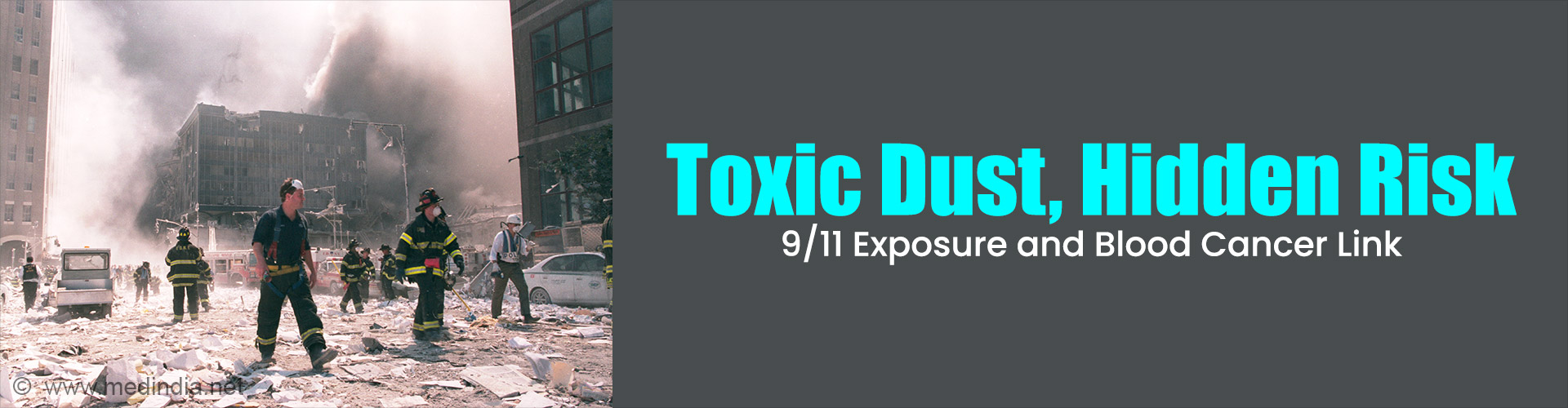
Toxic dust from the 9/11 attacks continues to harm survivors’ health. A new study reveals that first responders face a sixfold higher leukemia risk due to DNA mutations and inflammation triggered by toxin exposure.
Highlights:
More than two decades after the 9/11 attacks, scientists are uncovering how toxic dust from the disaster site continues to affect survivors’ health. A new study published in Cancer Discovery has found that first responders exposed to the World Trade Center (WTC) site have a higher rate of clonal hematopoiesis (CH)—a condition where blood stem cells acquire mutations that can lead to leukemia and Inflammation (1✔ ✔Trusted Source- 9/11 first responders show sixfold higher leukemia risk due to toxic dust exposure
- Mutations in blood-forming cells (clonal hematopoiesis) linked to inflammation and aging
- Blocking IL1RAP protein may prevent mutation-driven blood cancers
Elevated clonal hematopoiesis in 9/11 first responders has distinct age-related patterns and relies on IL1RAP for clonal expansion
Go to source). Researchers from the Montefiore Einstein Comprehensive Cancer Center analyzed blood samples from nearly 1,000 WTC responders and two control groups. They found that responders had a significantly higher prevalence of CH mutations, making them almost six times more likely to develop leukemia than unexposed individuals.

Lifetime Risk Calculator for Cancers
What are your chances for developing some common cancers in your lifetime - find out now.
What are your chances for developing some common cancers in your lifetime - find out now.
TOP INSIGHT

Did You Know?
Two decades on, the toxic dust from 9/11 is still rewriting survivors’ DNA — linking exposure to deadly blood cancers and chronic inflammation. #911health #leukemiarisk #toxinexposure#medindia
Toxic Dust and Genetic Mutations
The 9/11 dust cloud contained carcinogens and genetically toxic substances. When these enter the body, they can damage DNA in blood-forming cells. The study found that younger responders under 60 showed unique genetic mutations, suggesting that exposure may have accelerated cellular aging and cancer risk.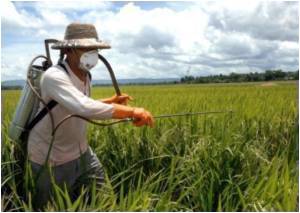
Chemicals Can Cause Cancer: Health Experts
Dr Linda Giudice has treated thousands of patients over the years with a range of troubling reproductive disorders, and this week, she joined health experts and a young mother in fingering
Dr Linda Giudice has treated thousands of patients over the years with a range of troubling reproductive disorders, and this week, she joined health experts and a young mother in fingering
Inflammation and the IL1RAP Protein
The research also identified a key inflammatory protein—IL1RAP—as a driver of these mutations. When tested in mice, 9/11 dust exposure triggered inflammation and increased defective blood stem cells. Blocking IL1RAP prevented this damage, pointing to a potential new drug target for toxin-related blood disorders.
Researchers Developing Technology to Detect Human Exposure to Environmental Toxins
Researchers at the University of California, Berkeley are aiming to develop a cutting edge technology for detecting diseases in humans exposed to environmental contaminants.
Researchers at the University of California, Berkeley are aiming to develop a cutting edge technology for detecting diseases in humans exposed to environmental contaminants.
Implications for Broader Environmental Exposure
Lead researcher Dr. Amit Verma emphasized that these findings go beyond 9/11. Similar risks may apply to those exposed to wildfire smoke, air pollution, or military burn pits, where toxins could trigger comparable mutations. Early screening for CH could help identify people at risk for blood cancers and open doors for preventive therapy.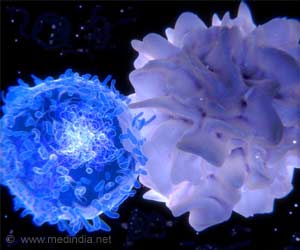
Splitting Cancer Drug is Safer Than A Whole
Splitting immunotoxins in half could increase their specificity toward cancers, study suggests.
Splitting immunotoxins in half could increase their specificity toward cancers, study suggests.
Future Implications:
This study opens new directions in environmental medicine—using genetic screening to detect early blood cell mutations in exposed populations and targeting inflammatory pathways like IL1RAP to prevent toxin-related cancers. It may also reshape how we monitor health risks in disaster and pollution-exposed communities.Reference:
- Elevated clonal hematopoiesis in 9/11 first responders has distinct age-related patterns and relies on IL1RAP for clonal expansion - (https://pubmed.ncbi.nlm.nih.gov/41031953/)
Source-Medindia
 Email
Email