Importance of Breastfeeding
Breastfeeding is the major source of nutrition for infants during the first few months of their lives. This is especially true in developing nations. Its numerous benefits, both with respect to health and otherwise, cannot be underestimated (1✔ ✔Trusted Source
Breastfeeding
Go to source).
History of World Breastfeeding Week
In order to promote, protect, educate about, and support breastfeeding globally, the World Alliance for Breastfeeding Action (WABA) was formed in 1991. The original plan of dedicating one day annually to promoting breastfeeding became a full week.
Starting in 1992, every year the week between August 1 and 7 is celebrated as World Breastfeeding Week (WBW). Over 170 countries participate in this venture, which is supported by UNICEF, WHO, FAO, and IPA (2✔ ✔Trusted Source
World Breastfeeding Week
Go to source).
In September 2015, world leaders pledged to achieve 17 goals aimed at ending poverty, protecting the earth, and ensuring prosperity. These came to be referred to as the Sustainable Development Goals (SDGs) (3✔ ✔Trusted Source
The 17 Goals
Go to source).
Facts about Breastfeeding
During this World Breastfeeding Week, it will be apt to once again re-iterate the numerous benefits of breastfeeding and breast milk. It is essential that women all over the world, understand and appreciate the importance of this simple, yet under-rated practice. Given below are 15 facts and stats about breastfeeding, its many benefits and the role of society in supporting and promoting it.
Statistics about Breastfeeding
- Based on UN agencies report, the rate of exclusive breastfeeding has increased globally by 10% over the past decade and its reaching close to 48% (3✔ ✔Trusted Source
The 17 Goals
Go to source). - UNICEF and WHO discussed with governments, donors, civil society and private sector to step up efforts to help women to achieve their breastfeeding goals and reach the global 2030 target of 70% (4✔ ✔Trusted Source
World Breastfeeding Week 2023: Supportive workplaces needed to reach global breastfeeding targets
Go to source). - Currently, India suffers economic loss because only 55% of children are exclusively breastfed (5✔ ✔Trusted Source
In India, breastfeeding impacts families, communities, and the economy.
Go to source). - Breastfeeding is associated with an Intelligence Quotient (IQ) increase by 3 to 4 points (6✔ ✔Trusted Source
Breastfeeding: The Best Possible Start in Life
Go to source). - Around 90% of women deliver in health facilities, but only 41.8% of women initiate breastfeeding within 1 hour of birth (7✔ ✔Trusted Source
Enabling Breastfeeding
Go to source). - Inadequate breastfeeding results in 100,000 preventable child deaths (mainly due to diarrhea and pneumonia), 3.47 crores cases of diarrhea, 0.24 crores cases of pneumonia, and 40,382 cases of obesity in India (7✔ ✔Trusted Source
Enabling Breastfeeding
Go to source). - Only 20% of countries provide paid breaks for employees and facilitates for breastfeeding or expressing milk (8✔ ✔Trusted Source
World Breastfeeding Week: 1-7 August
Go to source).
How Much and How Often To Breastfeed a Baby?
- Breastfeeding should ideally begin within an hour of birth. This early contact between the mother and the baby promotes ‘bonding’ which is very critical in the long-term. It helps nurture a loving and trusting relationship between the mother and the child (9✔ ✔Trusted Source
MCA Early initiation of breastfeeding (%)
Go to source). - Feeding should be ‘on demand’ as frequently as the baby wants, irrespective of whether it is day or night. Keeping pacifiers or dummies in the baby’s mouth should be avoided. Infants should be exclusively breastfed for the first 6 months (10✔ ✔Trusted Source
Effect of restricted pacifier use in breastfeeding term infants for increasing duration of breastfeeding
Go to source).
Benefits of Breast Milk
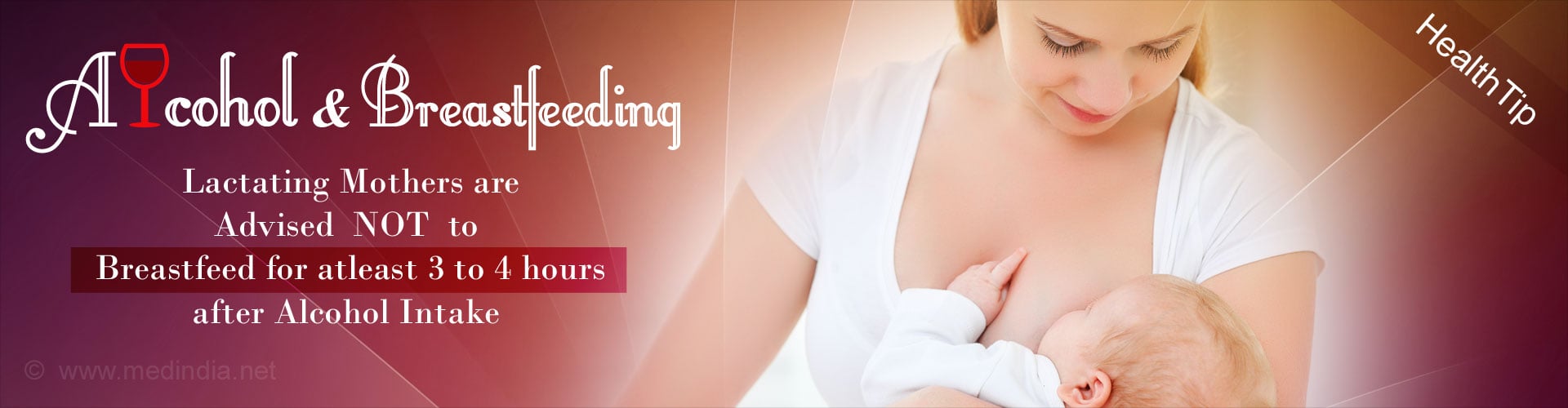
- Breast milk contains all the necessary nutrients for the baby’s healthy development. In addition, it contains protective antibodies that prevent neonatal diarrhea and respiratory infections, two of the leading causes of infant death. Lactating mothers are advised not to breastfeed their child for at least 2 hrs after alcohol intake (11✔ ✔Trusted Source
Why is Breastfeeding Important for your Baby?
Go to source). - Breast milk does not require any sterilization or mixing. There is no risk of addition of water that may be ‘unsafe’ or infection from poorly sterilized equipment. In addition, it is delivered at ideal temperature for the baby – neither too warm nor too cold (12✔ ✔Trusted Source
About Breastfeeding
Go to source). - Long-term benefits for the child include better health in adolescence and young adulthood. Breastfed children have a lower incidence of obesity, type II diabetes and also tend to perform better in intelligence tests (13✔ ✔Trusted Source
The association between breastfeeding and childhood obesity: a meta-analysis
Go to source).
Breastfeeding Benefits for Mother
- Breastfeeding benefits the mother too. It acts as a natural (around 98% safe) method of birth control. However, this method is not fool-proof as lactating women are known to get pregnant. Women who breastfeed their infants have a lower incidence of breast and ovarian cancer, type II diabetes and post-partum depression (13✔ ✔Trusted Source
The association between breastfeeding and childhood obesity: a meta-analysis
Go to source).
Breastfeed from HIV Mothers
- 1.Interestingly, the WHO recommends that HIV infected mothers be allowed to breastfeed. They should receive anti-retroviral (ARV) therapy and follow WHO recommendations for breastfeeding the infant. ARV drugs given to both the mother and the infant are said to decrease the risk of transmission (14✔ ✔Trusted Source
Guideline: updates on HIV and infant feeding
Go to source).
Breast Milk Storage
- Mothers can express their breast milk either manually or by means of a pump and store in special containers for future use. The milk can be maintained at room temperature for close to six hours, refrigerated for nearly eight days or frozen for six to twelve months (15✔ ✔Trusted Source
Infant and toddler health
Go to source).
 MEDINDIA
 English
 हिन्दी
 Español
 français
 中文
中文