MEDINDIA
 English
 हिन्दी
 Español
 français
 中文
中文
Genetics
What goes wrong in children with Progeria and why are they different from other kids?
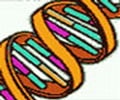
Classical Hutchinson-Gilford Progeria Syndrome is almost always the result of a sporadic (denovo) mutation that occurs in the Lamin A gene during the formative cell divisions of a child. The mutation is of the dominant variety, with the affected child having one normal copy and one abnormal copy of the gene.
Lamin A, a protein, is one of the building components that make up the nuclear envelope. A mutation that results in a ‘spelling error’ on the DNA of the Lamin A gene replaces the base cytosine with thymine. This gives rise to the abnormal form of pre Lamin A ( "progerin") which accelerates the aging process, resulting in progeria.
What triggers these mutations is still a mystery!
In the vast majority, these Lamin A mutations are not inherited from the parents. Only two cases have been recorded, wherein a healthy parent carried the progeria – causing LMNA mutation. One was that of a family from India with five progeric children, and the other was that of a Belgian family with two affected children.
 Email
Email