MEDINDIA
 English
 हिन्दी
 Español
 français
 中文
中文
 Email
Email
- Harrison’s Principles of Internal Medicine 18thEdition
- The Merck Manual
- Nelson Textbook of Pediatrics. 18th ed.
- Cecil Medicine 24thEdition
About
Von Gierke disease, also known as Type I glycogen storage disease, occurs due to impaired breakdown of glycogen to glucose.
Von Gierke disease is a genetic condition in which the body cannot breakdown glycogen for energy. The disease results from deficiency of an enzyme that releases glucose from glycogen. This results in accumulation of abnormal amounts of glycogen in certain tissues. Von Gierke disease is also called Type I glycogen storage disease (GSD I). Inadequate breakdown of glycogen leads to low blood glucose.
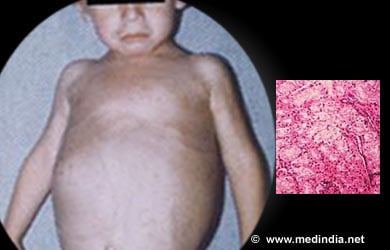
Von Gierke disease is unlikely to occur more frequently than 1 case in 50,000 infants. Affected newborns are at risk of neonatal hypoglycemia (low blood sugar) and associated complications. There are two subtypes of Von Gierke disease: type 1a and type 1b. Both subtypes occur with equal frequency in both sexes.
Enlargement of the liver due to glycogen accumulation is the clinical hallmark of the disease. Diet management is the mainstay of therapy; low blood sugar is to be avoided. Diet is adjusted so as to maintain a steady-state balance between circulating glucose and existing glycogen stores.
Causes of Von Gierke disease
Glycogen is stored in the liver and muscles. This stored glycogen is normally broken down into glucose when a person does not eat. Type I glycogen storage disease is caused by deficiency of the enzyme glucose-6-phosphatase in liver, kidney, and intestinal mucosa (inner lining of the intestine). This enzyme is required for the release of glucose from glycogen. In subtype 1a, the glucose-6-phosphatase enzyme is defective while in subtype 1b, translocase, an enzyme that acts as a transporter for glucose-6-phosphatase, is defective.
Enzyme deficiency leads to the accumulation of glycogen in tissues. When glycogen is not broken down, it leads to low blood sugar.
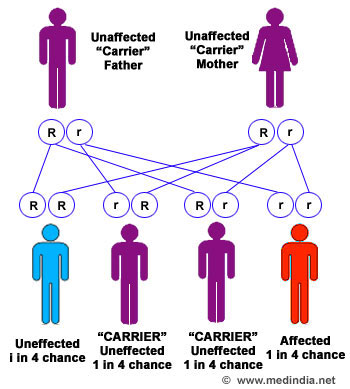
Von Gierke disease is inherited in an autosomal recessive pattern, i.e. a copy of the defective gene from both parents is required for the child to develop the serious ailment. Many people carry one copy of the abnormal gene. Two abnormal copies are needed for Von Gierke disease to develop.