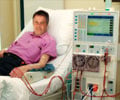
Dialysis - Hemodialysis, Peritoneal Dialysis and Role of Diet and Drugs
Dialysis is an artificial process for removing excess water and waste from the blood. Hemodialysis and peritoneal dialysis are the types of dialysis.
Dialysis is an artificial process for removing excess water and waste from the blood. Hemodialysis and peritoneal dialysis are the types of dialysis.
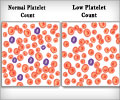
Province-wide testing of all patients from British Columbia who underwent hemodialysis in community and hospital-based facilities permitted collection of data from the majority (80 percent) of patients with hemodialysis from British Columbia (1,706 of 2,146 patients) and from Alberta (425 patients). Of the 1,706 patients from British Columbia, 1,411 patients (83 percent) were undergoing dialysis using e-beam sterilized membranes. In British Columbia, 11.4 percent of patients (n = 194) had postdialysis platelet counts of less than 100 x 103/µL, 23.4 percent of patients (n = 400) had more than 15 percent decrease in platelet count postdialysis, and 7.2 percent of patients (n= 123) met both criteria. Similar proportions from the Alberta population who were undergoing dialysis using a polysulfone e-beam sterilized dialyzer made by a different manufacturer were demonstrated (10.8 percent; n=46 had postdialysis platelet counts of less than 100 x 103/µL; 32.0 percent; n= 156 had more than 15 percent decrease in platelet count postdialysis; and 7.3 percent (n = 31) met both criteria.
In multivariate analysis adjusting for patient and dialysis history characteristics, use of an e-beam sterilized dialyzer was associated with a 2.5 times increased risk of significant thrombocytopenia. "Overall, among 1,784 patients, there were significant reductions in postdialysis thrombocytopenia following the change to use of non-e-beam sterilized dialyzers, such that 120 patients (6.7 percent) had platelet counts of less than 100 x 103/µL; 167 patients (9.4 percent) had decreases in platelet counts of greater than 15 percent; and 38 patients (2.1 percent) met both criteria," the authors write.

Anticoagulation Therapy / Blood Thinners - Injectable - Oral - Indications
Anticoagulants prevent the clotting of blood in our body. They are administered orally or via injection.
Anticoagulants prevent the clotting of blood in our body. They are administered orally or via injection.
The researchers add that it is biologically plausible that e-beam sterilization could induce changes in platelets by a number of possible mechanisms, but none of these have been thoroughly evaluated.
Advertisement

High Blood Pressure | Hypertension - Causes, Symptoms, Diagnosis & Treatment
High blood pressure or hypertension is a chronic condition, which usually lasts a lifetime once it is developed.
High blood pressure or hypertension is a chronic condition, which usually lasts a lifetime once it is developed.
Editor's Note: Please see the article for additional information, including other authors, author contributions and affiliations, financial disclosures, funding and support, etc.
Advertisement
In an accompanying editorial, Jonathan Himmelfarb, M.D., of the University of Washington, Seattle, comments on the findings of this study.
"This systematic, multifaceted study clearly demonstrated a robust association of thrombocytopenia risk with use of e-beam sterilization of dialyzers. It is also an exemplary model for investigating other problems that can affect patient safety during complex procedures such as dialysis. Several recently published single-patient case reports also have implicated e-beam sterilization as a possible cause of dialysis-induced thrombocytopenia."
Source-Eurekalert