MEDINDIA
 English
 हिन्दी
 Español
 français
 中文
中文
About
A stool test may be used to diagnose the presence or absence of a number of medical conditions. Faecal matter may be subjected to occult blood tests, microbiology tests, and chemical tests.
Occult Blood Test or Fecal Occult Blood Test (FOBT)
Faecal occult blood (FOB) refers to blood in the faeces that is not visibly apparent (occult). A number of conditions cause bleeding in the digestive system. Common conditions include - Colorectal cancer (cancer in the parts of the digestive system like colon, rectum) and stomach cancer. Other conditions are like peptic ulcer disease and inflammatory conditions like diverticulits and ulcerative colitis. Sometimes bleeding gums can also cause positive test and one should avoid vigorous brushing before taking such tests. Early diagnosis facilitates early intervention.
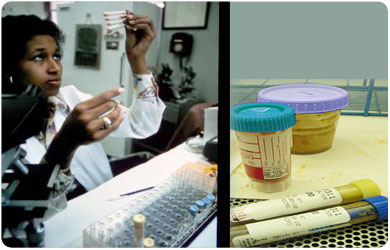
Occult blood loss can also occur in anaemia, peptic ulcer disease. Certain drugs like Bortezomib are also associated with bleeding. Taking iron tablets can also result is a positive test.
Intensive exercise or marathon running can also be the cause of low intensity GI bleeding.
Food restrictions before taking test - certain food should be avoided and these include - red meat, broccoli, turnips, and horseradish, Avoid these foods for at least 3 to 4 days before taking the test.
Drugs to avoid - colchicines, anti-coagulants such as aspirin, clopilet and oxidizing drugs (like iodine and boric acid) may make the test appear positive. Avoid vitamin C tablets too as these may interfere with the chemical reaction.
Sample collection - Ideally more than one sample over different days should be collected. Sample can be collected in a container or transferred to it using a spatula or a brush.
Microbiology Tests
Microscopic examination of stools may reveal the presence of worm larvae or eggs. This can aid in the diagnosis of a number of conditions like Ascariasis, Hookworm, Strongyloidiasis and Whipworm (all of these are diseases caused by parasites).
In cases where direct examination has not helped with diagnoses, stool culture is performed. Bacterial disease can be identified by culture tests. Toxins produced by bacteria (e.g. Clostridium difficile) can be identified.
Chemical Tests
Medical conditions like lactose intolerance, infections etc. alter the pH of stool. A faecal pH may be performed. Faecal fat test can diagnose conditions causing malabsorption of fat (steatorrhea). Diseases of pancreas may be diagnosed by tests that measure faecal Elastase (an enzyme) levels.
 Email
Email