MEDINDIA
 English
 हिन्दी
 Español
 français
 中文
中文
Study explains why spatial orientation and navigation skills often deteriorate as we grow older.

Brain Mapmaking Better Understood With Newly Discovered Grid Cells
Grid cells, which help the brain map locations, have been found for the first time outside of the hippocampus in the rat brain, according to new research from the Norwegian University
Grid cells, which help the brain map locations, have been found for the first time outside of the hippocampus in the rat brain, according to new research from the Norwegian University
TOP INSIGHT

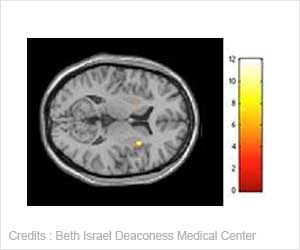
Grid cell firing patterns were less stable in older individuals, which may be a cause of why many senior people tend to have troubles with spatial navigation.
In virtual reality and in real space
To test this assumption, Stangl and colleagues performed experiments with 41 healthy young and older adults, who were split in two groups: The group of "young adults" consisted of 20 participants aged between 19 and 30 years, whereas the group of "older adults" comprised 21 individuals aged between 63 and 81 years. Both groups included men and women.
Role of Brain in Spatial Navigation
Do you have any idea how do we know where we are at any given moment? How do we remember routes that we've walked?
Do you have any idea how do we know where we are at any given moment? How do we remember routes that we've walked?
Instabilities in firing patterns

Testosterone Makes Males Better at Spatial Navigation: Study
According to an analytical study, male superiority over females in spatial navigation may just be a side-effect of testosterone.
According to an analytical study, male superiority over females in spatial navigation may just be a side-effect of testosterone.
Wolbers adds: "Grid cells play a central role not just in navigation but also in other cognitive functions. Therefore, our findings might indicate a key mechanism underlying cognitive deficits in old age. Not only does this provide insights into neurophysiological changes due to aging. It may also help in designing therapies against age-related cognitive decline."
Cognitive Tasks Achieved With Brain�s GPS
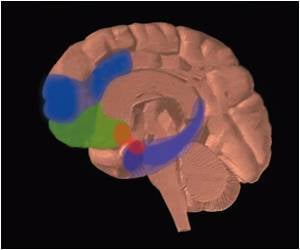
Two regions in the brain (hippocampus and entorhinal cortex) navigate both mapping of the external environment and forming of new memories.
Two regions in the brain (hippocampus and entorhinal cortex) navigate both mapping of the external environment and forming of new memories.
While weakening navigational skills might occur in healthy adults, such a decline is also considered as one of the earliest symptoms of Alzheimer's Alzheimer's. "Assessing navigation performance and grid cell function could possibly facilitate early diagnosis of Alzheimer's and other neurodegenerative disorders", says Wolbers. "To this end, it would be necessary to develop diagnostic methods that distinguish between an age-related decline in navigational ability and a decline caused by disease. This might be a challenging task. However, our findings lay the foundation for future studies on such topics."
Source-Eurekalert
 Email
Email