MEDINDIA
 English
 हिन्दी
 Español
 français
 中文
中文
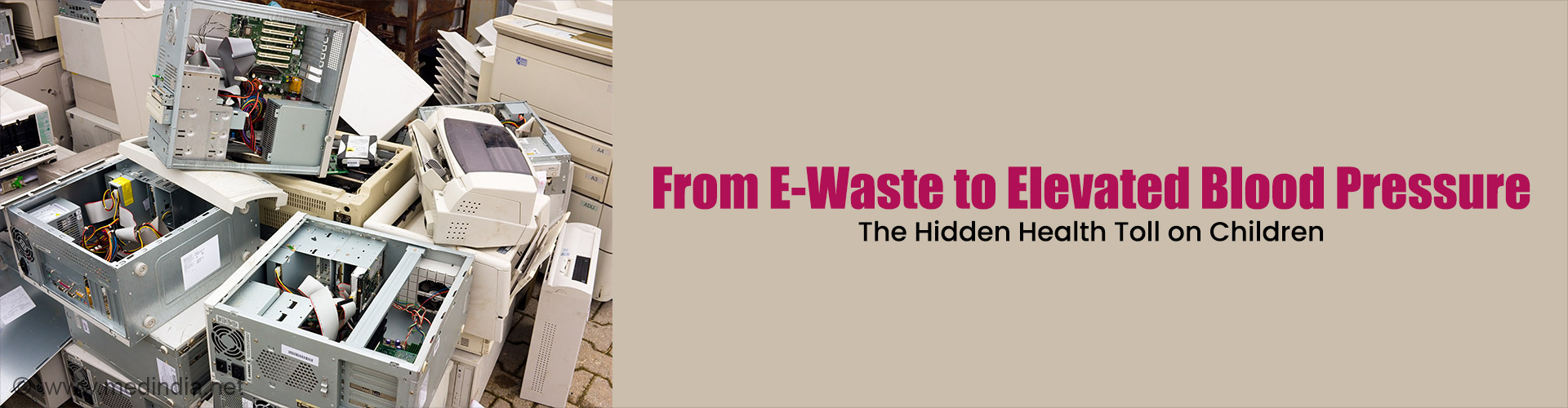
A new study reveals that children exposed to toxic e-waste pollutants are at a much higher risk of developing high blood pressure, as harmful metals and chemicals disrupt the body’s natural blood pressure regulation.
Highlights:
Children living near electronic waste (e-waste) recycling sites may be facing more than just pollution — they’re also at risk of developing high blood pressure, a condition once rare in the young (1✔ ✔Trusted Source- Children in e-waste regions were four times more likely to develop hypertension
- Exposure to toxic metals and volatile organic compounds (VOCs) was linked to disturbed metabolic pathways
- Pollutants may alter gut metabolism and oxidative stress, affecting heart and blood vessel health
Exploring the Impact of E-Waste Exposure on Childhood Blood Pressure: Metabolomics Analysis and Risk Prediction
Go to source). A new study published in Environment & Health reveals that children exposed to harmful metals and volatile chemicals from e-waste dumps were about four times more likely to develop hypertension than those in other regions (12.7% vs. 3.1%).

Exposure to Toxic Waste can Ruin Health in Kids
Constant exposure to chromium and lead can pose serious health problem for children in developing nations. Researchers have found that living near toxic waste regions can be detrimental for health.
Constant exposure to chromium and lead can pose serious health problem for children in developing nations. Researchers have found that living near toxic waste regions can be detrimental for health.
TOP INSIGHT

Did You Know?
Growing up near e-waste dumps may silently raise children’s risk of hypertension, warn researchers. #ewaste #childhealth #hypertension #pollution #environmentalhealth #medindia
How E-Waste Pollution Affects the Body
E-waste — discarded computers, phones, and other electronics, often release toxic metals like lead, arsenic, and cadmium, along with volatile organic compounds (VOCs) such as benzene and styrene, when dismantled or burned.These substances can enter the bloodstream and alter key metabolic pathways, especially those linked to the gut and cardiovascular system. The result? Disrupted blood pressure regulation and early signs of hypertension in children.

E-waste Recycling a 'health and Environmental Hazard'
Scientists are concerned that recycling of electronic waste from computers, cell phones and other goods might be creating significant health and environmental hazards.
Scientists are concerned that recycling of electronic waste from computers, cell phones and other goods might be creating significant health and environmental hazards.
Inside the Study
The research involved 426 children from an e-waste recycling region in China. Scientists analyzed urine samples to measure 18 metal(loid)s and 15 VOC metabolites, along with over 180 metabolic markers using advanced techniques.Children’s blood pressure was measured following standard pediatric guidelines. Statistical models and machine learning analysis showed that exposure to certain metal(loid)s — including cobalt, gallium, and tin — and VOCs was strongly associated with elevated blood pressure.

Global Environmental Problem may be Worsened by Ban of E-Waste Export
A proposal under debate in the US Congress to ban the export of electronics waste would likely make a growing global environmental problem even worse, a new study has said.
A proposal under debate in the US Congress to ban the export of electronics waste would likely make a growing global environmental problem even worse, a new study has said.
The Hidden Role of the Gut
One of the study’s most striking findings was the link between pollution and the gut’s metabolic activity.Changes in metabolites such as l-glutamine and N-phenylacetyl-l-glutamine (PAGln) suggest that gut bacteria may play a role in how the body responds to toxic exposure. Pollutants may disrupt gut microbiota, triggering oxidative stress and hormonal imbalances, which over time could raise blood pressure.

E-waste Processing in India Poses Several Health Risks, Warns the UN
Discarding electronic waste without proper safeguards in India increases the risk for health and environmental dangers, warns the UN
Discarding electronic waste without proper safeguards in India increases the risk for health and environmental dangers, warns the UN
Future Implications
This research sheds light on an emerging public health threat. As global e-waste continues to rise, millions of children in low-income regions may face similar risks.Experts stress the need for safer recycling practices, strict pollution controls, and regular health monitoring for children in affected areas.
The study also opens new doors for early detection and prevention, using metabolomic profiling to identify at-risk children before hypertension becomes irreversible.
Reference:
- Exploring the Impact of E-Waste Exposure on Childhood Blood Pressure: Metabolomics Analysis and Risk Prediction - (https://pubs.acs.org/doi/10.1021/envhealth.5c00189)
Source-Medindia
 Email
Email