MEDINDIA
 English
 हिन्दी
 Español
 français
 中文
中文
Research underscores TikTok's role in promoting regular cervical cancer screening, emphasizing its potential as an educational platform.

Can Videos on TikTok Improve Pap Smear Attitudes and Intentions? Effects of Source and Autonomy Support in Short-Form Health Videos
Go to source). Pap smears are considered the primary screening method for cervical cancer, responsible for approximately 4,000 annual deaths among women in the United States. TikTok and other short-form video platforms are booming in popularity — for entertainment and for sharing information, including health information.
Navigating Health Information on TikTok: A Closer Look at Cervical Cancer Awareness
“With TikTok, there have been a lot of news reports about how people, especially Gen Z, are using the platform as a source for health information,” Kirkpatrick said. “(My co-author and I) noticed that there was a lot of health messaging regarding pap smears, which are a really important preventative measure for cervical cancer. We were fascinated by what was being shared, and then we also found out that there has been a decline in the number of women in the U.S. who are getting a pap smear.”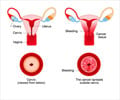
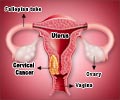
Cervical Cancer
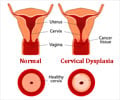
Cancer cervix refers to cancerous growth in the cervix and usually occurs in the transition called squamo-columnar junction.
Cancer cervix refers to cancerous growth in the cervix and usually occurs in the transition called squamo-columnar junction.
TOP INSIGHT

Short video formats, such as TikToks, have the potential to educate women on the significance of regular pap smears as a means to detect cervical cancer. #cervicalcancer #tiktok #papsmear
In the study’s experiment, 636 females, aged 21-29, viewed videos that simulated those on TikTok about pap smears, varying in source (doctor or peer) and level of autonomy support — using either controlling/demanding language or language supportive of one’s choice. They then rated the videos for perceived message effectiveness, credibility, attitude toward message, and engagement intention.
They found that doctors were deemed more credible than peer sources, and that autonomy-supportive videos delivered by a doctor improved attitude toward the message and toward getting a pap test more than the peer videos. Regardless of source, autonomy-supportive messages were significantly more likely to receive engagement in the form of likes or shares.

Pap smear and Cervical Cancer Screening
Pap smear is the most common test used in screening cervical cancer caused by an infection with human papilloma virus. Pap smear should be repeated every 1 to 3 years till the age of 65 years.
Pap smear is the most common test used in screening cervical cancer caused by an infection with human papilloma virus. Pap smear should be repeated every 1 to 3 years till the age of 65 years.
Kirkpatrick said the results provide evidence that doctors creating short-form video content about pap smears is time well spent, but that peer messages play a role, too.
Quiz on Cervical Cancer
Cervical cancer remains a common cancer in women of the developing world despite a test available for early diagnosis and a vaccine to prevent it. Here’s a quiz to test your knowledge on cervical cancer. ...
Cervical cancer remains a common cancer in women of the developing world despite a test available for early diagnosis and a vaccine to prevent it. Here’s a quiz to test your knowledge on cervical cancer. ...
Kirkpatrick suspects the findings would translate to videos encouraging other preventative screenings and said that should be explored further. Currently, Kirkpatrick is also examining why more young women are turning to TikTok for health information.

Female Reproductive System - Animation
Interactive section of Medindia gives details regarding Female reproductive system showing how the sperm fetilize the eggs
Interactive section of Medindia gives details regarding Female reproductive system showing how the sperm fetilize the eggs
Reference:
- Can Videos on TikTok Improve Pap Smear Attitudes and Intentions? Effects of Source and Autonomy Support in Short-Form Health Videos - (https://www.tandfonline.com/doi/abs/10.1080/10410236.2023.2254962)
Source-Eurekalert
 Email
Email