MEDINDIA
 English
 हिन्दी
 Español
 français
 中文
中文
Front-of-package health claims often mislead; study finds they don’t reflect true nutrition—check Nutrition Facts instead.
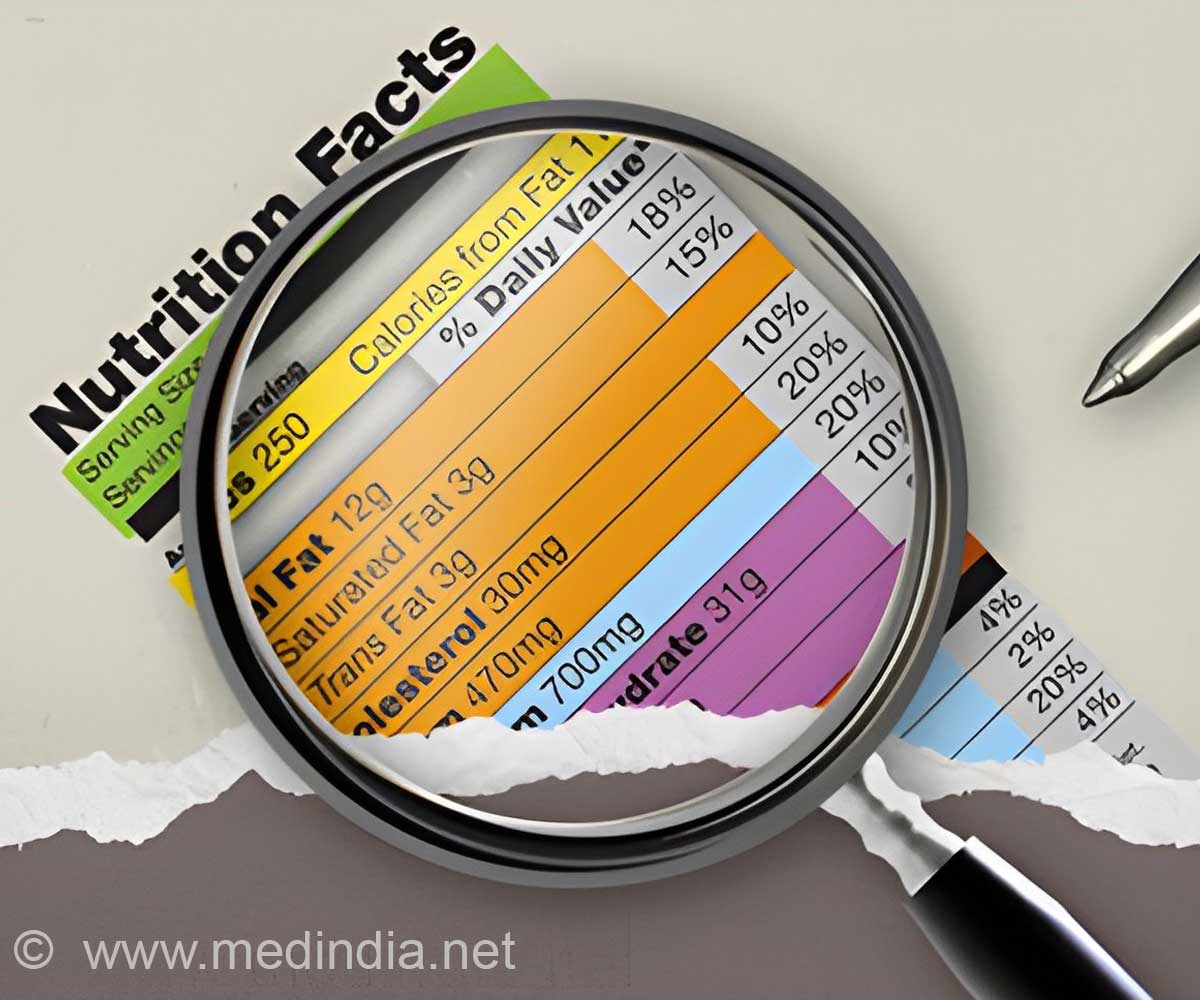
Do Food Packaging Health Claims Depict Healthiness or Mislead Patients?
Go to source).
Published in Peer-reviewed Reports in Medical Education Research, the study explored whether the number and type of front-of-package health claims could predict a product’s objective nutritional quality across commonly purchased U.S. foods.
Why Do We Eat - Nutrition Facts
The importance of eating food and the physiological, psychological and social functions of food.
The importance of eating food and the physiological, psychological and social functions of food.
TOP INSIGHT

Curious about that #heart_healthy or #keto_friendly label on your #groceries? Researchers who analyzed ~600 items say these flashy front claims often don't match the real nutrition. The lesson? Ignore the marketing! The #Nutrition Facts panel is where you find the truth about what you're buying. Time to start reading the fine print! #FoodLabels #NutritionFacts #GroceryHacks #BuyerBeware
Front-of-Package Claims: Marketing Hype vs. Real Nutrition
In the United States, FOP messages heavily influence consumer decisions. Yet, despite the abundance of “healthy” marketing, diet-related diseases remain widespread. The U.S. Food and Drug Administration (FDA) allows certain nutrient content, function, and restricted health claims — but these claims, while eye-catching, may not capture the product’s overall nutritional profile.Researchers hoped to generate insights that could help family physicians guide patients in making smarter food choices, both in-store and online.
The research team analyzed products sourced from Walmart to replicate a typical American grocery shopping experience. Using data from the U.S. Department of Agriculture’s What We Eat in America categories (NHANES 2017–2020), they selected 11 of 14 major food groups most relevant to consumers — including dairy, snacks, grains, beverages, fruits, and vegetables.
From 122 subcategories, they identified the two most frequently purchased items per group, then sampled five specific products each, resulting in a total of 597 items.
Each product’s packaging was reviewed for promotional statements. Claims were classified according to FDA definitions as nutrient content, function, or restricted health claims. Marketing terms such as “gluten-free,” “organic,” or “keto-friendly” were included as nutrient content claims.
Nutritional data from each product’s Nutrition Facts panel were converted into Nutri-Score values (a lower score indicates a healthier product), following the World Health Organization (WHO)-endorsed algorithm. Data management and analysis were performed using REDCap and R (R Foundation).
Across all food categories, nutrient content claims were the most prevalent, with over 1,073 instances recorded. By comparison, restricted health claims (14 total) and function claims (22 total) were extremely rare.

Learn to Read Nutrition Labels: A Step-by-Step Approach
Learn to read nutrition labels to make informed food choices. Understand serving sizes, ingredients, and nutrient content to improve your diet and health.
Learn to read nutrition labels to make informed food choices. Understand serving sizes, ingredients, and nutrient content to improve your diet and health.
The 'More Claims, More Health' Myth Debunked
However, the study found no consistent link between the number of front-of-package claims and the actual Nutri-Score. In simple terms, products with more “healthy-sounding” claims were not necessarily healthier.While certain categories — such as grains and snacks/sweets — showed minor statistical improvements in Nutri-Score as the number of claims increased, others, like fruits, displayed the opposite trend. These inconsistencies highlight the danger of relying on the number of claims as an indicator of nutritional quality.
The food category itself proved to be a much stronger predictor of nutritional health. Unsurprisingly, vegetables and fruits scored far better on average than sugary products, oils, or processed snacks.
The researchers noted several limitations: product data were collected online, packaging may differ in-store, and some claim classifications required subjective judgment. Furthermore, Nutri-Score — while widely used — represents a simplified measure of food healthfulness.
Despite these constraints, the study underscores a crucial takeaway: front-of-package health claims can mislead consumers.
Label Lingo on Food Items: Decoded
Read on to become a “pro” in “label reading” and don’t get tricked by fancy promotions of food product manufacturing companies.
Read on to become a “pro” in “label reading” and don’t get tricked by fancy promotions of food product manufacturing companies.
Expert Guidance: How to Shop Smart & Ignore the Food Label Hype
For clinicians and health-conscious shoppers alike, the findings emphasize a more reliable approach to healthy eating:- Shop by category first. Prioritize fruits, vegetables, whole grains, and minimally processed proteins.
- Ignore marketing buzzwords. Phrases like “low-fat,” “keto,” or “heart healthy” don’t necessarily guarantee nutritional value.
- Read the Nutrition Facts label. Focus on specific nutrients such as sugars, sodium, and saturated fat.
Reference:
- Do Food Packaging Health Claims Depict Healthiness or Mislead Patients? - (https://journals.stfm.org/primer/2025/venkatesh-2024-0129/)
Source-Medindia
Customers Prefer Restaurants That Offer Healthy Food and Nutrition Facts
Customers are more frequent to restaurants that provide both healthy food and nutrition information, according to researchers at Penn State and the University of Tennessee.
Customers are more frequent to restaurants that provide both healthy food and nutrition information, according to researchers at Penn State and the University of Tennessee.
 Email
Email