MEDINDIA
 English
 हिन्दी
 Español
 français
 中文
中文
A potassium channel, called Eag1, has been found in a number of cell types, and in some tumors cells, where it's thought to have a cancer-promoting effect.
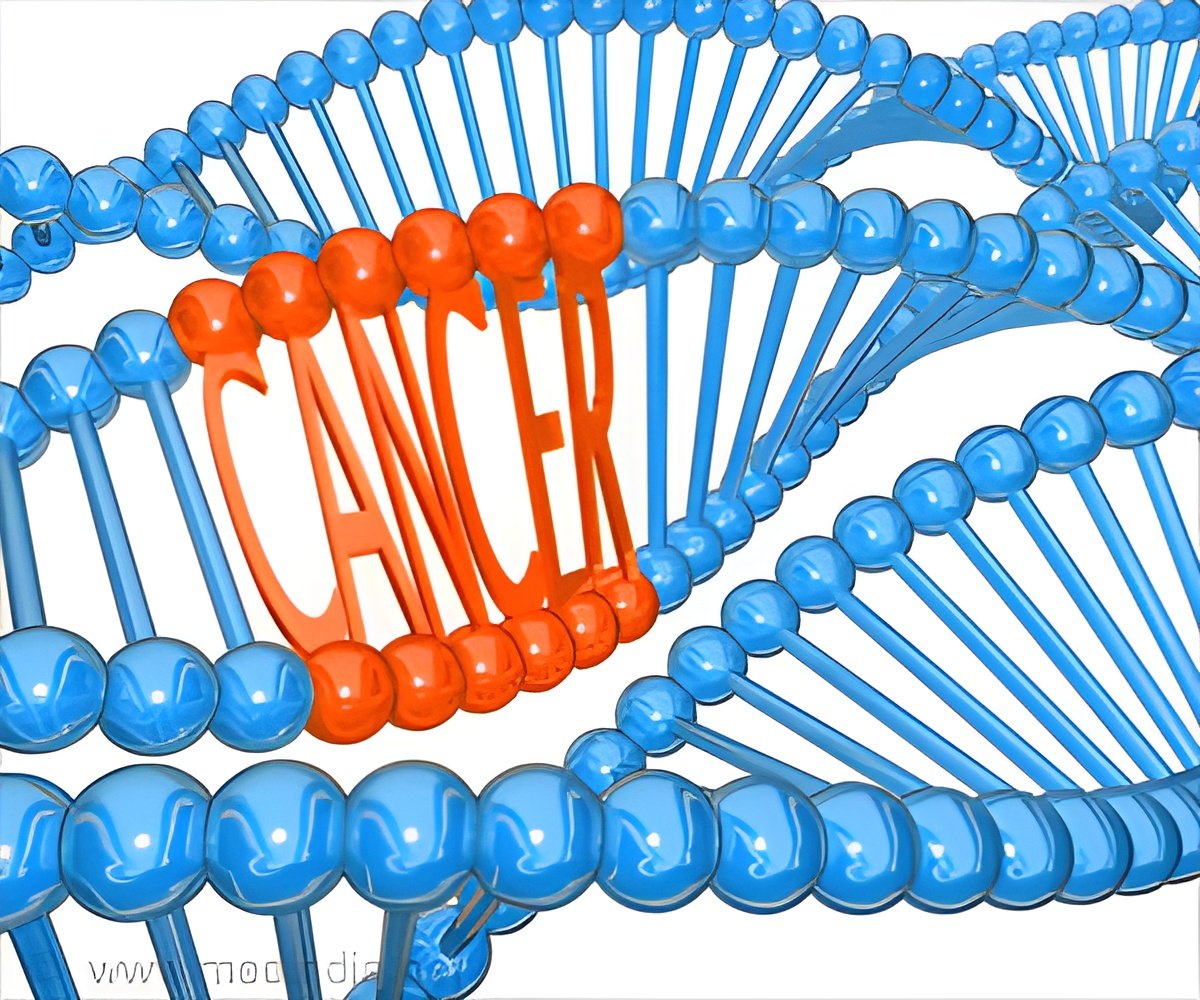
Novel Approach to Cancer Therapy in Cutting Off the Cell's Fuel Supply
A new approach to cancer therapy in cutting off a cancer cell's 'fuel supply' by targeting a cellular survival mechanism has been identified by investigators.
A new approach to cancer therapy in cutting off a cancer cell's 'fuel supply' by targeting a cellular survival mechanism has been identified by investigators.
TOP INSIGHT

A type of potassium channel, called Eag1, has been found in a number of cell types, and in some tumors cells, where it's thought to have a cancer-promoting effect.
Like some other potassium channels, Eag1 opens when it senses a change in electrical potential, as happens when neurons send signals. In the video above, the part of the channel that most interested the researchers -the section that spans the cell membrane -appears in yellow and green.
It includes the sensors responsible for detecting electrical changes (yellow), and the segments that form the pore through which potassium passes (green). The rest of the channel is located inside the cell. The researchers also determined the structure of another molecule called calmodulin (purple), which binds to Eag1 and holds it in a closed position.
"Within the structure, we see some important differences between Eag1 and other potassium channels in the section that spans the cellular membrane," says first author Jonathan Whicher, a postdoc in Roderick MacKinnon's lab. "This gives us a better idea of how the channel's components work on a molecular level, and its role within a cell, either a normal one or a cancerous one."
This research is an early step toward finding molecules that could inhibit or control the channel. These, in turn, could provide valuable tools for further exploring the role of Eag1 in cancer, or for developing new therapeutics.

Novel Algorithm Could Help in Developing Precise Cancer Treatments
A computational algorithm to analyze Big Data obtained from tumor samples to better understand and treat cancer has been developed by researchers.
A computational algorithm to analyze Big Data obtained from tumor samples to better understand and treat cancer has been developed by researchers.
Source-Eurekalert

Drug Sensitivity in Breast Cancer Tumors Restored
A team of Case Western Reserve University School of Medicine cancer researchers has uncovered one way certain tumors resist vital medication.
A team of Case Western Reserve University School of Medicine cancer researchers has uncovered one way certain tumors resist vital medication.
 Email
Email