MEDINDIA
 English
 हिन्दी
 Español
 français
 中文
中文
Mutations in Omicron variant bond with human cells far more efficiently than previous strains revealed a study led by an Indian-origin researcher.

Maharashtra Reports 23 Omicron Cases
Maharashtra has reported the highest spike of Omicron cases, 23, so far, taking the tally to 88, said health officials.
Maharashtra has reported the highest spike of Omicron cases, 23, so far, taking the tally to 88, said health officials.
TOP INSIGHT

Both the Omicron variant's increased binding affinity and its capacity to evade antibodies are "likely contributing factors to its increased transmissibility."
Researchers from the University of British Columbia, Canada, studied Omicron using cryo-electron microscopy -- a technique that provides images of the virus at incredibly high resolution.
The results, published pre-print and not peer-reviewed yet, showed that "Omicron has far greater binding affinity than the original SARS-CoV-2 virus" due to new bonds created between the virus and human cell receptors, Dr Sriram Subramaniam, lead scientist, was quoted as saying to the Daily Mail.

COVID-19: Oxford-AstraZeneca Begins Work on Omicron-Targeted Vaccine
The pharma giant AstraZeneca and Oxford University have come together to develop a COVID-19 vaccine that specifically targets the Omicron variant.
The pharma giant AstraZeneca and Oxford University have come together to develop a COVID-19 vaccine that specifically targets the Omicron variant.
"The Omicron variant is unprecedented for having 37 spike protein mutations - that's three to five times more mutations than any other variant," Subramaniam, a biochemistry professor at the University, was quoted as saying in a statement.
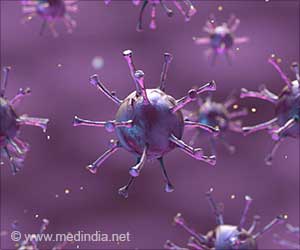
Omicron Becomes Dominant Variant in The US
Omicron has become the dominant Covid-19 variant in the US. Get vaccinated and boosted before travelling or attending any gatherings, wear your mask even in indoor settings and practice physical distancing.
Omicron has become the dominant Covid-19 variant in the US. Get vaccinated and boosted before travelling or attending any gatherings, wear your mask even in indoor settings and practice physical distancing.
The team probed Omicron's mutations through microscopic imaging, and found that some of the mutations create additional bonds between the virus and ACE2 receptors - a human cell receptor located throughout the body, the report said.

Omicron is 3 Times More Transmissible Than Delta Variant
Omicron is three times more transmissible that the Delta variant. Union Health Ministry asked the states to focus on Covid Appropriate Behavior as strategic areas of intervention.
Omicron is three times more transmissible that the Delta variant. Union Health Ministry asked the states to focus on Covid Appropriate Behavior as strategic areas of intervention.
The researchers compared Omicron's binding affinity to that of the Delta variant and the original strain of the coronavirus.
"Overall, the findings show that Omicron has far greater binding affinity than the original SARS-CoV-2 virus, with levels more comparable to what we see with the Delta variant," Subramaniam said.
Subramaniam's team also examined the Omicron spike protein's ability to evade both human antibodies and antibodies from monoclonal antibody treatments.
This analysis confirmed real-world data, showing that Omicron is more capable of evading antibodies than previous variants - meaning that treatments are less successful, the report said.
"Notably, Omicron was less evasive of the immunity created by vaccines, compared to immunity stemming from natural infection in unvaccinated Covid patients," Subramaniam said, adding "this suggests that vaccination remains our best defence against the Omicron variant."
Source-IANS
 Email
Email