MEDINDIA
 English
 हिन्दी
 Español
 français
 中文
中文
Rapid blood test for a specific atrial protein which quickly reveals the extent of atrial wounds allows healing and further successful intervention in atrial fibrillation.
Atrial Fibrillation - Causes, Symptoms, Diagnosis, Treatment, Complication, Risks
Atrial fibrillation may not be life-threatening in itself but it is important to understand the causes, symptoms and treatments because of the risk of life-threatening complications.
Atrial fibrillation may not be life-threatening in itself but it is important to understand the causes, symptoms and treatments because of the risk of life-threatening complications.
TOP INSIGHT

Specific protein in the blood acts as a biomarker for estimating the atrial damage in atrial fibrillation
Read More..
Ablation is a procedure in which specific regions of the atrium are destroyed by applying heat or extreme cold to reroute the paths of electrical conduction and correct the abnormality.
Atrial protein as a potential biomarker
Drugs for Atrial Fibrillation - Symptoms, Treatment, Side Effects & Precautions
Atrial fibrillation is a condition with irregular heart rhythm. Be aware of the prescribed drugs, their side effects and precautions, to avoid risk to life.
Atrial fibrillation is a condition with irregular heart rhythm. Be aware of the prescribed drugs, their side effects and precautions, to avoid risk to life.
The researchers therefore wondered whether MYBPHL might serve as a blood-borne marker for atrial tissue damage. "Markers are particularly important in cardiac medicine for predicting and assessing progress, because early recognition of problems in such a vital organ as the heart can save many lives," says Markus Krane.
Cardiac Ablation - Procedure, Risks and Benefits
Cardiac Ablation is a minimally invasive heart procedure, which involves identifying and scarring the arrhythmia-causing heart tissue.
Cardiac Ablation is a minimally invasive heart procedure, which involves identifying and scarring the arrhythmia-causing heart tissue.
The scientists tested over a hundred blood samples from patients with atrial fibrillation in whom ablation had been performed. They found that levels of MYBPHL in the blood were highest immediately after ablation when the patients arrived at the intensive care unit and then gradually declined over the next 24 hours. Patients who underwent cardiac valve surgery without atrial intervention, for example, did not show increased levels of the protein, which remained at the same levels as in the healthy control group.
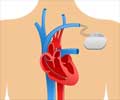
Cardiac Pacemaker for Abnormal Heart Rhythms – Types, Advantages & Risks
A pacemaker stimulates the heart with electrical signals when it detects arrhythmias of the heart. Pacemakers are classified based on the number of lead electrodes used and the type of pacing involved.
A pacemaker stimulates the heart with electrical signals when it detects arrhythmias of the heart. Pacemakers are classified based on the number of lead electrodes used and the type of pacing involved.
Development of a rapid blood test planned
In the next step, Krane and his team plan to produce antibodies that only recognize isoform 2, which can then be used in a rapid blood test. Such a standardized test would be suitable for widespread routine use following surgical or interventional procedures that specifically target atrial tissue.
Source-Eurekalert
 Email
Email