MEDINDIA
 English
 हिन्दी
 Español
 français
 中文
中文
Activity in specific brain regions provides a clue about the selfish motives of a white lie.


Infants Use Prefrontal Cortex in Learning, Finds Study
Given the task of learning simple hierarchical rules, babies appeared to use prefrontal cortex (PFC) region, finds new study.
Given the task of learning simple hierarchical rules, babies appeared to use prefrontal cortex (PFC) region, finds new study.
TOP INSIGHT

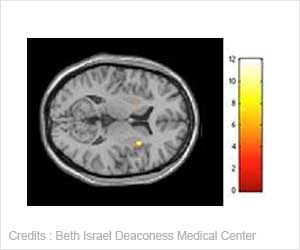
White lies, also known as Pareto lies are known to benefit both parties. However, the medial prefrontal cortex (MPFC) is found to encode the real motivations / selfish motives of these lies by revealing distinct activity patterns in this brain region. This helps in differentiating varying brain patterns depending upon the type of lies and thus can also be utilized in analyzing certain behavioral studies.
The participants were asked to tell lies to earn a reward for themselves, for an unknown person, or both. Then the fMRI was utilized to measure the MPFC activity of participants. Thus by comparing the brain activity of white lies with the selfish and altruistic lies, the true motivation for the lies was being predicted.
It was found that people with higher selfish motivation in Pareto white lies revealed greater activity in the ventral MPFC (red for selfish lies Activity patterns) and rostral MPFC (blue for dissimilar activity patterns to altruistic lies).
Age-Related Cognitive Decline Linked to Energy in Synapses in Prefrontal Cortex
Changes in the nervous system and age-related cognitive decline are closely linked, but up until recently, they were thought to result from the loss of neurons in areas such as the prefrontal cortex, the part of the brain important in working memory.
Changes in the nervous system and age-related cognitive decline are closely linked, but up until recently, they were thought to result from the loss of neurons in areas such as the prefrontal cortex, the part of the brain important in working memory.
Source-Medindia

Drug Abuse Disrupts Development of Prefrontal Cortex
All drugs can have dangerous effects. Many can be unpredictable and variable. There are numerous problems which the use of recreational drugs can cause.
All drugs can have dangerous effects. Many can be unpredictable and variable. There are numerous problems which the use of recreational drugs can cause.
 Email
Email