MEDINDIA
 English
 हिन्दी
 Español
 français
 中文
中文
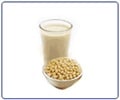
A soy-rich diet could protect against reproductive health problems associated with BPA exposure. It is still unknown why soy has this effect in humans.

Bisphenol A Poses No Health Risk
The EU food safety watchdog said that bisphenol A --a chemical used in food can linings and other products-- poses no health risk to consumers.
The EU food safety watchdog said that bisphenol A --a chemical used in food can linings and other products-- poses no health risk to consumers.
TOP INSIGHT

It is recommended that women who are trying to get pregnant should reduce their exposure to BPA.
The researchers examined the relationship between BPA exposure, diet and success rates among 239 women who underwent at least one in vitro fertilization (IVF) cycle at the Massachusetts General Hospital Fertility Center between 2007 and 2012. The women participated in the Environment and Reproductive Health (EARTH) Study, an ongoing prospective cohort study designed to evaluate the role of environmental factors and nutrition in fertility. The EARTH Study was funded by the National Institutes of Health's National Institute of Environmental Health Sciences.
Participants' urine samples were analyzed to measure BPA exposure. The women, who were between the ages of 18 and 45, completed a lifestyle questionnaire that included questions about how frequently they ate soy-based foods. Among the participants, 176 consumed soy foods.

Bisphenol A Substitutes are Dangerous: Study
Bisphenol A is a plastic ingredient banned in some countries over the health fears. Two of the substitutes used for bisphenol are also a source of concern, French researchers warned Thursday.
Bisphenol A is a plastic ingredient banned in some countries over the health fears. Two of the substitutes used for bisphenol are also a source of concern, French researchers warned Thursday.
"Although it is recommended that women trying to get pregnant reduce their exposure to BPA, our findings suggest that diet may modify some of the risks of exposure to BPA, a chemical that is nearly impossible to completely avoid due to its widespread use," said senior author Russ Hauser, MD, ScD, MPH of Harvard T.H. Chan School of Public Health, Massachusetts General Hospital, Harvard Medical School in Boston, MA.

Bisphenol A Health Threats Raise Concerns
The exposure levels to Bisphenol A, which is a health concern for babies, should be cut by a factor of 10, according to the EU food safety watchdog
The exposure levels to Bisphenol A, which is a health concern for babies, should be cut by a factor of 10, according to the EU food safety watchdog
Other authors of the study include: Lidia MÃnguez-Alarcón, Yu-Han Chiu, Audrey J. Gaskins, and Paige L. Williams, of the Harvard T.H. Chan School of Public Health in Boston, MA; Irene Souter of Massachusetts General Hospital and Harvard Medical School in Boston; and Antonia M. Calafat of the U.S. Centers for Disease Control and Prevention in Atlanta, GA.

Exposure to Bisphenol A Could Lead to Miscarriage
Exposure to bisphenol A - a chemical found in plastic could increase the risk of miscarriage, says study.
Exposure to bisphenol A - a chemical found in plastic could increase the risk of miscarriage, says study.
Source-Newswise
 Email
Email