MEDINDIA
 English
 हिन्दी
 Español
 français
 中文
中文
An investigational therapy for retinitis pigmentosa has demonstrated a favorable safety and tolerability profile in an ongoing Phase I/II clinical trial.
Increase in Swelling of Retinas of Patients With Retinitis Pigmentosa With Iodine
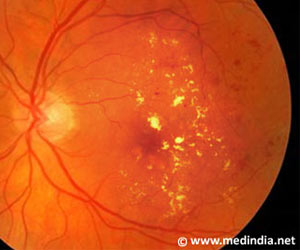
A common complication of retinitis pigmentosa is cystoid macular edema, causing swelling in the retina.
A common complication of retinitis pigmentosa is cystoid macular edema, causing swelling in the retina.
TOP INSIGHT

An investigational cell-based therapy for retinitis pigmentosa has demonstrated a favorable safety and tolerability profile in an ongoing Phase I/II clinical trial.
"We are pleased with the results," said jCyte co-founder Henry Klassen, an associate professor of ophthalmology at UCI and a member of the Sue & Bill Gross Stem Cell Research Center, where much of the pre-clinical work took place. "This is an important milestone in our effort to treat these patients."
The cell-based approach taken by jCyte is intended to rescue sick and dying retinal photoreceptor cells (rods, cones) in the diseased retina. Nonclinical studies have shown that transplanted retinal progenitor cells tend not to provoke an immunological rejection response, even when sourced from unrelated donors. Because of this, patients in the study are not immunosuppressed, as is often done in traditional organ transplantation. In addition, the procedure is relatively simple to perform and can be completed in an office setting.

Researchers Identify How Photoreceptor Cells in Retinitis Pigmentosa Die
Boston (Aug. 20, 2012) – Research conducted at the Angiogenesis Laboratory at Massachusetts Eye and Ear Infirmary, has for the first time, identified the mode of death of cone photoreceptor
Boston (Aug. 20, 2012) – Research conducted at the Angiogenesis Laboratory at Massachusetts Eye and Ear Infirmary, has for the first time, identified the mode of death of cone photoreceptor
Based on the interim results from the current trial, further clinical studies are being planned.
Scientists Reveal Novel Way to Prevent Blindness Caused by Retinitis Pigmentosa
A novel way to use a radical new type of gene therapy to prevent blindness caused by retinitis pigmentosa has been discovered by scientists.
A novel way to use a radical new type of gene therapy to prevent blindness caused by retinitis pigmentosa has been discovered by scientists.
Two Experimental Treatments Found to Produce Long Term Improvement for Retinitis Pigmentosa
Two experimental treatments have been found to improve the visual function in mouse models of retinitis pigmentosa.
Two experimental treatments have been found to improve the visual function in mouse models of retinitis pigmentosa.
 Email
Email