MEDINDIA
 English
 हिन्दी
 Español
 français
 中文
中文
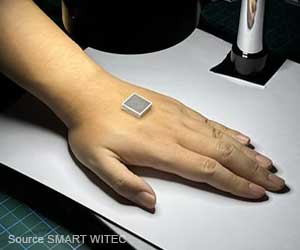
By simply breathing into a small gadget today's technological innovation enables smartphone users to diagnose serious diseases such as diabetes or lung cancer quickly and effectively.

New Smartphone App Aids in Patients� Preparation for Colonoscopy
A new study suggests that using a smartphone application can significantly improve patients’ preparation for a colonoscopy.
A new study suggests that using a smartphone application can significantly improve patients’ preparation for a colonoscopy.
The morphological change results in nanofibers that are shaped like an open cylinder inside which thin-film SnO2 nanotubes are layered and then rolled up. A number of elongated pores ranging from 10 nanometers (nm) to 500 nm in length along the fiber direction were formed on the surface of the SnO2 fibers, allowing exhaled gas molecules to easily permeate the fibers. The inner and outer wall of SnO2 tubes is evenly coated with catalytic platinum (Pt) nanoparticles. According to the research team, highly porous SnO2 fibers, synthesized by eletrospinning at a high flow rate, showed five-fold higher acetone responses than that of the dense SnO2 nanofibers created under a low flow rate. The catalytic Pt coating shortened the fibers' gas response time dramatically as well.
Source-Eurekalert
Order Your Favourite Cocktail to a Robot Bartender Via Smartphone
Scientists have developed a cocktail-making robot which can be controlled by smartphones.
Scientists have developed a cocktail-making robot which can be controlled by smartphones.
Researchers Try To Detect Disease With a Smartphone Accessory
The incidence of Kaposi's sarcoma, a type of cancer linked to AIDS, has decreased in the United States, as antiretroviral drugs that treat HIV have become more commonplace.
The incidence of Kaposi's sarcoma, a type of cancer linked to AIDS, has decreased in the United States, as antiretroviral drugs that treat HIV have become more commonplace.
Smartphone Turns Smarter With New App to Spot Toxins and Bacteria
Smartphones are getting smarter by the day and are having people hooked for its multiple benefits via new applications.
Smartphones are getting smarter by the day and are having people hooked for its multiple benefits via new applications.
 Email
Email