MEDINDIA
 English
 हिन्दी
 Español
 français
 中文
中文
Novel way to attack herpesviruses has been identified. Human cytomegalovirus (HCMV) is a major cause of birth defects and transplant failures. Scientists have uncovered the mechanism that allows the virus to replicate.
Genital Herpes-Causes-Symptoms–Complications-Diagnosis–Treatment-Prevention
Genital herpes is a sexually- transmitted disease (STD) that affects the genitals.
Genital herpes is a sexually- transmitted disease (STD) that affects the genitals.
TOP INSIGHT

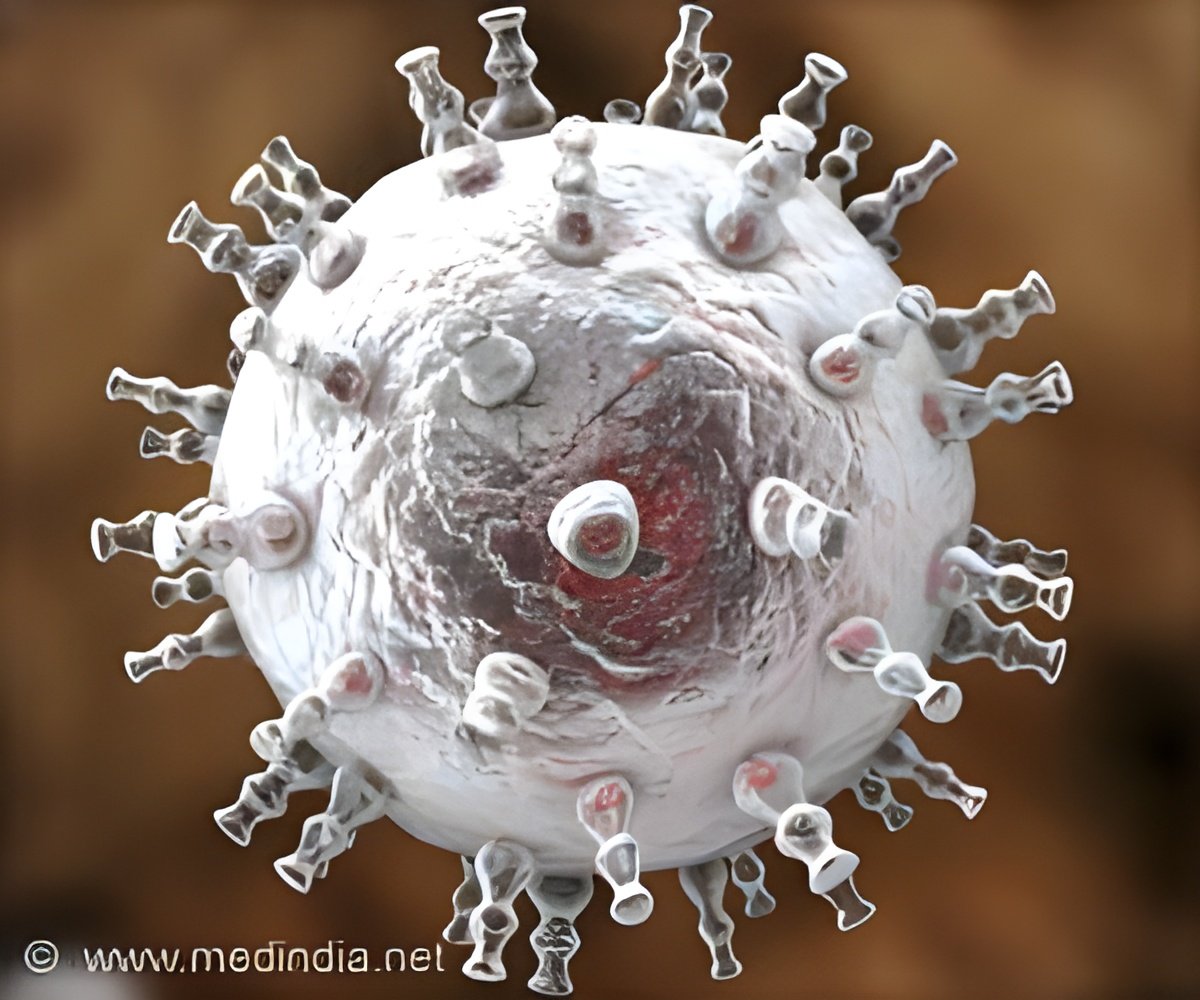
Human cytomegalovirus (HCMV) is a major cause of birth defects and transplant failures. Scientists have uncovered the mechanism that allows the virus to replicate which can lead to a new therapeutic target to attack cytomegalovirus and other herpesviruses.
Normally, when a virus enters your cell, that cell blocks the virus's DNA and prevents it from performing any actions. The virus must overcome this barrier to effectively multiply.
To get around this obstacle, cytomegalovirus doesn't simply inject its own DNA into a human cell. Instead, it carries its viral DNA into the cell along with proteins called PP71. After entering the cell, it releases these PP71 proteins, which enables the viral DNA to replicate and the infection to spread.

Herpes � A Risk for Alzheimer's Disease
Link between Alzheimer's disease and herpes virus infection has been identified by a research team at the University of Manchester. The research suggests that herpes treatment with aggressive antiviral drugs may reduce the risk of dementia.
Link between Alzheimer's disease and herpes virus infection has been identified by a research team at the University of Manchester. The research suggests that herpes treatment with aggressive antiviral drugs may reduce the risk of dementia.
"The PP71 proteins are needed for the virus to replicate. But they actually die after a few hours, while it takes days to create a new virus. So how can the virus successfully multiply even after these proteins are gone?"
New Molecule Has Potential Anti-Herpes Virus Effect
A new molecule called BX795 appears to be effective against herpes simplex type 1 (HSV-1) infection of the eye. It acts by a mechanism different from the currently used nucleoside analogues.
A new molecule called BX795 appears to be effective against herpes simplex type 1 (HSV-1) infection of the eye. It acts by a mechanism different from the currently used nucleoside analogues.
To confirm their findings, the team created a synthetic version of the virus that allowed them to adjust the levels of the IE1 proteins using small molecules. With this technique, they could let the virus infect the cell while controlling how quickly the IE1 protein would break down in the cell.

Green Tea Effective Against Herpes
An extract of green tea is found to reduce symptoms of herpes, reducing itching and stages of ulceration and blistering, offering hope to many.
An extract of green tea is found to reduce symptoms of herpes, reducing itching and stages of ulceration and blistering, offering hope to many.
This study could have broad implications for the scientific community, which has been struggling to determine how cells maintain their identity over time. During development, for instance, stem cells choose a path based on the proteins that surround them. But even after these initial proteins disappear, the specialized cells don't change. So, stem cells that turn into neurons during development continue to be neurons long after those proteins are gone.
"The issue is similar for the virus," explained Weinberger, who is also a professor of pharmaceutical chemistry at UC San Francisco. "It was not clear what mechanisms allowed the virus to continue replicating long after the initial signal from the PP71 had decayed to a whisper.
Our findings uncover a circuit encoded by the virus that controls its fate and indicates that such circuits may be quite common in viruses."
The new study could lead to a new therapeutic target to attack cytomegalovirus and other herpesviruses, such as Epstein-Barr virus that causes mononucleosis and herpes simplex virus 1 and 2 that produce most cold sores and genital herpes.
Source-Eurekalert
 Email
Email