MEDINDIA
 English
 हिन्दी
 Español
 français
 中文
中文
Key cellular factor for the replication and pathogenesis of chikungunya has been identified by researchers.
Chikungunya - Causes, Symptoms, Diagnosis, Treatment. FAQs
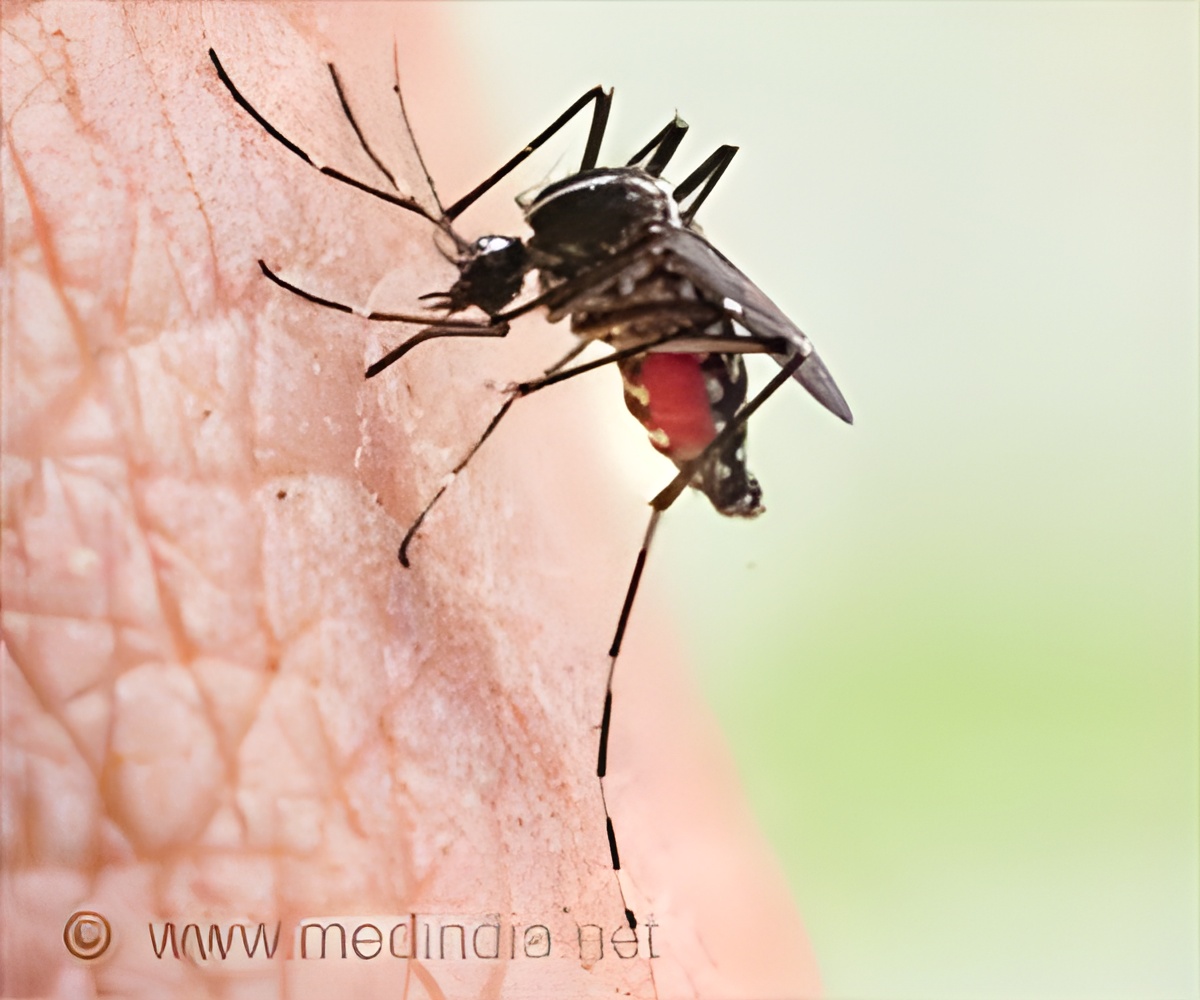
Chikungunya is a viral disease spread by mosquito bites; it causes fever, severe joint pain and rash on the body. Chikungunya occurs in Africa, Asia and the Indian sub continent.
Chikungunya is a viral disease spread by mosquito bites; it causes fever, severe joint pain and rash on the body. Chikungunya occurs in Africa, Asia and the Indian sub continent.
TOP INSIGHT

FHL1 interacts with a viral protein known as nsP3. It is when binding to this that FHL1 participates in the replication of the chikungunya virus.
FHL1 is a molecule present mainly in the muscle cells and fibroblasts, the preferred targets of the virus. Usually, FHL1 contributes to healthy muscle physiology and it is now thought to be diverted from that function by the virus to ensure its replication in the target cells.
To conduct this study, Amara's team used the CRISPR-Cas9 technology to systematically screen the genome of human cells in order to identify the host factors necessary for viral replication. In doing so, it isolated the gene coding for the FHL1 protein. The team then conducted a series of experiments showing the incapacity of the virus to infect cells whose FHL1 expression had been abolished.

Quiz on Chikungunya
Chikungunya is a viral disease transmitted by mosquito bite. Test your knowledge on Chikungunya by taking this quiz.
Chikungunya is a viral disease transmitted by mosquito bite. Test your knowledge on Chikungunya by taking this quiz.
Finally, the researchers performed in vivo experiments in mice whose Fhl1 gene was invalidated. They have shown that these animals are totally resistant to infection and do not develop the disease, whereas the virus multiplies and causes major muscle lesions in mice expressing a functional FHL1 protein. These observations demonstrate that the FHL1 protein plays a key role in chikungunya virus replication and pathogenesis.

Trapping Female Mosquitoes can Protect You From Chikungunya Virus
Trapping female mosquitoes using an Autocidal Gravid Ovitrap (AGO trap) can protect you and your family from chikungunya virus, reveals a new study.
Trapping female mosquitoes using an Autocidal Gravid Ovitrap (AGO trap) can protect you and your family from chikungunya virus, reveals a new study.
At present, only symptomatic treatments are available for patients infected with chikungunya.

Chikungunya Snapshot Aids to Design Drugs & Vaccines for Viral Arthritis
Structure of chikungunya virus promises to accelerate efforts to design drugs and vaccines to prevent or treat arthritis caused by chikungunya or related viruses.
Structure of chikungunya virus promises to accelerate efforts to design drugs and vaccines to prevent or treat arthritis caused by chikungunya or related viruses.
 Email
Email