MEDINDIA
 English
 हिन्दी
 Español
 français
 中文
中文
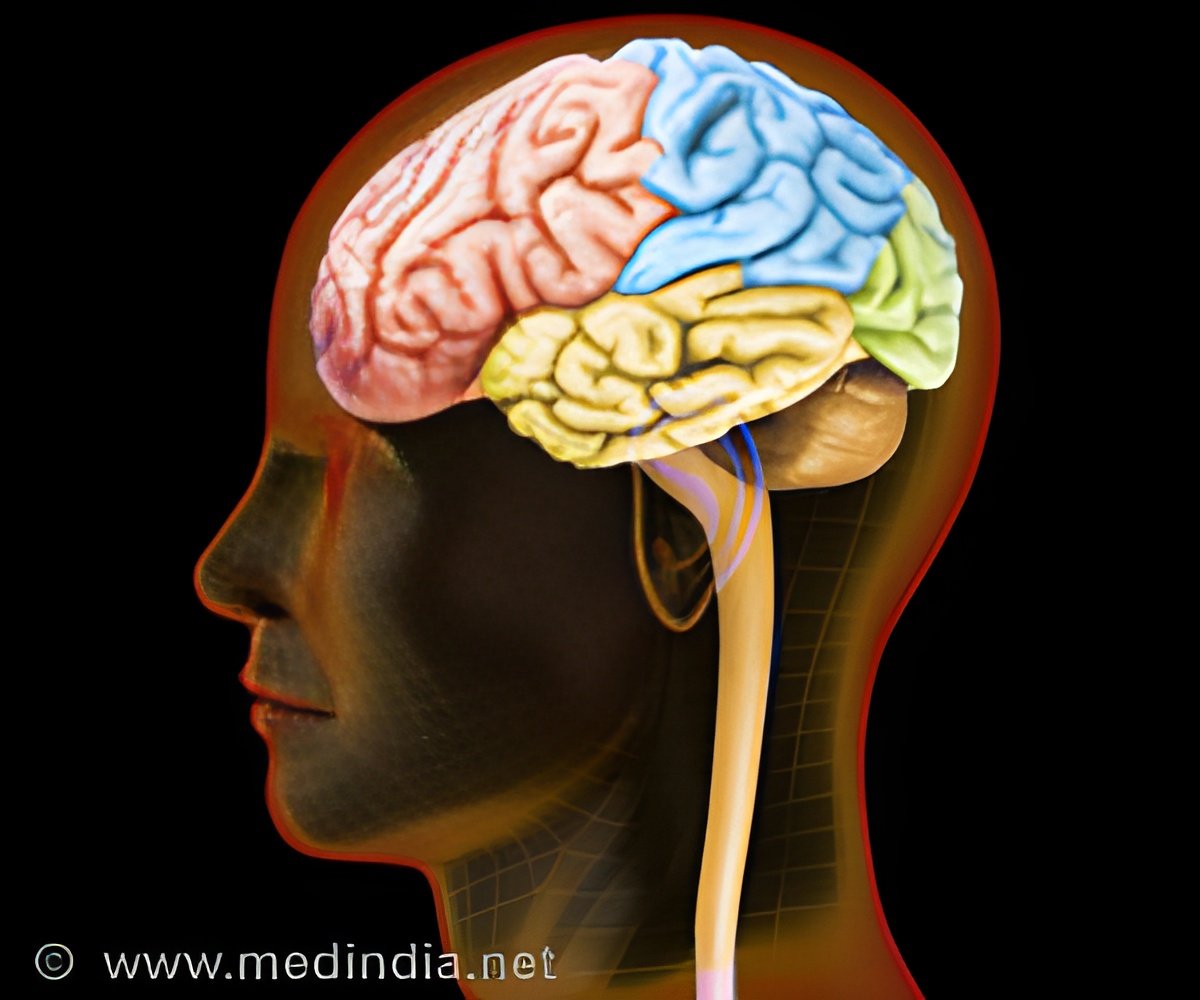
The brains of children do not get thinner as they grow, stated new study.

Multiple sclerosis - Symptoms - Causes - Diagnosis - Treatment
Multiple sclerosis can be a severely disabling autoimmune disease that affects the myelin or insulating layer of the nerve fibers and typically has remissions and relapses
Multiple sclerosis can be a severely disabling autoimmune disease that affects the myelin or insulating layer of the nerve fibers and typically has remissions and relapses
TOP INSIGHT

The brains of children likely do not thin as much as expected.
It's a fatty sheath that insulates many nerve fibers and allows faster neurotransmission. The problem is, measurements of gray matter thickness critically depend on detecting the border between white and gray matter.
As Natu and Kirilina have found out, this limit can be obscured and cortical thickness underestimated if myelination increases during development. The researchers obtained these results by examining adults and children using state-of-the-art quantitative MRI techniques. Evgeniya Kirilina, who is working in the department of Neurophysics at MPI CBS, offers a word of caution. 'The fact that the cortex thins during development is well established, even with histological methods. We are not claiming that thinning does not occur. But estimates may be off in some cases due to concurrent myelination.'

Quiz on Multiple Sclerosis
Multiple sclerosis is an autoimmune disease that affects nerves and can leave the affected patient completely disabled. Test your knowledge on this condition by taking this quiz.
Multiple sclerosis is an autoimmune disease that affects nerves and can leave the affected patient completely disabled. Test your knowledge on this condition by taking this quiz.
The face and word recognition areas showed the myelination effect described above, whereas the place recognition area showed apparent thinning but no indication of myelination. Instead, it seemed to structurally change, stretching over time. Highlighting the important link between structure and function, the differences in myelination of these functionally specialized regions were confirmed in post mortem brains of adults, using both ultra-high field MRI and histology. The implications of these new findings are quite broad. Decades of work will need to be revisited and assessed for accuracy. For example, there is a rich literature suggesting that the thickness of the cortex changes when learning new skills.

Brain Depression
Interactive section of Medindia provides information about chemistry of Brain depression
Interactive section of Medindia provides information about chemistry of Brain depression
Source-Eurekalert

New App can Assess Multiple Sclerosis Much Faster
Newly developed tablet-based app could provide faster, and more accurate assessment for patients with multiple sclerosis (MS).
Newly developed tablet-based app could provide faster, and more accurate assessment for patients with multiple sclerosis (MS).
 Email
Email