MEDINDIA
 English
 हिन्दी
 Español
 français
 中文
中文
Unusual changes in the signaling pathway associated with memory could pass this change on to some neurons related to aging, finds a new study.


Emotional Closeness and Sexual Activity in Older Adults Do Not Affect Memory Loss
Sexual activity and emotional closeness in older adults are unrelated to the rate of cognitive decline, finds a recent study.
Sexual activity and emotional closeness in older adults are unrelated to the rate of cognitive decline, finds a recent study.
TOP INSIGHT

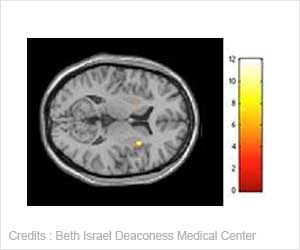
When adenosine receptor was increased in the brain cells, it was found that in these neurons, glutamate was also increased, which is considered to be a profile of early aging.
To better understand its function, the team of researchers generated an animal model that reproduces the increase of adenosine receptor in the same brain areas as those observed in patients. The team found that in these neurons, there is an increased release of glutamate, the most abundant neurotransmitter in the brain.
Using a combination of electrical records and calcium measurements it was possible to detect that under these conditions an overactivation of glutamate signaling occurs. "Just by altering the amount of the adenosine receptor in hippocampal and cortex neurons we induced a profile that we have called early aging, as it causes cognitive deficits and changes in neuronal transmission," explains Mariana Temido, the first author of the study and student of the iMM BioMed PhD programme.

Do Hearing Problems Cause Memory Loss?
People with central hearing loss were twice as likely to have mild cognitive impairment as people who had no hearing loss.
People with central hearing loss were twice as likely to have mild cognitive impairment as people who had no hearing loss.
This work opens new perspectives for the design of drugs that regulate this new aberrant signaling, namely the caffeine family that was also tested effectively in the study. In addition, it allows to create new models that are useful in the understanding of aging.
Epilepsy-associated Seizures and Memory Loss Linked to Loss of Brain Cells
A small group of cells in the brain had a big effect on seizures and memory in a mouse model of epilepsy.
A small group of cells in the brain had a big effect on seizures and memory in a mouse model of epilepsy.

Here's How Seizures Lead to Memory Loss
A new mechanism developed helps explain how seizures can lead to memory loss. The levels of deltaFosB and calbindin are essential markers of brain activity and memory function.
A new mechanism developed helps explain how seizures can lead to memory loss. The levels of deltaFosB and calbindin are essential markers of brain activity and memory function.
 Email
Email