MEDINDIA
 English
 हिन्दी
 Español
 français
 中文
中文
New strategies for pneumonia treatment can be identified by the discovery of changes in the lung cells following an infection.
Pneumonia - Causes, Symptoms, Diagnosis, Treatment, Prevention, Complications
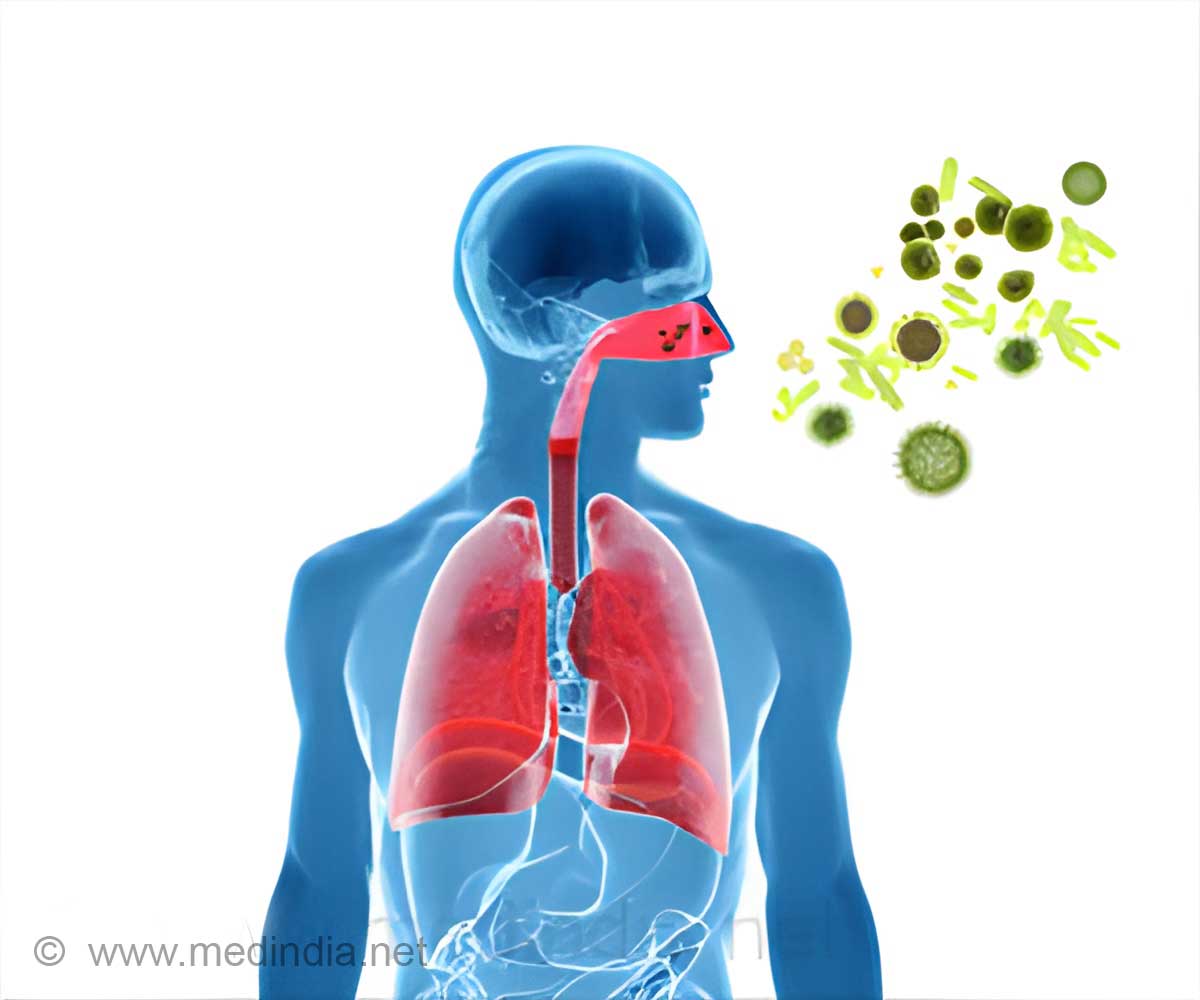
Pneumonia is a lung infection that can be caused by a bacteria or a virus. It causes inflammation of the alveoli or the air sacs of the lungs.
Pneumonia is a lung infection that can be caused by a bacteria or a virus. It causes inflammation of the alveoli or the air sacs of the lungs.
TOP INSIGHT

Changes in the lung cells following an infection could help to identify new strategies for pneumonia treatment.
The study appears in the journal Mucosal Immunology.
Worldwide, pneumonia remains a serious public health burden. Each year more than one million children under the age of five die from pneumonia and associated complications.
In the U.S., pneumonia is the most common reason for the hospitalization of children and accounts for nearly half of the infectious disease-related hospitalizations and deaths of older adults.
To model the typical experience of most children, an experimental model received a series of mild and non-life threatening respiratory infections.
Quiz on Pneumonia
Pneumonia is a serious respiratory tract infection that is often life-threatening in the elderly, children or those with reduced immunity. See how much you know about pneumonia by taking this quiz.
Pneumonia is a serious respiratory tract infection that is often life-threatening in the elderly, children or those with reduced immunity. See how much you know about pneumonia by taking this quiz.
"Our study suggests that respiratory bacterial infections during childhood establish a novel type of antibacterial immunity," explained corresponding author Joseph Mizgerd, ScD, professor of medicine, microbiology and biochemistry at Boston University School of Medicine.
Young children and older adults are highly susceptible to pneumonia, but the factors that are responsible for preventing pneumonia in young healthy adults are still not understood. "We have only modest abilities to prevent or cure many of the infections that cause pneumonia.
Defining the protective mechanisms normally preventing lung infections in most young healthy adults will lead to tests identifying who is susceptible and new approaches for preventing and treating the infections," added Mizgerd.
Source-Eurekalert
 Email
Email