MEDINDIA
 English
 हिन्दी
 Español
 français
 中文
中文
Pulmonary ionocyte: A new lung cell type has been discovered. New finding helps target the functionally relevant cells for cystic fibrosis therapies going forward.
Cystic Fibrosis - Symptoms, Causes, Diagnosis, Treatment, Support Groups
Cystic fibrosis is a genetic disease involving the mucus and sweat glands and the medical world has still to find its cure
Cystic fibrosis is a genetic disease involving the mucus and sweat glands and the medical world has still to find its cure
TOP INSIGHT

Pulmonary ionocyte: A new lung cell type has been discovered.
"We can use this information to be a bit more clever when we devise therapeutic approaches to cystic fibrosis," says Aron Jaffe, co-corresponding author and a co-leader of respiratory disease research at NIBR.
"As people work toward cures, knowing you are looking at one percent of the cell population seems essential for any type of trouble shooting to improve a therapy or develop new therapies," adds Allon Klein, co-corresponding author and assistant professor of systems biology at HMS.

Quiz on Cystic Fibrosis
How much do you know about the chronic, progressive, inherited, fatal disease called cystic fibrosis? Learn more about cystic fibrosis from this quiz.
How much do you know about the chronic, progressive, inherited, fatal disease called cystic fibrosis? Learn more about cystic fibrosis from this quiz.
"I was surprised to spot potential paths to new therapies so quickly after doing the initial experiments," says Lindsey Plasschaert, co-first author and postdoctoral researcher at NIBR.

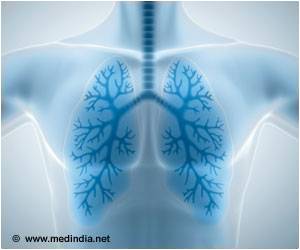
The Lungs
The lungs are our organs of respiration. It is within these, that exchange of gases takes place.
The lungs are our organs of respiration. It is within these, that exchange of gases takes place.
Technology painted the path

Antioxidant Supplements may have a Positive Impact on Cystic Fibrosis
An antioxidant-enhanced vitamin may help in reducing respiratory exacerbation in people with cystic fibrosis.
An antioxidant-enhanced vitamin may help in reducing respiratory exacerbation in people with cystic fibrosis.
The secret--and the hard part--is being able to look at the gene activity of just one cell at a time. The NIBR scientists began working with the HMS scientists in 2015, about the time the HMS scientists published a seminal paper on their single-cell RNA sequencing platform, which is called InDrops. Up to that point researchers had been able to perform single-cell analysis of genetic activity on a few cells at a time, not the thousands of cells needed for a catalogue like the one Jaffe envisioned for the airway.
InDrops allows scientists to capture individual cells in water droplets and then wrap those in oil so that the contents of the cells don't mix. In order to look at only active genes, it starts with the cell's messenger RNA. Messenger RNA delivers information encoded in the DNA to the machinery that produces proteins, and it is only made when a gene is active.
Ideally, scientists would sequence the messenger RNA to identify the source genes. But with no good method for sequencing RNA, it must be converted back into DNA. Doing this on many thousands of isolated cells would be a time consuming and expensive task, so Klein's lab figured out how to rapidly label the contents of the cell with tiny pieces of DNA that act as bar codes by isolating each cell in a tiny water droplet in oil.
"We are introducing the DNA into the droplets using squishy gels," says Klein. "Each has about a billion little tags on it, which are then used to decorate all the material from the cell, and then we can break the droplets open and the contents of each cell are now tagged with a different bar code. And we can read out the bar codes later and figure out which genetic material came from which cell."
InDrops is now commercially available, but the Novartis researchers were able to access the technology for the airway project when it had just been invented. And Klein's lab is on the cutting edge of analyzing the data that it produces. Graduate student Rapolas Zilionis, co-first author on the paper, handled this for the team along with Virginia Savova from the Klein lab.
"They analyzed the data and then fed it into an interactive viewer that allowed me to go through and look for differences in gene activity between the different cell types," Plasschaert explains.
New cell pops out
Looking at that activity was essential to the catalogue of cell types envisioned at the start of the project. The analysis revealed a couple clusters of cells that did not appear to be like anything in the scientific literature, which sent Plasschaert down a laborious journey to further characterize those cells.
In essence, she was looking at a bowl of jelly beans, and she could tell some were colors not seen before, but she had no idea what flavor they were, or for her cells, their function. The experiments she designed showed that one set resembled the ionocytes--or cells that transport ions--found in some other tissues, most commonly in fish and frogs.
In fish, ionocytes transport ions in order to maintain an equilibrium with the water that surrounds them. In a bit of an evolutionary parallel, the cells discovered by the Novartis-Harvard team--which the researchers call pulmonary ionocytes--move ions at the interface between our tissues and the air around us. After considering various ways the ionocytes could do this, Plasschaert settled on CFTR activity.
"The key finding turned out to be the high level of CFTR activity in the ionocytes and not in the ciliated cells people expected," Plasschaert says. "This will help us target the functionally relevant cells for cystic fibrosis therapies going forward."
Graduate student Zilionis says that from the beginning he was excited by the project's main goal of cataloguing the types of cells that make up our airway and was surprised that it produced a result with therapeutic potential so quickly.
"We can now design ways to isolate pulmonary ionocytes," he says. "We can get those cells in a dish and start doing things with them, looking for how they impact disease."
Source-Eurekalert
 Email
Email