MEDINDIA
 English
 हिन्दी
 Español
 français
 中文
中文
Assessing children's speech is particularly challenging because of high levels of variation even among typically developing children.


Using Sign Language may be Helpful for Kids With Speech Disorder
Very little is scientifically proven when it comes to ‘best practices’ but there is a growing body of literature that is helping to guide treatment.
Very little is scientifically proven when it comes to ‘best practices’ but there is a growing body of literature that is helping to guide treatment.
TOP INSIGHT

Early-childhood intervention for children with speech and language disorders can make a difference in their later academic and social success.
"The really exciting idea here is to be able to do screening in a fully automated way using very simplistic tools. You could imagine the storytelling task being totally done with a tablet or a phone. I think this opens up the possibility of low-cost screening for large numbers of children," said John Guttag, former Professor at the MIT.
The researchers evaluated the system's performance using a standard measure called area under the curve, which describes the tradeoff between exhaustively identifying members of a population who have a particular disorder, and limiting false positives.

Speech Disorder Apraxia May Damage Nerves in Brain
A problem with speech programming - directing the muscles and structures that move - is apraxia and is sometimes misdiagnosed as Alzheimer's disease.
A problem with speech programming - directing the muscles and structures that move - is apraxia and is sometimes misdiagnosed as Alzheimer's disease.
Unlike speech impediments, speech and language disorders both have neurological bases. But the investigators explains, they affect different neural pathways -- speech disorders affect the motor pathways, while language disorders affect the cognitive and linguistic pathways.

Learning About Human Speech Disorders from a Bird's Song
Can the song of a small bird provide valuable insights into human stuttering and speech-related disorders and conditions, including autism and stroke? New research by UCLA life scientists
Can the song of a small bird provide valuable insights into human stuttering and speech-related disorders and conditions, including autism and stroke? New research by UCLA life scientists
They identified a set of 13 acoustic features of children's speech that their machine-learning system could search, seeking patterns that correlated with particular diagnoses. These were things like the number of short and long pauses, the average length of the pauses, the variability of their length, and similar statistics on uninterrupted utterances.
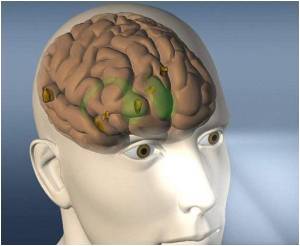
Victims of Speech Disorders are Able to Sing Songs
Victims suffering serious speech disorders are able to sing complete texts with considerable fluency.
Victims suffering serious speech disorders are able to sing complete texts with considerable fluency.
The children whose performances on the storytelling task were recorded in the data set had been classified as typically developing, as suffering from a language impairment, or as suffering from a speech impairment.
Source-IANS
 Email
Email