MEDINDIA
 English
 हिन्दी
 Español
 français
 中文
中文
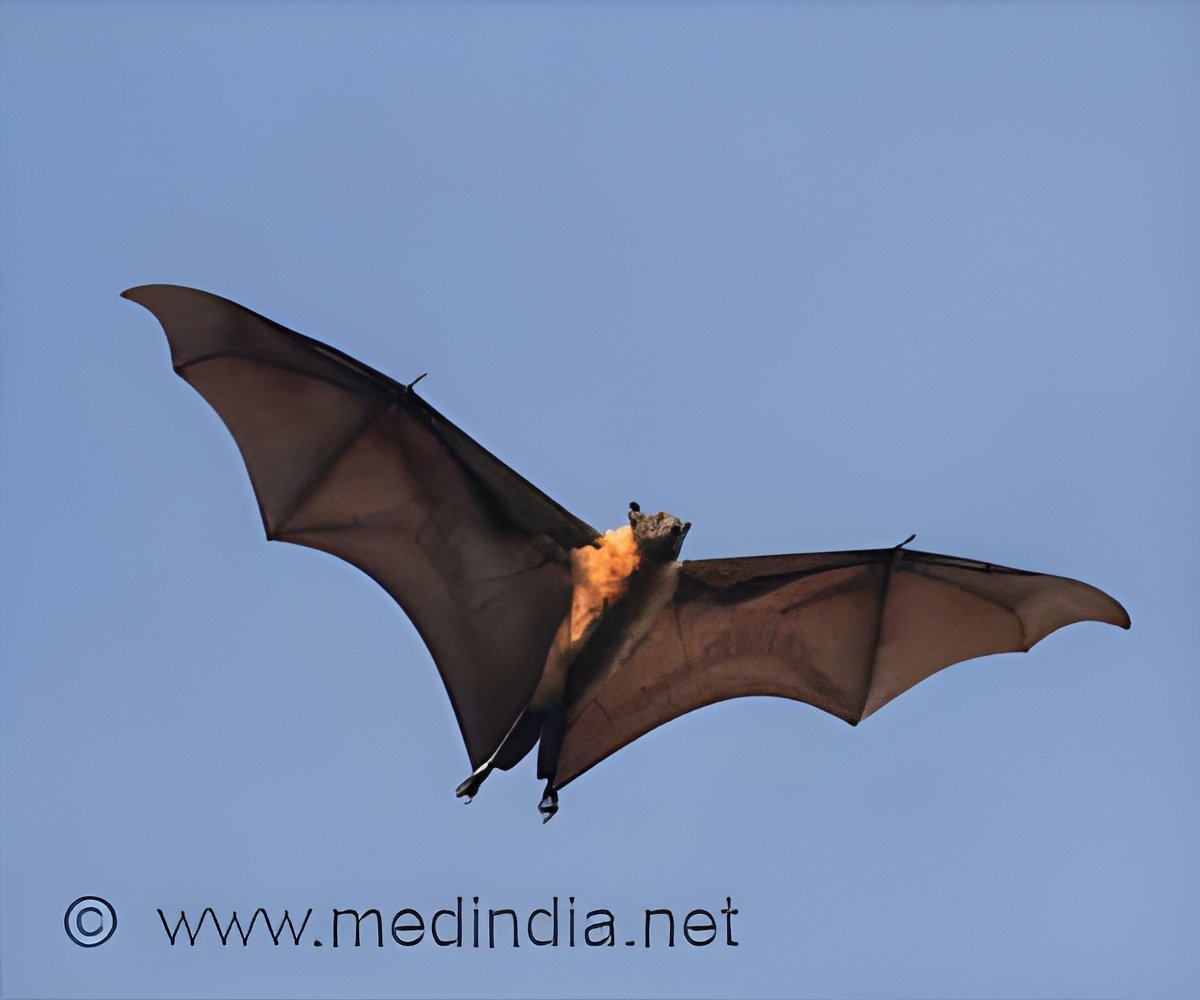
Learn about the potential of a new, deadly bat virus discovered in Thailand that could infect people akin to COVID.
EcoHealth Alliance Receives NIH Renewal Grant for Collaborative Research to Understand the Risk of Bat Coronavirus Spillover Emergence
Go to source).
New Virus Risk of Bat-To-Human Spread Raise Pandemic Concern
Dr Peter Daszak, head of the New York-based non-profit EcoHealth Alliance, reported the discovery of a never-before-seen virus with 'almost' as much potential to infect humans as COVID. EcoHealth has been linked with controversial experiments in Wuhan which some fear started the pandemic. "We found a lot of SARS-related coronaviruses, but one in particular we found was quite common in bats where people were commonly exposed," Daszak, a zoologist, said while describing his findings in bats at an event held by the World Health Organisation (WHO) on future pandemic research preparedness.
Test your Knowledge on Coronavirus (COVID-19)
Coronavirus is a large positive-strand RNA virus that is surrounded by a protein envelope. The virus obtains its name from the S protein spikes on its surface, which resemble a crown. The overall pattern of increasing coronavirus cases is shown to ...
Coronavirus is a large positive-strand RNA virus that is surrounded by a protein envelope. The virus obtains its name from the S protein spikes on its surface, which resemble a crown. The overall pattern of increasing coronavirus cases is shown to ...
TOP INSIGHT

The unidentified new bat virus was discovered in a cave in Thailand, where farmers source bat feces as fertilizer for their crops. #batvirus #humanspread #pandemic #medindia
"We consider this to be a potential zoonotic pathogen. Here we have a virus in bats, right now in a cave used by people highly exposed to bat feces,” Daszak said. "And this virus is shed in bat feces, so there is a real potential for emergence."
The findings come as the WHO reported a surge in coronavirus globally, with hospitalizations jumping 42 percent across 50 countries. The fresh surge in cases, majorly driven by the highly transmissible JN.1 variant, has also brought in mask mandates in several US states. JN.1, classified as a variant of interest (VOI) by the WHO is becoming the dominant variant globally, causing spikes in infections, hospitalizations as well as deaths in some countries.
Novel Bat Influenza Viruses Could Present a Threat to Humans
Bats don't only carry the fatal Ebola virus, but also is a reservoir for a new type of influenza virus which could possibly attack the cells of humans and livestock.
Bats don't only carry the fatal Ebola virus, but also is a reservoir for a new type of influenza virus which could possibly attack the cells of humans and livestock.
However, it added that "it is too early to know whether or to what extent JN.1 will cause an increase in infections or hospitalizations". As per the CDC, existing vaccines, tests, and treatments work against JN.1.

Coronavirus
Coronaviruses infect animals, humans, and birds. Human coronaviruses, such as SARS, MERS, and 2019-nCoV cause respiratory distress and even death. The S protein is the infectious agent of the virus.
Coronaviruses infect animals, humans, and birds. Human coronaviruses, such as SARS, MERS, and 2019-nCoV cause respiratory distress and even death. The S protein is the infectious agent of the virus.
- EcoHealth Alliance Receives NIH Renewal Grant for Collaborative Research to Understand the Risk of Bat Coronavirus Spillover Emergence - (https://www.ecohealthalliance.org/2023/05/collaborative-research-to-understand-the-risk-of-bat-coronavirus-spillover-emergence)

India Records First COVID-19 JN. 1 Variant in Kerala
A 79-year-old lady in Kerala becomes the first recorded victim of the new COVID-19 JN. 1 variant, which resembles the Omicron variant.
A 79-year-old lady in Kerala becomes the first recorded victim of the new COVID-19 JN. 1 variant, which resembles the Omicron variant.
 Email
Email