MEDINDIA
 English
 हिन्दी
 Español
 français
 中文
中文
A new assay, anchored multiplex PCR (AMP)-based targeted next-generation-sequencing (NGS), with superior diagnostic utility to detect genetic abnormalities in sarcomas.

Ewing Sarcoma - Causes, Symptoms, Diagnosis, Prognosis & Treatment
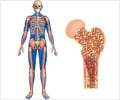
Ewing sarcoma is a primary tumor of small round cells that affects bones and soft tissues. It affects adolescents and young adults between 10 and 30 years of age.
Ewing sarcoma is a primary tumor of small round cells that affects bones and soft tissues. It affects adolescents and young adults between 10 and 30 years of age.
TOP INSIGHT

A new assay, anchored multiplex PCR (AMP)-based targeted next-generation-sequencing (NGS), with superior diagnostic utility to detect genetic abnormalities in sarcomas.
To validate the utility of this novel test, investigators analyzed 81 samples using the new AMP technique, for NGS using the Archer® FusionPlex® Sarcoma Kit. They then compared the results to those of more conventional methods, such as fluorescence in situ hybridization (FISH) and reverse-transcriptase PCR.
The goal of these techniques is to identify specific genetic abnormalities in which regions of genetic material are rearranged (translocated), which can help in diagnosis. "Both FISH and reverse transcription-PCR are accompanied by challenges in routine application. Due to these limitations, the need for novel methods for fusion detection has grown significantly as more and more recurrent translocations are revealed with the advance of NGS," noted co-author Suk Wai Lam, MD, of the Department of Pathology of Leiden University Medical Center, Leiden, The Netherlands.
Liposarcoma - Types, Risk Factors, Diagnosis & Management
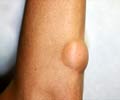
Liposarcoma is a cancer of the fat cells in the body. It can occur anywhere in the body but most commonly affects the limbs, abdomen and groin region.
Liposarcoma is a cancer of the fat cells in the body. It can occur anywhere in the body but most commonly affects the limbs, abdomen and groin region.
In four cases, conventional methods missed the translocation (three with FISH and one with reverse transcription-PCR). This problem may occur more frequently in Ewing sarcoma, in which the primer used by reverse transcription-PCR is focused on the most common fusion type and may miss less common alternatives. In another case of Ewing sarcoma, the presence of complex rearrangements went beyond the capabilities of FISH, whereas NGS produced definitive results.

Test Your Knowledge on Sarcoma
Sarcoma is a type of cancer that may arise from several soft-tissues as well as bone. As for other cancers, the treatment of the early stages is associated with better outcomes. Test your knowledge on sarcomas by taking this quiz.
Sarcoma is a type of cancer that may arise from several soft-tissues as well as bone. As for other cancers, the treatment of the early stages is associated with better outcomes. Test your knowledge on sarcomas by taking this quiz.
The new assay also offers other distinct advantages. Its high sensitivity allows it to pick up the presence of a translocation in small samples, and it can be used for analysis of formalin-fixed, paraffin-embedded material as well as fresh frozen tissue. Nevertheless, the study showed a failure rate of 14 percent for AMP-based targeted NGS. "None of the molecular assays used in the current study was able to provide a hundred percent of certainty with respect to false-positive and false-negative results," stated Dr. Lam. "However, we believe this novel test will assist the pathologist in establishing the correct diagnosis in the complex world of sarcomas."

New Therapeutic Target for Ewing Sarcoma Identified
Correlation of EphA2 membrane receptor with the metastatic capacity of tumors in Ewing sarcoma.
Correlation of EphA2 membrane receptor with the metastatic capacity of tumors in Ewing sarcoma.
 Email
Email