MEDINDIA
 English
 हिन्दी
 Español
 français
 中文
中文
Are you suffering from high blood pressure (hypertension)? Molecular channel that controls blood pressure has been identified. Discovery of this three-dimensional structure of a membrane channel can pave the way for developing new and better treatments to fight blood pressure.


TOP INSIGHT

Using a cryo-electron microscope, scientists have generated a three-dimensional model of the human epithelial sodium channel. This discovery may pave the way for developing new and better treatments and medications to control blood pressure.
"It's definitely going to move the field forward," Baconguis agreed.
The channel enables sodium ions to be absorbed into tissues throughout the body, including the kidney. As such, it is a crucial aspect of human health by regulating sodium balance, blood volume and blood pressure.
High Blood Pressure | Hypertension - Causes, Symptoms, Diagnosis & Treatment
High blood pressure or hypertension is a chronic condition, which usually lasts a lifetime once it is developed.
High blood pressure or hypertension is a chronic condition, which usually lasts a lifetime once it is developed.
Dysfunction of the epithelial sodium channel, or ENaC, can lead to severe forms of hypertension such as Liddle syndrome or neonatal salt-wasting disorder. The discovery answers fundamental biophysical questions about the specific architecture of the channel, which ultimately could lead to the development of medications to improve the treatment of diseases such as severe hypertension, heart failure and nephrotic syndrome.
Combination Therapy for High Blood Pressure - Monotherapy - Options - Reference
Anti-hypertensive agents are still the treatment drugs for hypertension but recent advances indicate that combination therapy may be a more effective form of treatment.
Anti-hypertensive agents are still the treatment drugs for hypertension but recent advances indicate that combination therapy may be a more effective form of treatment.
Noreng noted the discovery may be especially helpful in developing targeted medications to control high blood pressure.
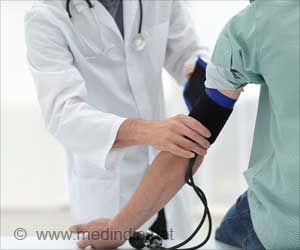
High Blood Pressure Guideline Lowers Definition of Hypertension
Stage 1 hypertension or blood pressure threshold has been lowered from 140/80 mmHg to 130/80 mmHg in the new set of guidelines
Stage 1 hypertension or blood pressure threshold has been lowered from 140/80 mmHg to 130/80 mmHg in the new set of guidelines
The researchers made the discovery through the use of a cryo-electron microscope housed in OHSU's Robertson Life Sciences Building. Cryo-EM technology is part of a newly designated national center intended to widen the use of a technique that is revolutionizing structural biology. The technique enables scientists to visualize biological molecules at an atomic scale and to see them in their natural state.
Source-Eurekalert
 Email
Email