MEDINDIA
 English
 हिन्दी
 Español
 français
 中文
中文

Shift workers are more likely to develop kidney stones, with lifestyle factors like sleep, hydration, and body weight partially explaining this increased risk.
Highlights:
Shift workers are at a 15 percent higher risk of developing kidney stones, with younger individuals and those performing minimal manual labor being especially vulnerable (1✔ ✔Trusted Source- Shift workers have a 15 percent higher risk of developing kidney stones
- Night shift work disrupts circadian rhythms contributing to kidney stone formation
- Promoting healthy lifestyle habits may reduce kidney stone risk among shift workers
Lifestyle Factors in the Association of Shift Work With Kidney Stone Events
Go to source). Key contributors to this increased risk include body mass index, hydration habits, and other lifestyle factors.
These findings, published in Mayo Clinic Proceedings by Elsevier, emphasize the importance of including shift workers in kidney stone prevention strategies.
Defined as non-traditional work hours, long-term shift work, particularly at night, can disrupt the body's natural circadian rhythm, negatively affect metabolic and hormonal processes, alter lifestyle patterns, and lead to a range of health problems.
Existing evidence links shift work with higher risks for chronic conditions like heart disease, metabolic syndrome, and mental health disorders. Yet, little focus has previously been placed on its connection to kidney stone formation.
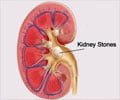
Kidney Stones / Renal Stones - Causes - Symptoms - Diagnosis - Treatment - FAQs
A kidney stone is a solid mass made up of tiny crystals and may appear in any area of the urinary system.
A kidney stone is a solid mass made up of tiny crystals and may appear in any area of the urinary system.
TOP INSIGHT

Did You Know?
Shift workers face a 15 percent higher chance of developing kidney stones, and those working #nightshifts are at the greatest risk due to disrupted #biologicalclocks. #kidneystones #shiftwork #medindia
Analysis Connects Work Schedules with Kidney Stones
Using data from more than 220,000 individuals in the UK Biobank Study, researchers explored how different shift work patterns, based on type, frequency, and duration, relate to the development of kidney stones over a median follow-up period of 13.7 years. Mediation analyses were also carried out to understand whether lifestyle behaviors could account for these findings.Yin Yang, Ph.D., lead author of the study “Lifestyle Factors in the Association of Shift Work with Kidney Stone Events” and a researcher from the Department of Epidemiology at Sun Yat-sen University in Guangzhou, China, stated that this is the first population-based cohort analysis to fully assess how shift work affects kidney stone risk. The association was found to be partially driven by factors such as smoking, poor sleep, low fluid intake, and high body mass index.
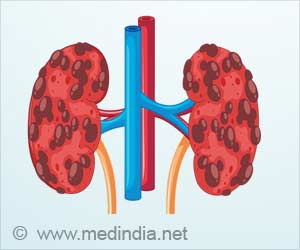
Kidney Disease Epidemic Linked to Occupational Heat Exposure
Chronic kidney disease, common in agricultural workers in El Salvador and Nicaragua, was also found in 12 percent of sample of brick makers.
Chronic kidney disease, common in agricultural workers in El Salvador and Nicaragua, was also found in 12 percent of sample of brick makers.
Unexpected Trend in Long-Term Shift Workers
Interestingly, participants who had been engaged in shift work for longer periods showed a slightly reduced risk of kidney stone formation. This may reflect a "healthy worker effect," suggesting that some workers may adapt over time, although more research is needed to confirm this possibility.Kidney stone disease is common and preventable, with prevalence estimates ranging from 1 to 13 percent globally. It is linked to serious complications including heart disease, chronic kidney disease, and renal failure, which collectively pose a major long-term health burden. Contributing factors include genetic predisposition, diet, physical activity levels, body weight, and various lifestyle habits.
Exercise Improves Health in Patients With Kidney Disease
Study becomes the first to report on the optimal amount of physical activity in patients with kidney disease.
Study becomes the first to report on the optimal amount of physical activity in patients with kidney disease.
Night Shift Work Disrupts Biological Clocks
Felix Knauf, M.D., from the Division of Nephrology and Hypertension at Mayo Clinic and author of the related editorial “Shift Work and the Risk of Kidney Stones,” emphasized that kidney stones can be silent or trigger severe pain requiring hospitalization. He highlighted that the risk is highest for individuals on night shifts.Dr. Knauf explained that one of the main physiological consequences of shift work is the disruption of circadian rhythms. These rhythms regulate numerous bodily functions, including fluid balance and solute regulation, which are key to kidney stone formation.
Thus, disrupted biological clocks from night shifts may directly contribute to the development of kidney stones. He stressed the importance of initiatives aimed at reducing such risks, including more flexible work hours.

How to Productively Work Night Shifts and Sleep During the Day?
What happens to the health of the shift workers when they stay awake at night and sleep during the day? Read more to find out.
What happens to the health of the shift workers when they stay awake at night and sleep during the day? Read more to find out.
Promoting Healthier Habits to Reduce Risk
Dr. Yang emphasized that their findings highlight a global priority to address how shift work affects urological health. Encouraging better health habits among shift workers, such as weight management, increased fluid consumption, proper sleep, physical activity, and quitting smoking could have significant benefits for kidney health. Integrating these into workplace health programs could help mitigate the negative health impacts associated with shift work.To sum up, shift work, particularly night shifts increases the risk of kidney stone development, primarily through disruptions in circadian rhythm and unhealthy lifestyle habits. Encouraging better health behaviors and considering more flexible work arrangements may help reduce this risk and improve the long-term well-being of shift workers.
Reference:
- Lifestyle Factors in the Association of Shift Work With Kidney Stone Events - (https://www.mayoclinicproceedings.org/article/S0025-6196(25)00222-8/fulltext)
Source-Medindia
 Email
Email