MEDINDIA
 English
 हिन्दी
 Español
 français
 中文
中文
Among children in African countries egg powder has the great potential to improve the nutritional situation.
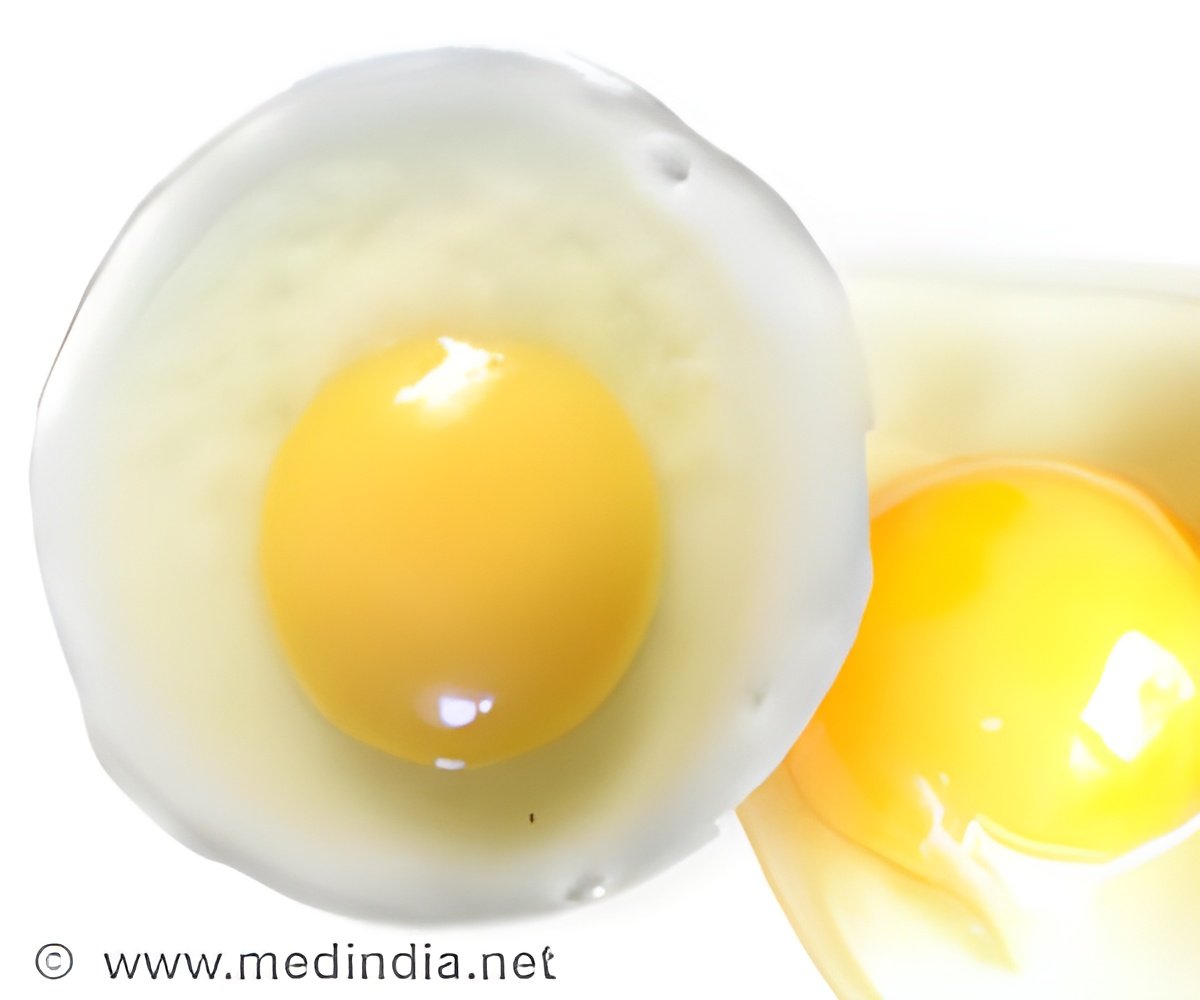

Top Ten Incredible Benefits of Eggs
Top ten incredible reasons why eating eggs can make you healthier and brainier. Eggs are powerhouse of nutrients packed with proteins, essential vitamins and minerals.
Top ten incredible reasons why eating eggs can make you healthier and brainier. Eggs are powerhouse of nutrients packed with proteins, essential vitamins and minerals.
TOP INSIGHT

A daily intake of egg powder equivalent to one medium-sized egg is sufficient to cover 24 percent of a child's daily requirement for vitamin A, 100 percent for vitamin E, 61 percent for selenium and 22 percent for zinc, depending on age.
Egg Powder a Low-Cost Alternative?
In areas where malnutrition is part of everyday life, however, eggs are hardly available. Inexpensive egg powder could therefore be an alternative. Due to its minimal water content, it has a significantly longer shelf life as well as a relatively high nutrient density. In addition, it is easier to store and transport than eggs, and it can be easily added to food. This makes it interesting as a potential dietary supplement.However, despite its widespread industrial use, little has been known about its nutritional quality. To fill this knowledge gap, the team led by Veronika Somoza conducted an extensive comparative study. Using state-of-the-art food chemistry analysis methods, the scientists determined the nutrient profiles of three batches each of industrially produced, pasteurized whole egg and egg powder processed from it and compared them on a dry matter basis.
Egg Powder not Contaminated by Heavy Metals
"As our analyses showed, the drying process did not lead to an accumulation of the heavy metals cadmium, lead, arsenic and mercury," reports Philip Pirkwieser, PhD chemist at LSB and lead author of the study. In addition, the research team observed little or no loss in total fat content, essential amino acid content, important trace elements or carotenoids. Likewise, vitamin E (alpha- and gamma-tocopherol) and vitamin B12 concentrations remained nearly constant. However, vitamin A (retinol) levels decreased by 14 percent. The amount of vital omega-6 and omega-3 fatty acids even decreased significantly by an average of 39 and 61 percent, respectively."Despite the small loss of retinol, egg powder is a valuable source of vitamin A. Sub-Saharan African regions in particular could benefit from this. This is because vitamin A deficiency is widespread there and leads to a high prevalence of vision problems," explains Veronika Somoza. If it were possible to increase the content of essential fatty acids and vitamin A, the great potential of egg powder as a food supplement could be fully exploited, the LSB director continues. One way to achieve this could be through chicken feed enriched with these fatty acids and vitamins.

Egg Whites: A Wonder Food for Maintaining Beauty and Optimal Health
Egg whites are replete with essential nutrients beneficial for enhancing innate beauty and maintaining optimal health.
Egg whites are replete with essential nutrients beneficial for enhancing innate beauty and maintaining optimal health.

Let Children Eat More Eggs To Avoid Egg Allergy Later
A new study presented at the American College of Allergy suggested that children should be introduced to eggs at an early age to decrease egg allergy.
A new study presented at the American College of Allergy suggested that children should be introduced to eggs at an early age to decrease egg allergy.
Safe and Cheap Technology of Disinfection of the Packed Eggs
A safe, inexpensive, and reliable packed eggs surface disinfection technology has been discovered by Russian researchers.
A safe, inexpensive, and reliable packed eggs surface disinfection technology has been discovered by Russian researchers.
 Email
Email