MEDINDIA
 English
 हिन्दी
 Español
 français
 中文
中文
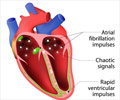
Atrial fibrillation affects millions of people worldwide. In high-risk patients, the detection rate of atrial fibrillation lasting six or more minutes at 18 months was 29%.
In United States Costs Soar For Atrial Fibrillation Hospitalizations
Research reveals that U.S. hospitalizations and costs of care for atrial fibrillation nearly doubled from 1998 to 2010.
Research reveals that U.S. hospitalizations and costs of care for atrial fibrillation nearly doubled from 1998 to 2010.
TOP INSIGHT

The patients at high risk of both atrial fibrillation and stroke had non-specific symptoms such as fatigue, breathing difficulties, and palpitation.
The patients were at high risk of both AF and stroke; approximately 90 percent had non-specific symptoms potentially compatible with AF, such as fatigue, breathing difficulties, and/or palpitations, and had either three or more of heart failure, hypertension, age 75 or older, diabetes, prior stroke or transient ischemic attack (TIA), or two of the former plus at least one of the following additional AF risk factors: coronary artery disease, renal impairment, sleep apnea, or chronic obstructive pulmonary disease. Patients underwent monitoring for 18 to 30 months.
The researchers found that the detection rate of AF lasting six or more minutes at 18 months was 29 percent. Detection rates at 30 days and 6, 12, 24, and 30 months were 6 percent, 20 percent, 27 percent, 34 percent, and 40 percent, respectively. Median time from device insertion to first AF episode detection was 123 days. Of patients with AF lasting six or more minutes at 18 months, 10 percent had one or more episodes lasting 24 hours or longer, and oral anticoagulation therapy was prescribed for 72 patients (56 percent).
New Guidelines on Atrial Fibrillation Launched
Atrial fibrillation is associated with a 1.5-2 fold increased the risk of death. By 2030,14-17 million cases of atrial fibrillation will be reported in Europe.
Atrial fibrillation is associated with a 1.5-2 fold increased the risk of death. By 2030,14-17 million cases of atrial fibrillation will be reported in Europe.
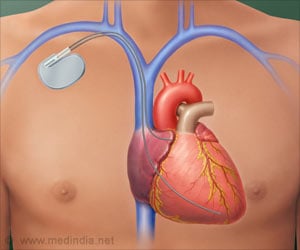
Pacemaker-Checks are Good to Identify Atrial Fibrillation and Ward Off Stroke
One-third of people with atrial fibrillation do not know they have it so we need to use all of the tools available to recognize it.
One-third of people with atrial fibrillation do not know they have it so we need to use all of the tools available to recognize it.

Atrial Fibrillation Linked to Memory Problems
People suffering from atrial fibrillation are more likely to fall prey to memory and thinking problems, a new study suggests
People suffering from atrial fibrillation are more likely to fall prey to memory and thinking problems, a new study suggests
 Email
Email