MEDINDIA
 English
 हिन्दी
 Español
 français
 中文
中文
Loss of skin and hair color can be corrected by reversing oxidative stress with PC-KUS, a pseudocatalase, according to a team of European researchers.

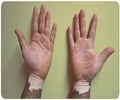
Vitiligo-Symptoms-Diagnosis-Treatment-Research-Lifestyle
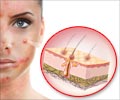
Vitiligo is a skin disease characterized by patches of unpigmented skin. Vitiligo is usually slowly progressive. Melanin is either destroyed or not produced.
Vitiligo is a skin disease characterized by patches of unpigmented skin. Vitiligo is usually slowly progressive. Melanin is either destroyed or not produced.
‘To date, it is beyond any doubt that the sudden loss of the inherited skin and localized hair color can affect those individuals in many fundamental ways,’ said Schallreuter, the lead researcher of the study. ‘The improvement of quality of life after total and even partial successful repigmentation has been documented.’
This study analyzed the effects of the medication on an international group of 2,411 patients with vitiligo, where 2.4 percent were diagnosed with strictly segmental vitiligo (SSV), and 3.2 percent were diagnosed with mixed vitiligo (SSV plus non-segmental vitiligo NSV).

Olive Oil and Its Benefits
The anti-oxidants in Olive oil prevent free radical damage to the body and help maintain healthy skin and hair.
The anti-oxidants in Olive oil prevent free radical damage to the body and help maintain healthy skin and hair.
Segmental vitiligo, on the other hand, is rare, non-symmetrical, and usually tends to affect dorsal roots of the spine. It is more stable, less erratic, and responds well to topical treatments.
Hair Loss in Women
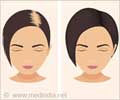
Hair loss or Alopecia can be emotionally devastating to women but understanding reasons behind hair loss can help in prevention and treatment of hair loss.
Hair loss or Alopecia can be emotionally devastating to women but understanding reasons behind hair loss can help in prevention and treatment of hair loss.
The researchers treated the patients with PC-KUS (a modified pseudocatalase) and found that the treatment led to successful re-pigmentation in their skin and eyelashes, that is, the original color was restored.
This study is a follow up on a 2009 study published in the journal FASEB which described the cause of age-related graying of hair. According to the study findings, low levels of enzyme that breaks up hydrogen peroxide into water and oxygen (catalase) cause the build up of hydrogen peroxide. These hair follicles also have low levels of enzymes MSR A and B, which are used to repair the damage. Further complicating matters, the high levels of hydrogen peroxide and low levels of these enzymes, disrupt the formation of an enzyme tyrosinase (which produces melanin in hair follicles), thus causing graying of hair.
References:
http://www.fasebj.org/content/early/2013/04/29/fj.12-226779.abstract
http://www.eurekalert.org/pub_releases/2013-05/foas-gha050313.php
Source-Medindia
 Email
Email