MEDINDIA
 English
 हिन्दी
 Español
 français
 中文
中文
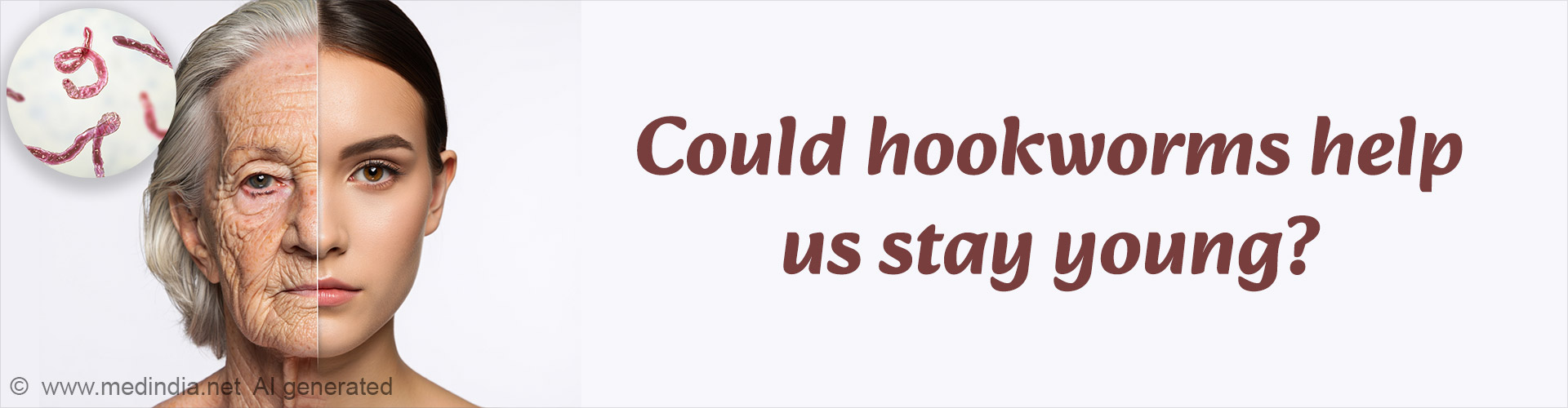
A new study of Amazonian forager-horticulturalists suggests aging does not always bring chronic inflammation. Researchers say proteins from hookworms could inspire new drugs to fight inflammaging.
Highlights:
It’s long been assumed that inflammation naturally rises as we age, a phenomenon so common it has its own name: inflammaging. However, new research suggests that this might not be a universal rule (1✔ ✔Trusted Source- Amazonian tribes show almost no age-related inflammation, challenging what we know about aging
- Hookworm proteins may one day be turned into drugs to fight chronic inflammation and age-related diseases
- Lifestyle, diet, and environmental factors still play a significant role in healthy aging
Inflammaging is minimal among forager-horticulturalists in the Bolivian Amazon
Go to source). Scientists from Arizona State University studied two Indigenous communities in the Bolivian Amazon – the Tsimane and the Moseten – to see how age affects their immune systems. The results, published in Proceedings of the Royal Society B, showed something remarkable: older Tsimane adults had minimal increases in inflammation compared to aging adults in industrialized countries.
"To see if they develop inflammaging, we measured a collection of cytokines in a sample of older Tsimane adults to see if they increase with age – we found minimal increases with age," said Jacob Aronoff, lead author and postdoctoral research scholar at ASU.

The Interplay between Inflammaging and Nutrition
Inflammaging and nutrition have gained attention from health watchers. Good nutrition containing sufficient nutrients that supports counteracting inflammaging.
Inflammaging and nutrition have gained attention from health watchers. Good nutrition containing sufficient nutrients that supports counteracting inflammaging.
TOP INSIGHT

Did You Know?
From parasites to potential cures - scientists may turn hookworm proteins into medicines that slow down aging and inflammation. #healthyaging #inflammation #hookwormresearch #antiinflammatory #ageingscience #immunehealth
Modernization May Make It Worse
The team also examined the Moseten, a genetically similar group that has adopted some modern amenities like electricity and running water. Surprisingly, they showed more signs of inflammaging than the Tsimane."We measured them together in the same lab, using the same technology, and we found clearly more pronounced inflammaging in the Moseten, suggesting that inflammaging – to a large extent – is a product of industrialized lifestyles," Aronoff explained.
The finding suggests that aging and inflammation are heavily influenced by lifestyle, environment, and possibly exposure to microbes and parasites, rather than being purely genetic or inevitable.
The Interplay between Inflammaging and Nutrition
Inflammaging and nutrition have gained attention from health watchers. Good nutrition containing sufficient nutrients that supports counteracting inflammaging.
Inflammaging and nutrition have gained attention from health watchers. Good nutrition containing sufficient nutrients that supports counteracting inflammaging.
Parasites as Medicine?
The researchers believe higher exposure to natural pathogens and parasites may help keep the immune system balanced. Among these, hookworms caught their attention."Instead of, say people getting infected with hookworm, we could figure out what are the proteins on the surface of hookworm cells – and what if we could turn that into a drug that people could take and trick our immune system," said Benjamin Trumble, senior author and ASU professor.
This could open an entirely new way to treat age-related inflammation – by mimicking the effects of parasites without infection, much like how vaccines work for viruses.

Links Between Immunity, Aging, and Neurodegeneration Explored
A key element in the aging process is characterized by mild inflammation, which contributes to the decline and impairment associated with aging.
A key element in the aging process is characterized by mild inflammation, which contributes to the decline and impairment associated with aging.
Why It Matters
Chronic inflammation drives many age-related illnesses, from heart disease and diabetes to Alzheimer’s. Finding ways to control or reduce this inflammation could mean healthier, more active years for older adults.However, experts warn there is no single solution. Diet, exercise, and environment are still critical. Future studies will focus on how lifestyle factors and controlled immune stimulation can work together.
"For 99% of human history we were physically active hunter gatherers. Now with sedentary urban life we are basically operating outside the 'manufacturer's recommended warranty'," said Trumble.

Anti-aging Secrets to a Younger You-Wrinkles Creams-Super Foods-Simple Tips-FAQs
Is there anyone in this world who fails to be swayed by the magic of youth? None, for when youth explodes joyously all Nature smiles!
Is there anyone in this world who fails to be swayed by the magic of youth? None, for when youth explodes joyously all Nature smiles!
The Takeaway
The key to slowing down aging might not be found in high-tech labs, but in lessons from the world’s most traditional communities – and maybe even in a worm.Reference:
- Inflammaging is minimal among forager-horticulturalists in the Bolivian Amazon - (https://royalsocietypublishing.org/doi/10.1098/rspb.2025.1111)
Source-Medindia
 Email
Email