MEDINDIA
 English
 हिन्दी
 Español
 français
 中文
中文
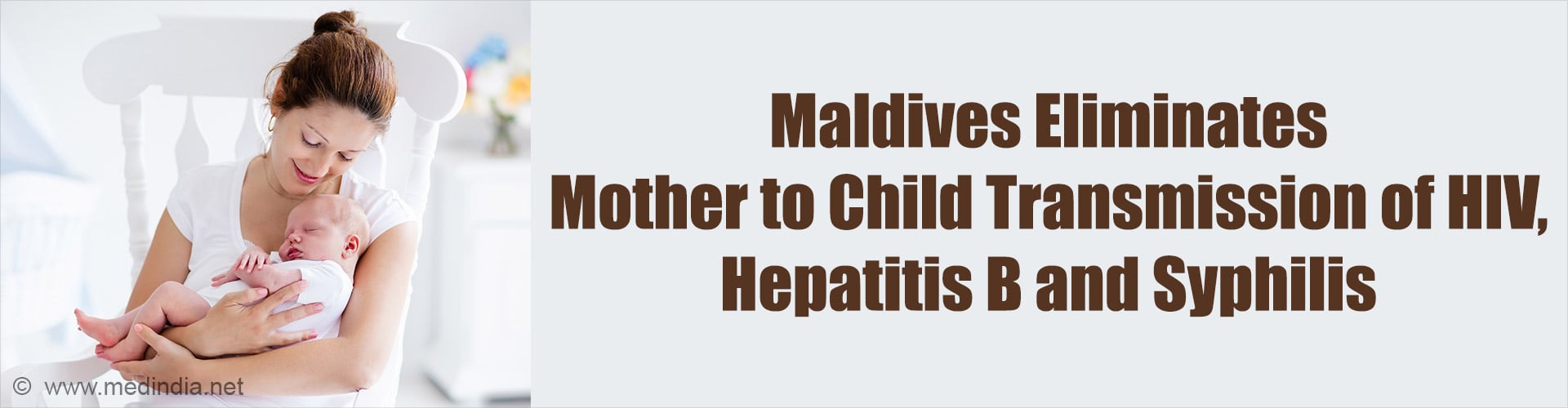
Maldives becomes the first country to achieve the elimination of mother-to-child transmission of HIV, hepatitis B, and syphilis, marking a global public health milestone.
Highlights:
The Maldives has become the first country globally to be validated for eliminating mother-to-child transmission of hepatitis B, HIV, and syphilis, a groundbreaking public health accomplishment confirmed by the World Health Organization (1✔ ✔Trusted Source- Maldives becomes the first country to achieve triple elimination of HIV, hepatitis B, and syphilis from mother to child transmission
- Over 95 percent of newborns in Maldives receive timely hepatitis B vaccination and full immunization
- Universal health coverage and strong partnerships drive Maldives’ historic public health success
Maldives becomes the first country to achieve 'triple elimination' of mother-to-child transmission of HIV, syphilis and hepatitis B
Go to source). This milestone adds to the nation’s earlier validation in 2019 for eliminating HIV and syphilis transmission, marking a historic ‘triple elimination’.
Dr. Tedros Adhanom Ghebreyesus, Director-General of the World Health Organization, emphasized that the Maldives has demonstrated how determined political leadership and continuous investment in maternal and child healthcare can make elimination of these life-threatening diseases a reality. He called this milestone a beacon of hope for other countries striving for similar goals.
AIDS Distribution Pattern
Epidemiologic studies indicate three broad yet distinct geographic patterns of transmission
Epidemiologic studies indicate three broad yet distinct geographic patterns of transmission
TOP INSIGHT

Did You Know?
Zero babies were born with #HIV or #syphilis in Maldives in both 2022 and 2023, and a national survey in 2023 confirmed no #hepatitis B among young children.
#maldives #AIDS #maternalhealth #medindia
Burden of Transmission and Regional Estimates
Mother-to-child transmission continues to cause widespread infections worldwide. In the World Health Organization South-East Asia Region, preliminary data for 2024 revealed that over 23,000 pregnant women had syphilis, leading to more than 8,000 infants born with congenital syphilis.Additionally, around 25,000 pregnant women living with HIV needed interventions to prevent vertical transmission. Hepatitis B remains a critical concern, impacting over 42 million individuals across the region.
Dr. Catharina Boehme, Officer-in-Charge at the WHO South-East Asia Regional Office, praised the Maldives’ unwavering efforts toward universal health coverage. She highlighted the nation’s commitment to ensuring high-quality, equitable care across its dispersed islands, benefiting all, including migrant populations. She commended the achievement as a crucial step toward enhancing maternal and newborn health and preventing avoidable deaths.

Novel Therapy Prevents HIV Mother-To-Child Transmission
HIV positive mothers receiving highly active antiretroviral therapy (HAART) while breastfeeding are less likely to transmit the virus to their kids, shows a new study.
HIV positive mothers receiving highly active antiretroviral therapy (HAART) while breastfeeding are less likely to transmit the virus to their kids, shows a new study.
Role of Integrated Healthcare and Vaccination Coverage
The Maldives has developed a holistic, integrated approach to maternal and child health services over the years.More than 95 percent of pregnant women undergo antenatal screening, which includes near-universal testing for HIV, syphilis, and hepatitis B. The nation’s immunization program is robust, with more than 95 percent of newborns receiving hepatitis B vaccination at birth, ensuring protection from chronic infection.
By 2022 and 2023, there were no recorded cases of HIV or syphilis in newborns, and a national survey in 2023 confirmed that no young children entering school carried hepatitis B.
These outcomes exceed elimination thresholds and are supported by comprehensive health coverage that ensures free access to vaccines, diagnostic services, and antenatal care for all, including migrant populations. The Maldives invests over 10 percent of its Gross Domestic Product in the healthcare sector, underpinning these achievements.

Mother's Extended Anti-HIV Regimen Cuts Infection in Breastfed Babies
Twin studies show that breast feeding by HIV-positive women on an extended anti-HIV regimen can curb babies' infection rates and breastfeeding improves babies' hopes of survival.
Twin studies show that breast feeding by HIV-positive women on an extended anti-HIV regimen can curb babies' infection rates and breastfeeding improves babies' hopes of survival.
Commitment to Long-Term Health and Partnerships
Minister of Health Abdulla Nazim Ibrahim described the validation as a moment of national pride and a reaffirmation of the government’s pledge to prioritize the health of mothers, children, and future generations.He emphasized that achieving triple elimination represents more than just a medical milestone, it signals an ongoing investment in high-quality and equitable healthcare for all.
This success story is also a result of strong collaboration between government institutions, private healthcare providers, civil society groups, and international organizations. Together, they have worked to enhance screening programs, deliver consistent healthcare services, and offer technical support and outreach throughout the country.

Preventing the Mother to Child Transmission of Hepatitis B
Procedures preventing the direct transmission of hepatitis B virus (HBV) from mother to child, particularly during and after pregnancy must adhere to international guidelines for complete protection.
Procedures preventing the direct transmission of hepatitis B virus (HBV) from mother to child, particularly during and after pregnancy must adhere to international guidelines for complete protection.
Digital Integration and Inclusive Care Expansion
The Maldives aims to sustain its success by further enhancing its health systems. This includes implementing digital health records, expanding services for vulnerable and migrant populations, improving collaboration with the private sector, and boosting laboratory quality standards.The World Health Organization will continue to assist the Maldives in these efforts to maintain progress and reach broader health goals, especially concerning maternal, child, and adolescent care.
In conclusion, the Maldives has achieved a world-first by eliminating mother-to-child transmission of HIV, hepatitis B, and syphilis, an extraordinary accomplishment built on strong political will, integrated healthcare, and universal health coverage.
This historic milestone not only sets a global precedent but also reaffirms the nation’s commitment to a healthier future for all mothers and children.
Reference:
- Maldives becomes the first country to achieve ‘triple elimination’ of mother-to-child transmission of HIV, syphilis and hepatitis B - (https://www.who.int/news/item/13-10-2025-maldives-becomes-the-first-country-to-achieve-triple-elimination-of-mother-to-child-transmission-of-hiv-syphilis-and-hepatitis-b)
Source-Medindia
 Email
Email