MEDINDIA
 English
 हिन्दी
 Español
 français
 中文
中文
Differences was seen between male and female patients with aortic stenosis (AS), in terms of clinical presentation and outcome.
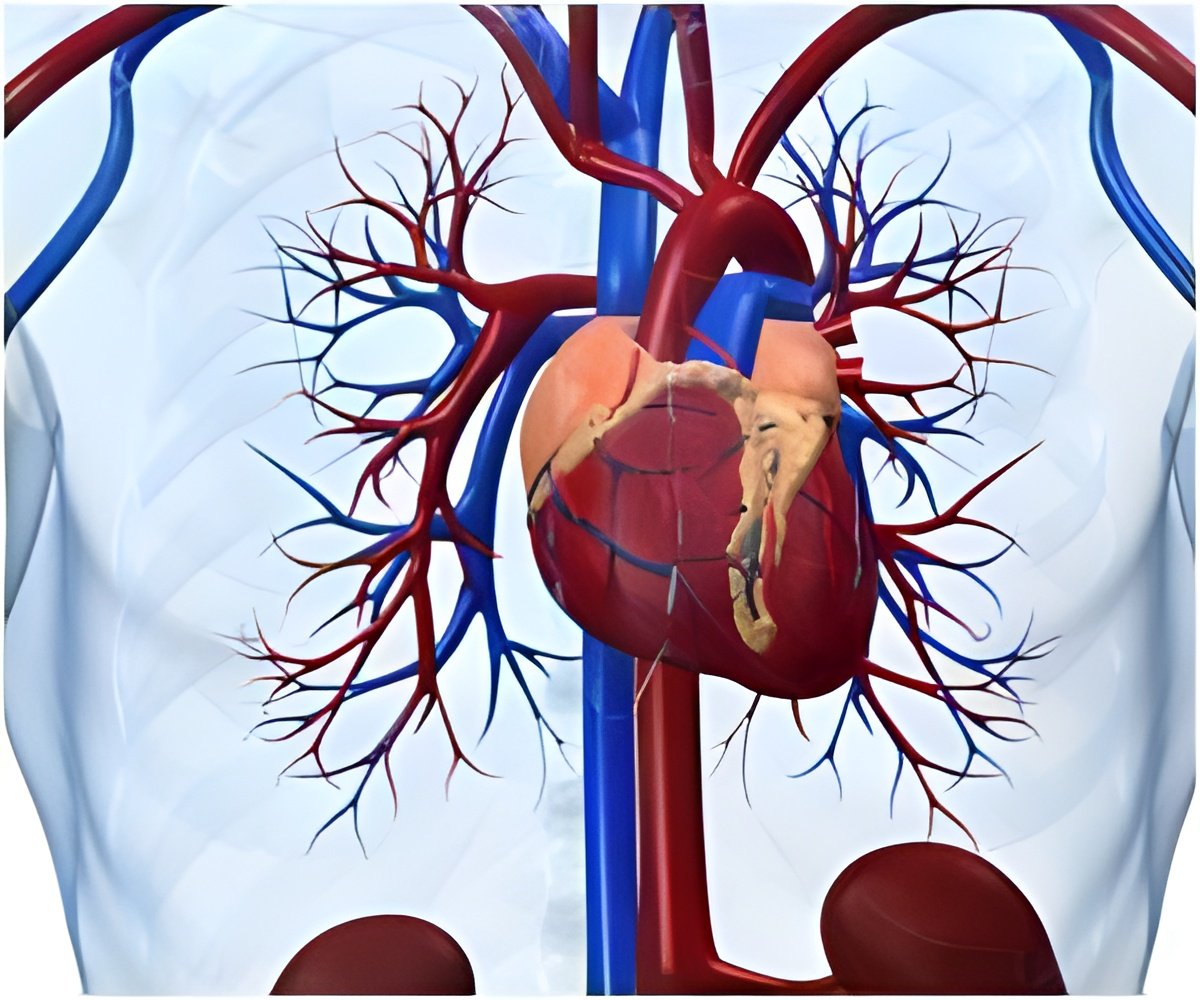
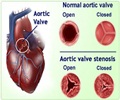
Aortic Valve Stenosis - Causes - Symptoms - Diagnosis - Replacement
Aortic valve Stenosis is an abnormal narrowing of the c valve. Symptoms include angina, and that of heart failure. Aortic valve replacement is effective therapy.
Aortic valve Stenosis is an abnormal narrowing of the c valve. Symptoms include angina, and that of heart failure. Aortic valve replacement is effective therapy.
The Edwards valve (85.4%) and Corevalve (14.6%) were used via the transfemoral (65.0%), transapical (31.9%), or subclavian (3.1%) approach. Interestingly, we found that women and men had a similar age at the time of TAVI (83.16.3 y-o), but women were characterized by less coronary and peripheral disease, less previous cardiac surgery, higher ejection fraction and a lower Euroscore (22.39.0 vs. 26.213.0%, p=0.005). Indeed, minimal femoral size (7.74±1.03 vs 8.55±1.34mm, p<0.001), annulus size (20.9±1.4 vs 22.9±1.7mm, p<0.001) and valve size (23.9±1.6 vs 26.3±1.5mm, p<0.001) were smaller in women.
The main results were
- The rate of TAVI success was similar (p=0.52) between females (90.8%) and males (88.4%) despite increased iliac complication (9.0 vs 2.5%, p=0.03) among female patients.
- One-year survival estimate was higher for women 76% (95%CI, 72-80%) compared to 65% for men (95%CI, 60-69%, log-rank p value =0.022).
- Male gender (HR 1.798: 1.004-3.215, p=0.048) was a strong and independent predictor of one-year mortality after TAVI, along with previous cardiac surgery (HR 2.299: 1.219-4.336, p=0.010), post-procedural aortic regurgitation (HR 2.261: 1.308-3.909, p=0.004), transfusion (HR 2.474: 1.319-4.640, p=0.005), acute kidney injury (HR 6.907: 3.085-15.465, p<0.001), and conversion to surgery (HR 5.147: 1.428-18.550, p=0.012).

Test Your Knowledge on Heart
The heart is a fist-sized organ that pumps blood throughout the body. It is the primary organ of the human circulatory system that helps in circulation of blood throughout the body...
The heart is a fist-sized organ that pumps blood throughout the body. It is the primary organ of the human circulatory system that helps in circulation of blood throughout the body...
In France, the CVD mortality rate decreased from 244/100,000 inhabitants to 172/100,000 inh. between 1950 and 1999 for males, and from 242/100,000 to 178/100,000 for females. Interestingly, a man who has reached 85 years has a 5.81 years life expectancy, whereas an 85 year-old woman can hope to live for 7.35 additional years (Source, French National Institute for Statitstics and Economics, www.insee.fr). The present data suggest that one-year outcome of TAVI is better among women compared to men and evidence shows that the proportion of survivors will still increase among women after years, because of more unfavourable mortality rates in males.

Aortic Stenosis - Surgical Aortic Valve Replacement to be Standard Treatment
Surgical aortic-valve replacement must continue to be the standard treatment procedure for aortic stenosis, argues a cardiothoracic surgeon from Boston Medical Center (BMC).
Surgical aortic-valve replacement must continue to be the standard treatment procedure for aortic stenosis, argues a cardiothoracic surgeon from Boston Medical Center (BMC).
 Email
Email