MEDINDIA
 English
 हिन्दी
 Español
 français
 中文
中文
Procyclidine, an FDA-approved Parkinson's drug, may effectively alleviate nicotine withdrawal symptoms, offering a potential new treatment for smoking cessation.

Overcoming nicotine withdrawal: Clues found in neural mechanisms of the brain
Go to source). The research team led by Dr. Heh-In Im at the Center for Brain Disorders of the Korea Institute of Science and Technology (KIST) has identified a novel brain region and neural mechanism involved in regulating nicotine withdrawal symptoms. Building on this discovery, the team found that an existing Parkinson's disease drug can effectively alleviate nicotine withdrawal symptoms, thus increasing its potential for therapeutic use.

Natural Remedies to Quit Smoking
Here are some of the most effective natural remedies and therapeutic aids that make it easy for you to kick the butt!
Here are some of the most effective natural remedies and therapeutic aids that make it easy for you to kick the butt!
TOP INSIGHT

Did You Know?
Nicotine withdrawal hits hardest in the first week, with days 3 to 5 being the toughest and most relapses happening within the first two weeks. #medindia #nicotine #withdrawal
The Impact of Nicotine Withdrawal on the Brain
When smoking is stopped, specific areas of the brain become hyperactive, causing physical withdrawal symptoms such as tremors and reduced activity. These symptoms significantly disrupt daily life and are major factors leading smokers to relapse. Therefore, understanding the internal processes triggered by nicotine withdrawal is crucial for achieving smoking cessation.The research team pinpointed the role of striatal cholinergic interneurons in nicotine withdrawal symptoms. Through experiments on mice, they selectively inhibited sodium channel expression in the striatal cholinergic interneurons to reduce neural activity. This intervention significantly alleviated tremors caused by nicotine withdrawal. Using advanced multi-electrode array technology, the team confirmed that suppressing cholinergic interneurons completely blocked abnormal neural activity changes.

Nicotine Dependence and Withdrawal Symptoms Rising Among E-Cigarette Users(JUUL)
Whooping 1 out of every five tweets mentioning JUUL(e-cigarettes) were based on addiction-related themes; this leads to the s.uspicion about the rise of nicotine dependence among the users.
Whooping 1 out of every five tweets mentioning JUUL(e-cigarettes) were based on addiction-related themes; this leads to the s.uspicion about the rise of nicotine dependence among the users.
Procyclidine as a Treatment for Nicotine Withdrawal
Additionally, microdialysis experiments showed that suppressing cholinergic interneurons restored dopamine levels in the striatum, which had decreased by over 20% during nicotine withdrawal, to normal levels. Based on these findings, the team explored the potential use of Procyclidine, an FDA-approved drug for Parkinson’s disease, for nicotine withdrawal treatment. Procyclidine mimics the inhibition effect on the neural activity of cholinergic interneurons, making it a promising candidate for alleviating physical symptoms of nicotine withdrawal.
Drugs to Treat Tobacco | Nicotine Addiction - Symptoms, Risk Factors & Complications
Smokers use tobacco or nicotine regularly in spite of being aware of negative health consequences. Nicotine dependence can be treated by using medications which could help quit smoking.
Smokers use tobacco or nicotine regularly in spite of being aware of negative health consequences. Nicotine dependence can be treated by using medications which could help quit smoking.
Improving Access to Effective Smoking Cessation Treatments
Notably, administering a single low dose of Procyclidine to mice prior to inducing nicotine withdrawal reduced tremors—a primary physical withdrawal symptom—by over 50%. This study demonstrates the potential of repurposing a safe and established drug for nicotine withdrawal treatment, significantly shortening the clinical trial process. This approach could improve access to smoking cessation therapies and effectively reduce health issues caused by smoking.Dr. Im stated, “This study presents new possibilities for smoking cessation treatment by mitigating the disruptions caused by withdrawal symptoms. It provides an additional treatment option alongside Bupropion and Varenicline. Moving forward, we aim to deepen our understanding of addiction mechanisms, including nicotine, and develop effective therapies.”
Reference:
- Overcoming nicotine withdrawal: Clues found in neural mechanisms of the brain - (https://www.eurekalert.org/news-releases/1073126)
Source-Eurekalert
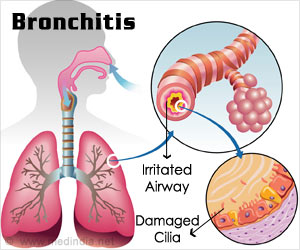
Nicotine Vaping Linked to Increased Bronchitis Risk
Among young adults, secondhand nicotine vaping at home is associated with an increased risk of bronchitic symptoms and shortness of breath.
Among young adults, secondhand nicotine vaping at home is associated with an increased risk of bronchitic symptoms and shortness of breath.
 Email
Email