MEDINDIA
 English
 हिन्दी
 Español
 français
 中文
中文
Stronger resistance to parasite infections has been found in a species of bee from Europe than native bumblebees and has spread across the UK, suggests a new research.

Trypanosomiasis / Sleeping sickness - Introduction
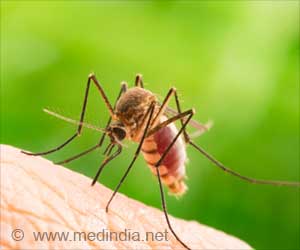
Sleeping sickness or Trypanosomiasis is a vector-borne parasitic disease which can trigger life-threatening complications in the absence of treatment
Sleeping sickness or Trypanosomiasis is a vector-borne parasitic disease which can trigger life-threatening complications in the absence of treatment
"Since its arrival to the UK, the tree bumblebee has been rapidly spreading despite high levels of this castrating parasite", said researcher Catherine Jones, from the School of Biological Sciences at Royal Holloway. "Bees are essential to our food chain and the populations of our native bumblebees have declined in recent decades. The arrival of tree bumblebees could be hugely beneficial to us by absorbing parasite pressure from our native species, as well as helping to pollinate wild plants and crops."
Professor Mark Brown, from the School of Biological Sciences at Royal Holloway, added: "While these findings show promising signs for bee populations in the UK, we still don't know whether there could be any negative impacts if the bumblebees compete for food or nesting sites. Further research should focus on how our native bees are affected and the pollination services that this new species provides."

Malaria: The Invincible Might of a Parasite, Nestled in a 'Mite'
Malaria is a disease that is preventable and curable, yet every 30 seconds a child dies due to the disease. Truly, malaria has posed one of the biggest challenges to…
Malaria is a disease that is preventable and curable, yet every 30 seconds a child dies due to the disease. Truly, malaria has posed one of the biggest challenges to…

Parasite Levels in Blood is Not the Sole Factor of Severity of Malaria
WHAT: Most cases of malaria in children are mild, although the mosquito-borne parasitic disease kills over 600,000 African children each year.
WHAT: Most cases of malaria in children are mild, although the mosquito-borne parasitic disease kills over 600,000 African children each year.
'Sting-O-Meter' That Tells You Which Insects Cause Most Pain
Scared of insect bites? Here’s a sting-o-meter to help you find out which stings will hurt the most!
Scared of insect bites? Here’s a sting-o-meter to help you find out which stings will hurt the most!
 Email
Email