MEDINDIA
 English
 हिन्दी
 Español
 français
 中文
中文
Among MS patients, the stem cells showed a neuroprotective role, guarding nerve cells from further decline.
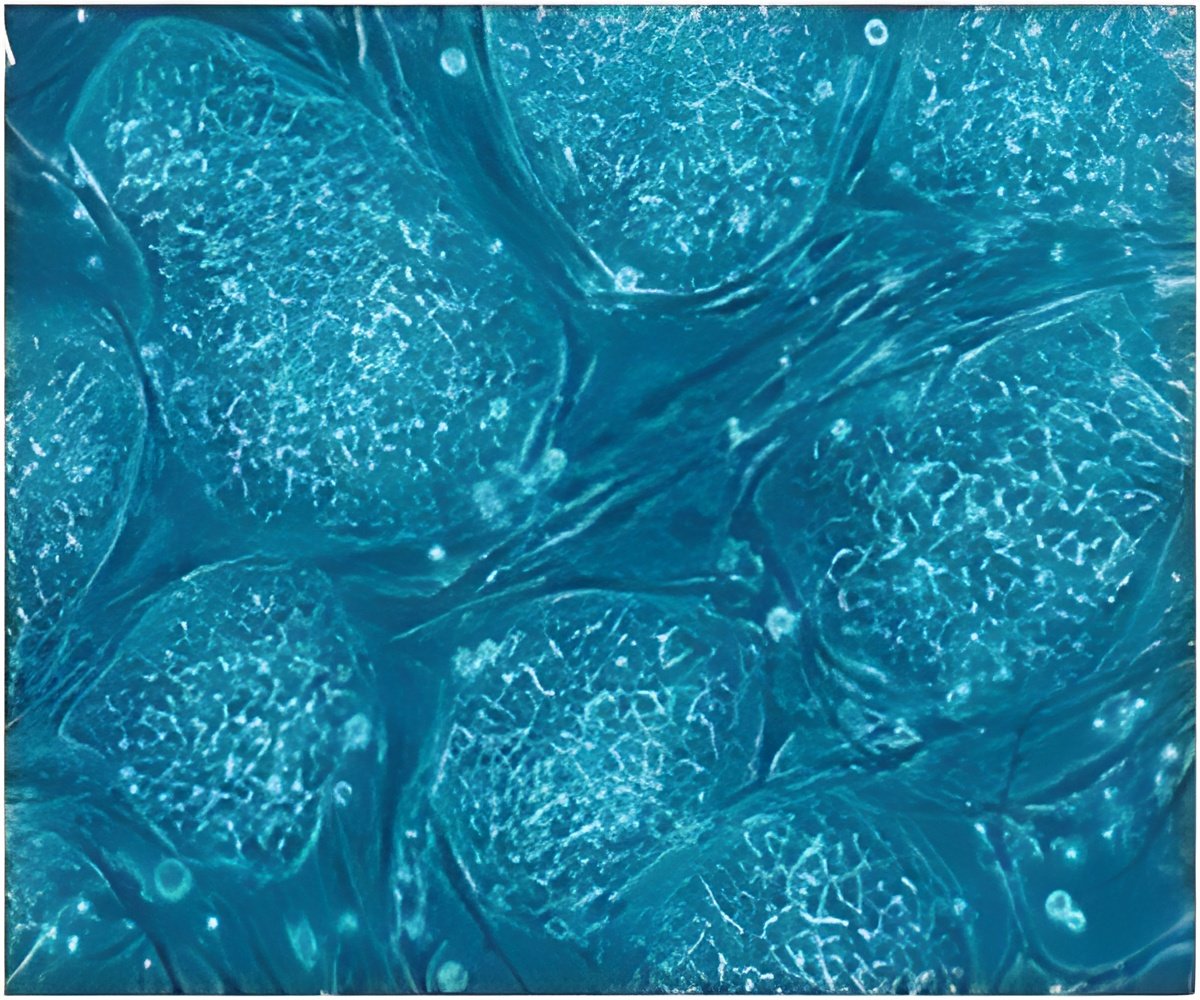
Phase I clinical trial of intracerebroventricular transplantation of allogeneic neural stem cells in people with progressive Multiple Sclerosis
Go to source) The study, led by scientists at the University of Cambridge, University of Milan Bicocca and Hospital Casa Sollievo della Sofferenza (Italy), is a step towards developing an advanced cell therapy treatment for progressive MS.

Multiple Sclerosis
Multiple sclerosis can be a severely disabling autoimmune disease that affects the myelin or insulating layer of the nerve fibers and typically has remissions and relapses
Multiple sclerosis can be a severely disabling autoimmune disease that affects the myelin or insulating layer of the nerve fibers and typically has remissions and relapses
TOP INSIGHT

Among multiple sclerosis patients, the administered stem cells were exhibiting a neuroprotective role, safeguarding nerve cells against further deterioration. #ms #multiplesclerosis #stemcelltherapy
In MS, the body’s own immune system attacks and damages myelin, the protective sheath around nerve fibres, causing disruption to messages sent around the brain and spinal cord.
Key immune cells involved in this process are macrophages (literally ‘big eaters’), which ordinarily attack and rid the body of unwanted intruders. A particular type of macrophage known as a microglial cell is found throughout the brain and spinal cord. In progressive forms of MS, they attack the central nervous system (CNS), causing chronic inflammation and damage to nerve cells.

Multiple Sclerosis Treatment and Modify
Multiple sclerosis is treated with drugs that modify the course of the disease, suppress immunity and relieve symptoms.
Multiple sclerosis is treated with drugs that modify the course of the disease, suppress immunity and relieve symptoms.
Previous work from the Cambridge team has shown in mice that skin cells re-programmed into brain stem cells, transplanted into the central nervous system, can help reduce inflammation and may be able to help repair damage caused by MS.
Neural Stem Cell Injection in Early-Stage Clinical Trial for Secondary MS Patients
Now, in research published in the Cell Stem Cell, scientists have completed a first-in-man, early-stage clinical trial that involved injecting neural stem cells directly into the brains of 15 patients with secondary MS recruited from two hospitals in Italy. The trial was conducted by teams at the University of Cambridge, Milan Bicocca and the Hospitals Casa Sollievo della Sofferenza and S. Maria Terni (IT) and Ente Ospedaliero Cantonale (Lugano, Switzerland) and the University of Colorado (USA).
Quiz on Multiple Sclerosis
Multiple sclerosis is an autoimmune disease that affects nerves and can leave the affected patient completely disabled. Test your knowledge on this condition by taking this ...
Multiple sclerosis is an autoimmune disease that affects nerves and can leave the affected patient completely disabled. Test your knowledge on this condition by taking this ...
The team followed the patients over 12 months, during which time they observed no treatment-related deaths or serious adverse events. While some side-effects were observed, all were either temporary or reversible.

Quiz on Stem Cells
Scientists believe (and are working hard) to use stem cells in the future to treat a wide range of diseases and injuries. But what exactly is a stem cell? How can it be used in curing disorders? See if you get your answers from this ...
Scientists believe (and are working hard) to use stem cells in the future to treat a wide range of diseases and injuries. But what exactly is a stem cell? How can it be used in curing disorders? See if you get your answers from this ...
The researchers assessed a subgroup of patients for changes in the volume of brain tissue associated with disease progression. They found that the larger the dose of injected stem cells, the smaller the reduction in this brain volume over time. They speculate that this may be because the stem cell transplant dampened inflammation.
Their previous work showed how tweaking metabolism – how the body produces energy – can in turn reprogram microglia from ‘bad’ to ‘good’. In this new study, they looked at how the brain’s metabolism changes after the treatment. They measured changes in the fluid around the brain and in the blood over time and found certain signs that are linked to how the brain processes fatty acids. These signs were connected to how well the treatment works and how the disease develops. The higher the dose of stem cells, the greater the levels of fatty acids, which also persisted over the 12-month period.
Professor Stefano Pluchino from the University of Cambridge, who co-led the study, said: “We desperately need to develop new treatments for secondary progressive MS, and I am cautiously very excited about our findings, which are a step towards developing a cell therapy for treating MS".
“We recognise that our study has limitations – it was only a small study and there may have been confounding effects from the immunosuppressant drugs, for example – but the fact that our treatment was safe and that its effects lasted over the 12 months of the trial means that we can proceed to the next stage of clinical trials.”
Co-leader Professor Angelo Vescovi from the University of Milano-Bicocca said: “It has taken nearly three decades to translate the discovery of brain stem cells into this experimental therapeutic treatment This study will add to the increasing excitement in this field and pave the way to broader efficacy studies, soon to come.”
Caitlin Astbury, Research Communications Manager at the MS Society, says: “This is a really exciting study which builds on previous research funded by us. These results show that special stem cells injected into the brain were safe and well-tolerated by people with secondary progressive MS. They also suggest this treatment approach might even stabilise disability progression. We’ve known for some time that this method has the potential to help protect the brain from progression in MS".
“This was a very small, early-stage study and we need further clinical trials to find out if this treatment has a beneficial effect on the condition. But this is an encouraging step towards a new way of treating some people with MS.”
Reference:
- Phase I clinical trial of intracerebroventricular transplantation of allogeneic neural stem cells in people with progressive Multiple Sclerosis - (https://linkinghub.elsevier.com/retrieve/pii/S1934590923003934)
 Email
Email