MEDINDIA
 English
 हिन्दी
 Español
 français
 中文
中文
Detection of four drug substances in downtown Auckland air, highlighting the potential for airborne drug analysis to complement existing wastewater data.

Air Monitoring for Illegal Drugs: An Alternative for Wastewater Analysis
One of the key limitations of wastewater analysis is that it is restricted to areas of drug excretion. Wastewater drug analysis can also be affected by heavy rainfalls and drug stability in the wastewater sewer system.
Air Pollution - Pollutants - Health Effect - Efforts to Reduce
Nearly 2.4 million deaths every year are attributable to air pollution. Air pollutants may be solid particles, liquid droplets or gases. Proper planning methods should be adopted to reduce air pollution.
Nearly 2.4 million deaths every year are attributable to air pollution. Air pollutants may be solid particles, liquid droplets or gases. Proper planning methods should be adopted to reduce air pollution.
TOP INSIGHT

Nicotine, caffeine, methamphetamine, and tetrahydrocannabinol (THC) were present in the suspended particulate matter of New Zealand's largest city (Auckland), representing the first study of airborne drug concentrations in Oceania.
As drugs are often found at small concentrations in urban air, large sample volumes and highly sensitive techniques, such as LC-MS, are typically employed in airborne drug investigations.
To better understand the concentrations of drugs in Aotearoa New Zealand's largest city, this method was developed for the off-line analysis of caffeine, nicotine, methamphetamine, and tetrahydrocannabinol (THC) within total suspended particulate matter.
Drugs of Abuse in Airborne Particulates in Urban Environments
The largest concentration of meth detected was 104 picograms (a picogram is one-trillionth of a gram) per cubic meter of air. The average for 10 samples over five weeks was 24.8 picograms per cubic meter.
Breathing Dirty Air may Lead to Kidney Failure
Breathing in unclean air due to increasing air pollution could cause kidney damage with resultant kidney failure according to a recent epidemiologic study.
Breathing in unclean air due to increasing air pollution could cause kidney damage with resultant kidney failure according to a recent epidemiologic study.
Methamphetamine concentrations were higher than in overseas cities such as Barcelona. Airborne drug concentrations spiked in the week leading up to the Christmas holidays and also over New Year’s Eve.

Immune System Weakens Due to Air Pollution
Air pollution not only leads to the development of respiratory diseases in seniors but also weakens their immune system.
Air pollution not only leads to the development of respiratory diseases in seniors but also weakens their immune system.
The results aren’t as concerning as a headline might make them sound. However, they highlight that we don’t know as much as we should about what’s in the air that we breathe.
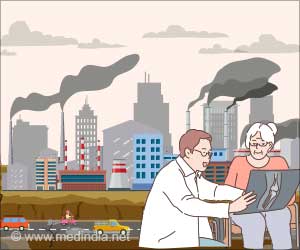
Air Pollution can Double the Risk of Bone Damage
Recent study shows that nitrous oxide, which is an air pollutant, can double the risk of bone damage
Recent study shows that nitrous oxide, which is an air pollutant, can double the risk of bone damage
Source-Eurekalert
 Email
Email