MEDINDIA
 English
 हिन्दी
 Español
 français
 中文
中文
Racial disparities in kidney transplantation among children is cut down by a policy instituted in 2005 states study emerging in an upcoming issue of the JASN.


About Transplantation
Since the early times, the novel idea of transplanting tissues and other body parts from one organism to the other has captured the imagination of successive generations.
Since the early times, the novel idea of transplanting tissues and other body parts from one organism to the other has captured the imagination of successive generations.
To answer these and other questions, Sandra Amaral, MD (The Children''s Hospital of Philadelphia) and her colleagues analyzed data from the US Renal Data System before and after Share 35. These data applied to 2,299 pediatric kidney failure patients who received a transplant before Share 35 and 2,467 patients who received one after.
Among the major findings:

Live Donor Kidney Transplantation - Improving the Short and Long Term Results
Live Donor Kidney Transplantation results can be improved by pretreatment with plasmapheresis and immune globulins prior to transplantation.
Live Donor Kidney Transplantation results can be improved by pretreatment with plasmapheresis and immune globulins prior to transplantation.
- Patients received a deceased-donor kidney transplant earlier after Share 35: 201 days earlier for Hispanics, 90 days earlier for blacks, and 63 days earlier for whites.
- All races experienced a shift from living- to deceased-donor sources after Share 35, with a 48% reduction in living donors for Hispanics, a 46% reduction for blacks, and a 25% reduction for whites.
These results indicate that Share 35 has attenuated racial disparities in terms of how likely and how soon children will receive a deceased-donor kidney transplant.

High Blood Pressure After Kidney Transplantation
Hypertension is almost ubiquitous in kidney transplant recipients. Hypertension negatively affects transplant and patient survival outcomes.
Hypertension is almost ubiquitous in kidney transplant recipients. Hypertension negatively affects transplant and patient survival outcomes.
Study co-authors include Rachel Patzer, PhD, Nancy Kutner, PhD, and William McClellan, MD (Emory University).
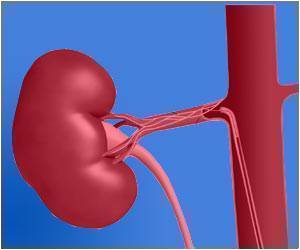
Access to Kidney Transplantation and Racial Disparities
Racial disparities exist in both the early and late steps in access to kidney transplantation, says a new study published in the American Journal of Transplantation
Racial disparities exist in both the early and late steps in access to kidney transplantation, says a new study published in the American Journal of Transplantation
The article, entitled "Racial Disparities in Access to Pediatric Kidney Transplantation Since Share 35," will appear online on April 26, 2012, doi: 10.1681/ASN.2011121145.
The content of this article does not reflect the views or opinions of The American Society of Nephrology (ASN). Responsibility for the information and views expressed therein lies entirely with the author(s). ASN does not offer medical advice. All content in ASN publications is for informational purposes only, and is not intended to cover all possible uses, directions, precautions, drug interactions, or adverse effects. This content should not be used during a medical emergency or for the diagnosis or treatment of any medical condition. Please consult your doctor or other qualified health care provider if you have any questions about a medical condition, or before taking any drug, changing your diet or commencing or discontinuing any course of treatment. Do not ignore or delay obtaining professional medical advice because of information accessed through ASN. Call 911 or your doctor for all medical emergencies.
Founded in 1966, and with more than 13,500 members, the American Society of Nephrology (ASN) leads the fight against kidney disease by educating health professionals, sharing new knowledge, advancing research, and advocating the highest quality care for patients.
Source-Newswise
 Email
Email