MEDINDIA
 English
 हिन्दी
 Español
 français
 中文
中文
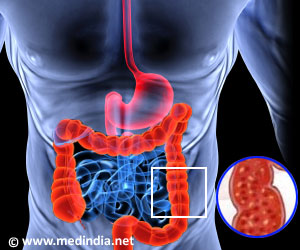
A competitive environment between good bacteria helps to maintain stability via negative feedback loops that counteract the destabilizing effect.

Three Contract Rare Antibiotic-Resistant Bacteria in New Zealand
Canterbury District Health Board (CDHB) said that three people tested positive as potential carriers of Carbapenem-resistant Enterobacteriaceae (CRE).
Canterbury District Health Board (CDHB) said that three people tested positive as potential carriers of Carbapenem-resistant Enterobacteriaceae (CRE).
TOP INSIGHT

Using mathematical modelling to work out how hundreds of bacteria species are able to co-exist successfully, the Oxford researchers found that contrary to popular assumption, cooperation between species has the effect of destabilizing the system.
Instead, a competitive environment between "good bacteria" helps to maintain stability via negative feedback loops that counteract the destabilizing effect of high species diversity.
The researchers go on to speculate that people -- or hosts -- may help maintain this natural stability in the gut by acting as "ecosystem engineers" who intervene in a number of ways.
Blame Your Gut Bacteria for Those Extra Kilos and Diabetes
An excess of bacteria in the gut can change the way the liver processes fat and could lead to the development of metabolic syndrome.
An excess of bacteria in the gut can change the way the liver processes fat and could lead to the development of metabolic syndrome.
"Rather than cooperating like plants and bees, whereby a reduction in one species will drag down the other, we think that the bacteria act more like trees competing in a dense jungle," Foster added.

Mothers Beware! Breast Milk Purchased Online Contains Deadly Bacteria in the UK
Breastfeeding is best as 93 percent of breast milk sold online contains detectable levels of bacteria as it is unpasteurized and improperly stored.
Breastfeeding is best as 93 percent of breast milk sold online contains detectable levels of bacteria as it is unpasteurized and improperly stored.
Different people may carry different microbial species, but any one individual tends to carry the same key set of species for long periods. This stability is considered critical for host health and well-being.
Moffitt Researchers Develop a Novel Method To Help Reduce Antibiotic-Resistant Bacteria
The ability of the bacterium E. coli to survive in antibiotics could be either promoted or hindered depending on the sequence of antibiotics given.
The ability of the bacterium E. coli to survive in antibiotics could be either promoted or hindered depending on the sequence of antibiotics given.
Source-IANS
 Email
Email