MEDINDIA
 English
 हिन्दी
 Español
 français
 中文
中文
Extremely aggressive type of cancer, inflammatory breast cancer is linked to early metastasis and feeble survival rates. Prognosis is even worse for people with tumors expressing the ErbB2 receptor.
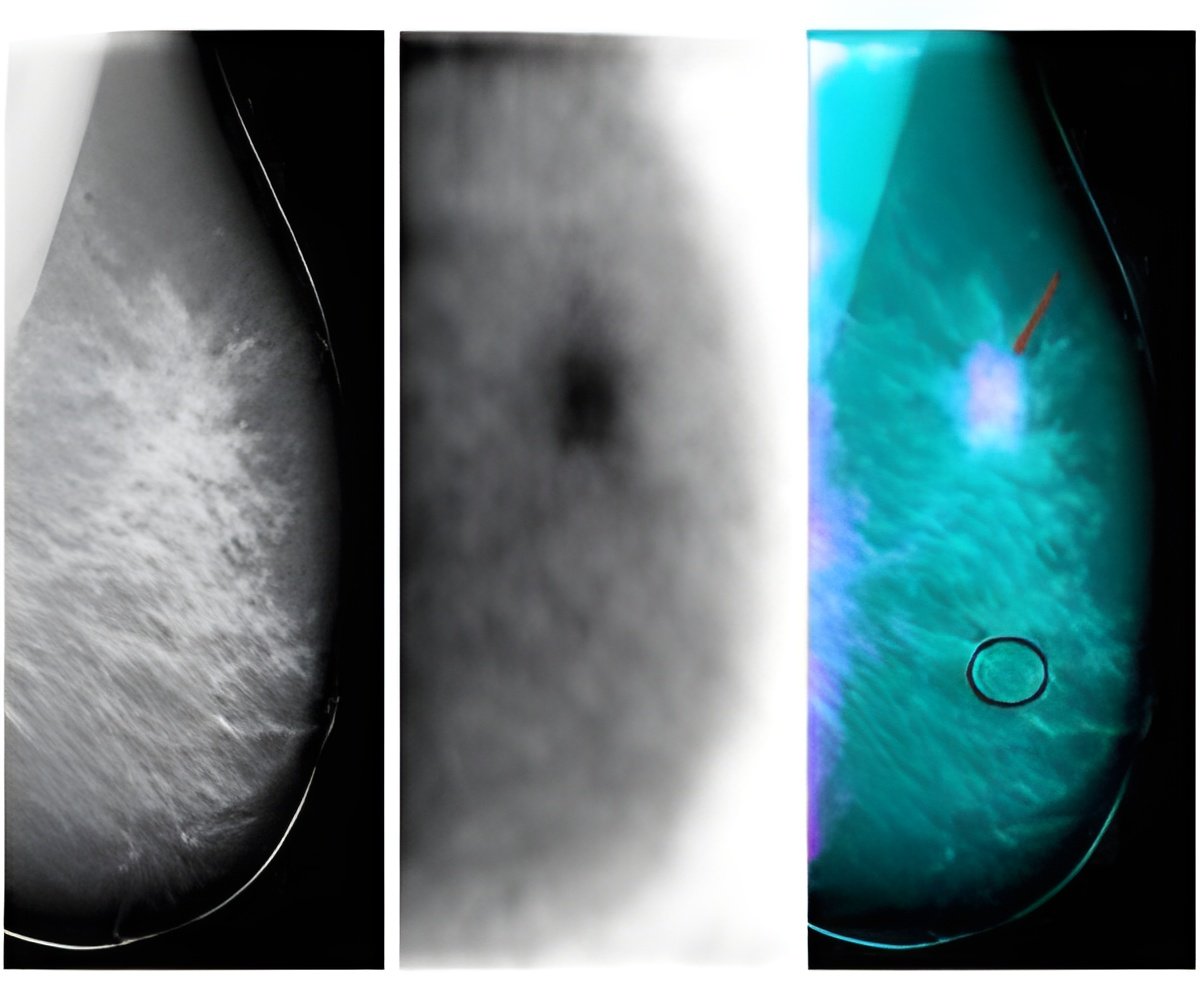

Cell and Animal Model of Inflammatory Breast Cancer Developed
Inflammatory breast cancer (IBC)is diagnosed more frequently in younger women than in older ones. It is also a very aggressive and often misunderstood type of cancer.
Inflammatory breast cancer (IBC)is diagnosed more frequently in younger women than in older ones. It is also a very aggressive and often misunderstood type of cancer.
In addition, side effects such as diarrhea, vomiting and liver dysfunction occurred in patients undergoing combination therapy, but not in individuals who only took lapatinib. As a result, 21 percent of the patients undergoing combination therapy required dose reductions and 55 percent required dose interruptions, compared with only 3 percent and 11 percent, respectively, of patients who only took lapatinib.
Because of the side effects experienced by the first group of patients, Cristofanilli and his team used lower doses of lapatinib and pazopanib in a second group of 87 patients. Combination therapy resulted in an overall response rate of 58 percent and median progression-free survival of 16 weeks, compared with 47 percent and 16 weeks for lapatinib alone, and 31 percent and about 11 weeks for pazopanib alone. "Once again, the outcomes in patients who received combination therapy were not significantly better than those in patients who took lapatinib alone," Cristofanilli says.

Gene That Triggers The Proliferation Of Inflammatory Breast Cancer Identified
Study says a gene called eIF4G1 has been found to be over expressed in many cases of inflammatory breast cancer (IBC), and is believed to trigger the proliferation of the disease.
Study says a gene called eIF4G1 has been found to be over expressed in many cases of inflammatory breast cancer (IBC), and is believed to trigger the proliferation of the disease.
"The results demonstrate that combination therapy consisting of lapatinib and pazopanib increases side effects, but does not significantly improve clinical outcomes, when compared with treatment with lapatinib as a single agent," Cristofanilli says. "Based on these findings, I don't recommend that this type of combination therapy be used to treat patients with inflammatory breast cancer, but we were able to confirm that lapatinib is an effective treatment for women with this disease."

Survival in Newly Diagnosed Inflammatory Breast Cancer Not Influenced by Circulating Tumor Cells
New research has indicated that survival in women who have just been diagnosed with inflammatory breast cancer may not be influenced by the presence of circulating tumor cells
New research has indicated that survival in women who have just been diagnosed with inflammatory breast cancer may not be influenced by the presence of circulating tumor cells
Source-Eurekalert
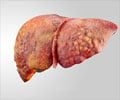
Liver Cancer - Types, Causes, Symptoms, Diagnosis, Treatment, Prevention, Progosis
Liver or hepatic cancer is an abnormal growth of cells in the liver. The leading cause of the disease is cirrhosis or scarring of the liver tissue.
Liver or hepatic cancer is an abnormal growth of cells in the liver. The leading cause of the disease is cirrhosis or scarring of the liver tissue.
 Email
Email