MEDINDIA
 English
 हिन्दी
 Español
 français
 中文
中文
Clinical trials from two international research teams have shown that icatibant, a new drug that blocks the action of an inflammatory protein known as bradykinin, is safe and effective

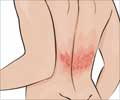
Hives
Hives or Urticaria are allergic skin reaction that appear suddenly in clusters or as single bumps on the skin surface and can be itchy.
Hives or Urticaria are allergic skin reaction that appear suddenly in clusters or as single bumps on the skin surface and can be itchy.
Icatibant blocks the receptor for bradykinin, a protein that dilates and increases the permeability of blood vessels and produces many symptoms of inflammation. Bradykinin is believed to mediate many symptom of HAE, so a drug that interferes with its action was felt to be a good candidate to treat HAE attacks. Manufactured by the German pharmaceutical firm Jerini, Inc., icatibant has received approval in the European Union, where it is marketed under the brand name Firazyr. The NEJM study reports on two phase 3 trials – one based in the U.S. the other in Europe – conducted as part of the Jerini's application to the U.S. Food and Drug Administration.
Both studies were randomized, double-blind, prospective trials enrolling adults who had been diagnosed with HAE. The U.S.-based trial, called FAST-1, compared icatibant with a placebo for treatment of acute attacks; while the European trial, FAST-2, used trenaxminic acid, an oral medication available in Europe, as the comparison drug. Study participants – 56 for FAST-1 and 74 for FAST-2 – returned to their enrollment site for treatment within six hours of onset of a moderate to severe HAE attack. Response to the study medication was assessed by both patients themselves and by study investigators, who primarily evaluated the time required for relief of the most severe symptom and secondarily evaluated relief of all symptoms.
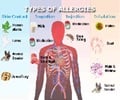
Allergy - Causes - Symptoms - Diagnosis - Treatment - FAQs - Videos
An allergy is a hypersensitive disorder of immune system. Substances that often cause allergic reactions are pollen, dust mites, mold spores, pet dander, food, insect stings and medicines.
An allergy is a hypersensitive disorder of immune system. Substances that often cause allergic reactions are pollen, dust mites, mold spores, pet dander, food, insect stings and medicines.
"These data do show that HAE patients receiving icatibant improve, and the drug seems to be very safe," says Banerji. "A larger, worldwide phase 3 trial of icatibant is currently in process and should help us clarify the picture further." Banerji is an assistant professor of Medicine at Harvard Medical School.

Asthma - Factors, Common Allergens, Diagnosis, Treatment, Support Groups, FAQs
It's a lung condition characterized by inflammation of the bronchi and constriction of the airways that result in coughing, wheezing or breathlessness. Allergy and other airway irritants can trigger it
It's a lung condition characterized by inflammation of the bronchi and constriction of the airways that result in coughing, wheezing or breathlessness. Allergy and other airway irritants can trigger it
Source-Eurekalert
 Email
Email