MEDINDIA
 English
 हिन्दी
 Español
 français
 中文
中文
Study sought to determine if lowering LDL cholesterol by inhibiting CETP had the same effect on the risk of CVD as other LDL cholesterol lowering therapies.


ALK1 Protein Plays a Key Role in Binding LDL Cholesterol
The protein called ALK1 facilitated low-density lipoprotein pathway into cells. ALK1 directly bound to the lipoprotein and aided the transportation of LDL from blood into tissue.
The protein called ALK1 facilitated low-density lipoprotein pathway into cells. ALK1 directly bound to the lipoprotein and aided the transportation of LDL from blood into tissue.
TOP INSIGHT

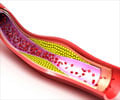
Cholesterol is naturally produced by your body and is essential to its function. However, excessively high levels of LDL cholesterol are bad and can lead to serious health problems such as clogged arteries, heart disease, and stroke.
"Therefore, the clinical benefit of LDL cholesterol lowering therapies may depend on the corresponding reduction in apoB particles, which in turn depend on how LDL cholesterol is lowered," he continued.
In the ACCELERATE trial, treatment with the cholesteryl ester transfer protein (CETP) inhibitor evacetrapib reduced LDL cholesterol by 39% (0.75 mmol/L) but did not reduce the risk of major cardiovascular events.2 The results led some people to question the causal effect of LDL cholesterol on the risk of developing CVD and suggested that the clinical benefit of lowering LDL cholesterol may depend on how it is lowered.

New Vaccine More Effective To Lower Bad LDL Cholesterol Than Statins
Statins that are prescribed to lower cholesterol have some serious side effects. But the new vaccine has been found to be more powerful than statins.
Statins that are prescribed to lower cholesterol have some serious side effects. But the new vaccine has been found to be more powerful than statins.
The study included a total of 358 205 participants from 77 studies. The researchers used inherited genetic variants that mimic the effect of CETP inhibitors and statins, respectively, to naturally randomise participants into four groups: CETP inhibition (mimicking the effect of a CETP inhibitor), HMG-CoA reduction inhibition (mimicking the effect of a statin), both (mimicking the effect of combined CETP inhibitor and statin therapy) or neither (placebo group) using a 2x2 factorial Mendelian randomisation study design.

Newly Modified Beneforte Broccoli can Reduce LDL Cholesterol Level by 6%
Beneforte broccoli contains two to three times more of a naturally occurring compound glucoraphanin. It works by reducing how much LDL-cholesterol our bodies make.
Beneforte broccoli contains two to three times more of a naturally occurring compound glucoraphanin. It works by reducing how much LDL-cholesterol our bodies make.
The investigators found that genetic variants that mimic the effect of CETP inhibitors were associated with higher high-density lipoprotein (HDL) cholesterol, lower LDL cholesterol, lower apoB and a corresponding lower risk of CVD that was proportional to the reduction in LDL cholesterol. In fact, genetic variants that mimic the effect of CETP inhibitors had a very similar effect on reducing the risk of cardiovascular events as genetic variants that mimic the effect of statins, ezetimibe and PCSK9 inhibitors when measured per unit reduction in LDL cholesterol.

LDL Cholesterol-Lowering Therapy can Reduce Risk of Heart Disease, Stroke in Kidney Disease Patients
Through statin-based treatment, lowering LDL cholesterol did not slow kidney disease progression within five years in a study appearing in an upcoming issue of the Journal of the American Society of Nephrology (JASN).
Through statin-based treatment, lowering LDL cholesterol did not slow kidney disease progression within five years in a study appearing in an upcoming issue of the Journal of the American Society of Nephrology (JASN).
The findings were validated in a genome-wide association study which found that other variants with discordant effects on LDL cholesterol and apoB were also associated with a lower risk of CVD that was proportional to the change in apoB but less than expected per unit change in LDL cholesterol.
Prof Ference said: "These results may help to explain the failure of some CETP inhibitors to reduce the risk of cardiovascular events despite robustly lowering LDL cholesterol. Adding a CETP inhibitor to a statin reduces LDL cholesterol out of proportion to apoB. Because the clinical benefit is determined by the reduction in apoB, rather than LDL cholesterol, combination therapy with a CETP inhibitor and a statin reduces the risk of cardiovascular events proportional to the attenuated reduction in apoB. This may be significantly less than expected for the observed change in LDL cholesterol depending on the degree of discordance between the reductions in apoB and LDL cholesterol."
Source-Eurekalert
 Email
Email