MEDINDIA
 English
 हिन्दी
 Español
 français
 中文
中文
Treatment-induced mutations cause drug resistance in some patients whose acute lymphoblastic leukemia (ALL) returns, said researchers.
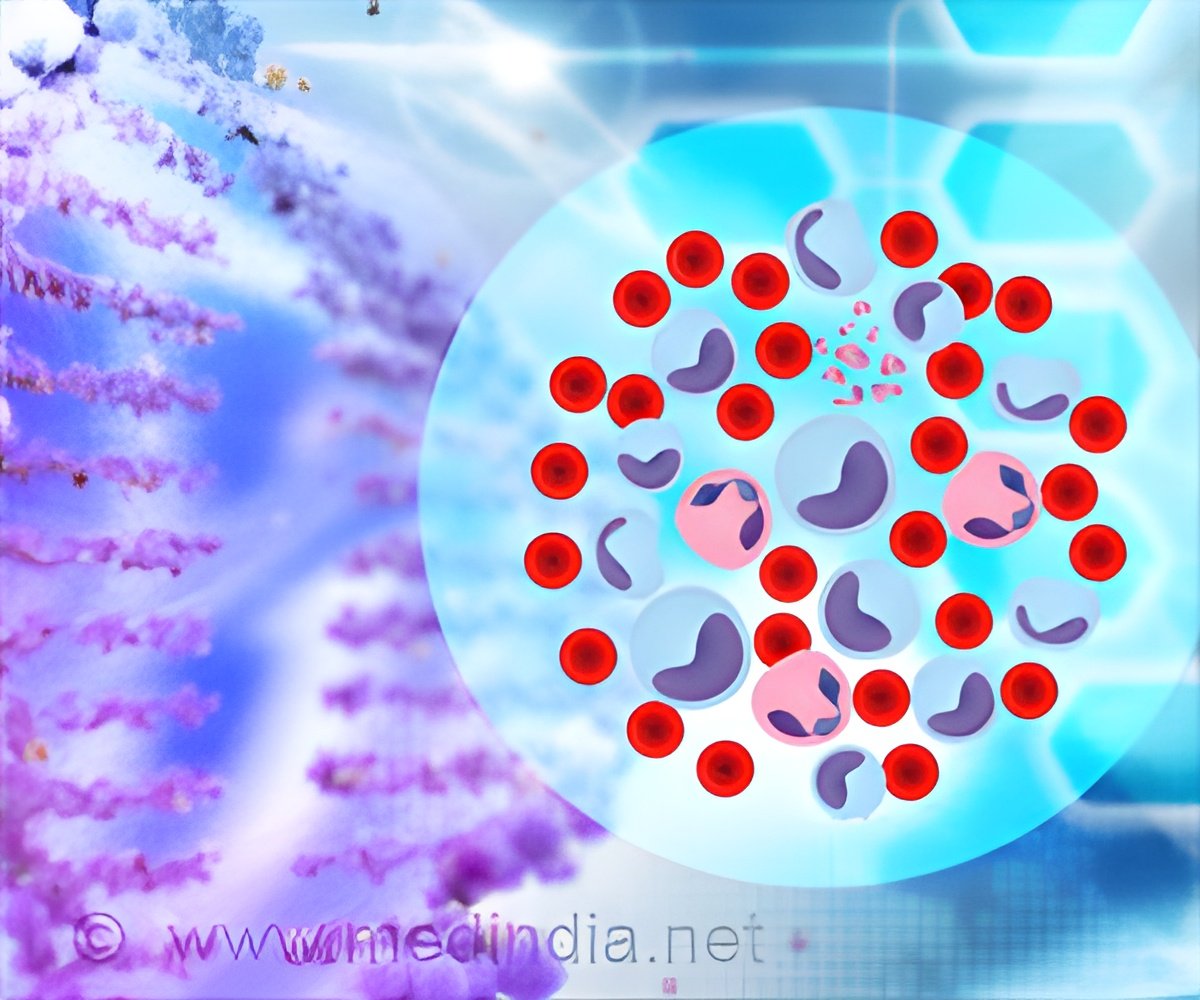
Acute Lymphoblastic Leukemia - Incidence Causes Symptoms Diagnosis Treatment Prognosis
Acute lymphoblastic leukemia (ALL) is the cancer of white blood cells characterized by excess lymphoblasts. It is the most common of all childhood cancers and can be fatal in weeks if left untreated.
Acute lymphoblastic leukemia (ALL) is the cancer of white blood cells characterized by excess lymphoblasts. It is the most common of all childhood cancers and can be fatal in weeks if left untreated.
TOP INSIGHT

Treatment-induced mutations cause drug resistance in some patients whose acute lymphoblastic leukemia (ALL) returns identified.
The findings underscore the need for less toxic therapies and precision-medicine approaches, said co-corresponding author Ching-Hon Pui, M.D., chair of the St. Jude Department of Oncology. Candidates in development include immunotherapies such as CAR-T cells and bispecific antibodies. "This study points to the potential need to individualize therapy when drug resistant mutations emerge in ALL", said co-corresponding author Jun J. Yang, Ph.D., of the St. Jude Departments of Oncology and Pharmaceutical Sciences. The other co-corresponding author is Bin-Bing Zhou, Ph.D., of Shanghai Children's Medical Center and National Children's Medical Center and the Shanghai Jiao Tong University School of Medicine.
Relapse remains leading cause of death

Quiz on Leukemia
Making up for 2.9% of all cancers, Leukemia is a serious condition. Do you know all about it? Test your knowledge with this quiz.
Making up for 2.9% of all cancers, Leukemia is a serious condition. Do you know all about it? Test your knowledge with this quiz.
Cause uncertain
Whole genome sequencing analysis

Cognitive Health May be Affected by Exercise Capacity In Survivors of Childhood Leukemia
Reduced exercise capacity and neurocognitive problems are linked in survivors of acute lymphoblastic leukemia (ALL), the most common childhood cancer.
Reduced exercise capacity and neurocognitive problems are linked in survivors of acute lymphoblastic leukemia (ALL), the most common childhood cancer.
Researchers identified relapse-specific acquired mutations in 12 genes involved in drug response, including FPGS, a novel, relapse-related gene. The analysis also revealed two novel mutational patterns or signatures. Researchers showed thiopurines caused one of the new mutational signatures. Additional research showed the mutations lead to multi-drug resistance.
Drug resistance and relapse timeline
The timeline of relapse of patients in this study and the presence of relapse-specific mutations in the 12 genes involved in drug response provided insight into the cause.
Most patients, 55%, relapsed nine to 36 months after diagnosis but before treatment ended. This group had the most relapse-specific mutations in the 12 drug-resistance genes, particularly compared to patients who relapsed earlier. Mathematical modeling, mutational analysis and other evidence indicated that earlier relapse was likely caused by drug-resistant tumor cells present at diagnosis.
Investigators proposed a two-step process to explain later relapse. The model suggested that relapse occurred when partially drug-resistant tumor cells that were present at diagnosis acquired treatment-related mutations. The now drug-resistant cells divide and eventually cause relapse.
"This suggests drug resistance is not a foregone conclusion," Yang said. "It may be preventable through changes in the dosage or timing of treatment." Based on the findings, Pui said screening relapsed patients for drug-resistance mutations may be indicated.
Source-Eurekalert
 Email
Email