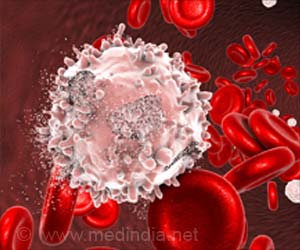
Doxorubicin, a chemotherapy drug carries a harmful side effect. It upsets the immune responses that are vital for heart maintenance, repair and control of inflammation. The chemo drug can cause a dose-dependent heart toxicity and lead to congestive heart failure.

About Chemotherapy Drugs
Chemotherapy drugs perform like ‘magic bullets’ to destroy cancer cells in the body.
Chemotherapy drugs perform like ‘magic bullets’ to destroy cancer cells in the body.
‘Doxorubicin, a chemotherapy drug widely used in ovarian, bladder, lung, thyroid and stomach cancers carries a harmful side effect. The chemo drug can cause a dose-dependent heart toxicity and lead to congestive heart failure.’





Immunometabolism is the study of how metabolism regulates immune cell function, and it is a recent and growing aspect of immunology. Two key players in immunometabolism are immune-responsive enzymes called lipoxygenases and cyclooxygenases. These immune-sensitive enzymes create a variety of bioactive lipid mediators that regulate immune cell responses. The UAB researchers, led by Ganesh Halade, Ph.D., an assistant professor in the UAB Department of Medicine's Division of Cardiovascular Disease, used a mouse model to study the effect of doxorubicin on immunometabolism. In the mice, doxorubicin induced fibrosis in the heart, increased the programmed cell death called apoptosis and impaired the pumping of the heart. The drug also caused a wasting syndrome in the heart and the spleen.
Mounting research has shown that the spleen -- which acts as a reservoir of immune cells that speed to the site of heart injury to begin clearance of damaged tissue -- plays a leading role in the initiation of immune response after a heart attack. Now, Halade and colleagues have found that the doxorubicin is also involved in the deleterious response to the spleen.
Chemotherapy - History, Principles, Aim, Types, Side Effcts, Pros & Cons
'Chemo' means medicine or 'drug', 'therapy' means 'treatment'. Chemotherapy refers to the use of cytotoxic drugs in the treatment of cancer.
'Chemo' means medicine or 'drug', 'therapy' means 'treatment'. Chemotherapy refers to the use of cytotoxic drugs in the treatment of cancer.
Second, in the spleen, doxorubicin also poisoned a special group of marginal zone immune cells called CD169+ macrophages, causing the spleen to diminish in size. This loss of specialized macrophages means an impaired host defense system because these unique macrophages usually coordinate the first-responders monocyte deployment plan to sites of injury or infection in order to synthesize bioactive lipids to activate the resolution of inflammation.
Advertisement

Fifteen Most Common Chemotherapy Side Effects and Ways to Manage Them
Chemotherapy side effects depend on the chemotherapy treatment as there are varied types of chemotherapy medications. Traditional chemotherapy drugs kill growing cancer cells.
Chemotherapy side effects depend on the chemotherapy treatment as there are varied types of chemotherapy medications. Traditional chemotherapy drugs kill growing cancer cells.
Thus, Halade says, doxorubicin appears to have a splenocardiac impact in this non-cancer model. Knowledge of this mechanism may help explore strategies that will preserve spleen and heart health during doxorubicin treatment in cancer models.
Advertisement
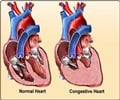
Congestive Heart Failure (Congestive Cardiac Failure) Current Management
Congestive heart failure (CHF) is a condition in which the heart fails to work adequately as a pump that can deliver oxygen rich blood to the body.
Congestive heart failure (CHF) is a condition in which the heart fails to work adequately as a pump that can deliver oxygen rich blood to the body.