MEDINDIA
 English
 हिन्दी
 Español
 français
 中文
中文
An inhibitor of the epigenetic regulator KDM4 discovered shows great promise in modulating breast cancer stem cell pathology.

Breast Cancer - Causes, Risks, Symptoms, Diagnosis, Staging, Treatment, Prevention & Prognosis
Breast cancer is a cancer that affects the breasts or mammary glands. Early detection and lifestyle changes help in controlling breast cancer.
Breast cancer is a cancer that affects the breasts or mammary glands. Early detection and lifestyle changes help in controlling breast cancer.
TOP INSIGHT

KDM4 inhibitor induces a change of the molecular make-up of the cancer stem cells and drives them out of stemness.
Although the prognosis for breast cancer has been steadily improving in the last decades, patients with triple receptor-negative breast cancer form a subgroup who receive a considerably worse prognosis in most cases.
Roughly 15 percent of all breast cancer patients have triple receptor-negative breast cancer, which lacks markers for a targeted therapy.

Consumption of Red Meat Increases Breast Cancer Risk
Red meat consumption has long been suspected of contributing to cancer development. Find out how much red meat is too much.
Red meat consumption has long been suspected of contributing to cancer development. Find out how much red meat is too much.
These cells, named cancer stem-like cells, share many characteristics with the body's normal stem cells. Due to their cancer-driving behavior, researchers have been focusing more and more on targeting these cells. However, there are currently only a few models available to study the biology of cancer stem cells.

Inflammatory Breast Cancer - Causes, Symptoms, Diagnosis, Treatment & Prognosis
One of the rare breast cancers, inflammatory breast cancer is marked by redness, swelling and warmth of the breast skin looking like an orange peel.
One of the rare breast cancers, inflammatory breast cancer is marked by redness, swelling and warmth of the breast skin looking like an orange peel.
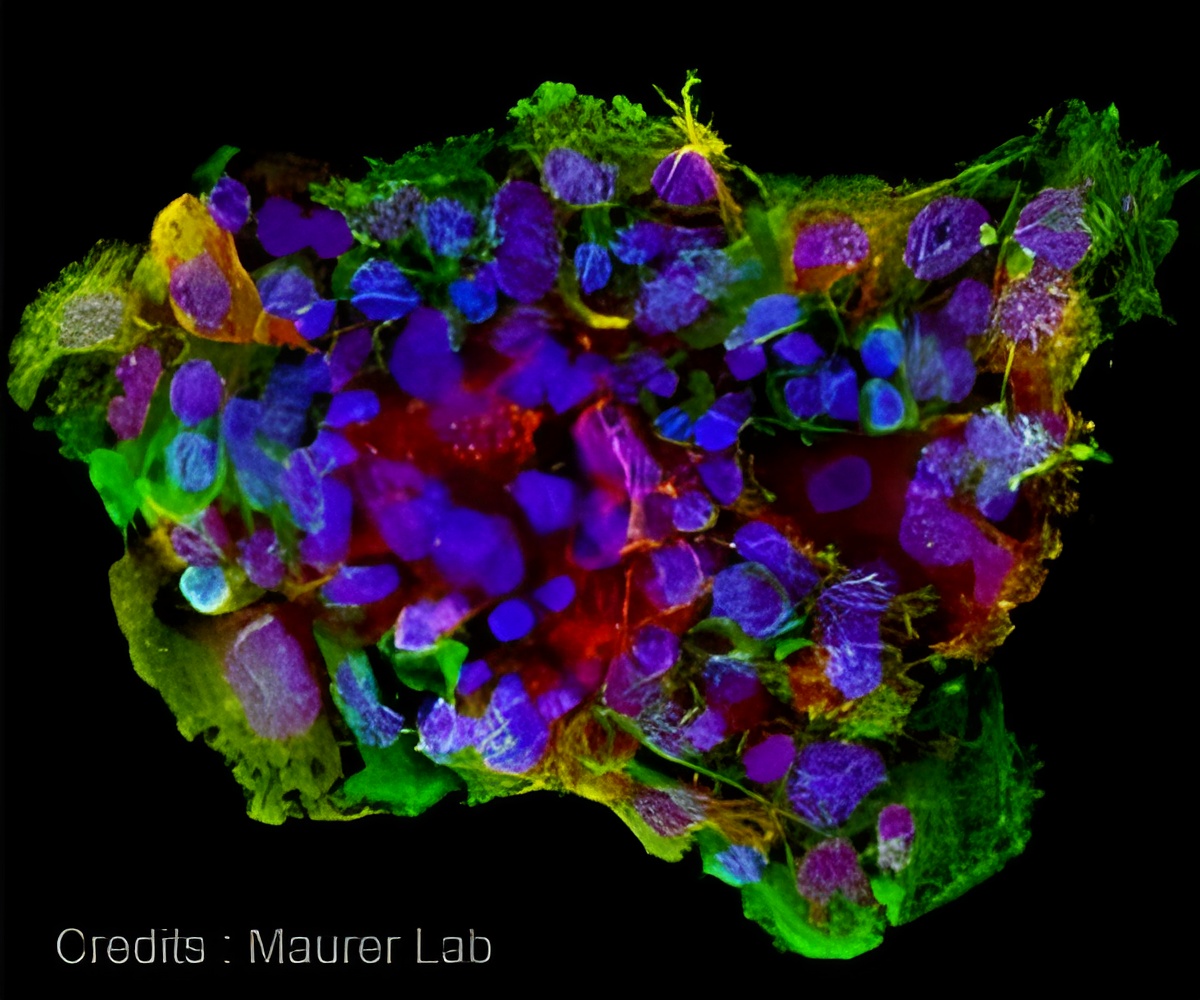
Dr. Jochen Maurer and his research group were able to cultivate several cancer stem cell lines from triple receptor-negative breast cancer that are excellent representations of the original tumors they isolated from the patients.
Inherited Breast Cancer Syndromes
Inherited breast cancers are caused due to mutations in genes that increase the risk of breast cancer in women.
Inherited breast cancers are caused due to mutations in genes that increase the risk of breast cancer in women.
Epigenetics relates to the regulation of genes without involving changes in the DNA sequence and is regarded as one of the most important issues of the 21st century. It is believed that epigenetics play a huge role in the development and progression of cancer.
Schüle and his team have already conducted well-known studies on the epigenetic regulator LSD1.
Now, they have discovered that an inhibitor of the epigenetic regulator KDM4 shows great promise in modulating breast cancer stem cell pathology. They were able to block proliferation of several cancer stem cell lines.
In addition, the KDM4 inhibitor induces a change of the molecular make-up of the cancer stem cells and drives them out of stemness. Finally, they were also able to reduce tumor growth in their first in vivo xenograft analysis.
Source-Eurekalert
 Email
Email