MEDINDIA
 English
 हिन्दी
 Español
 français
 中文
中文
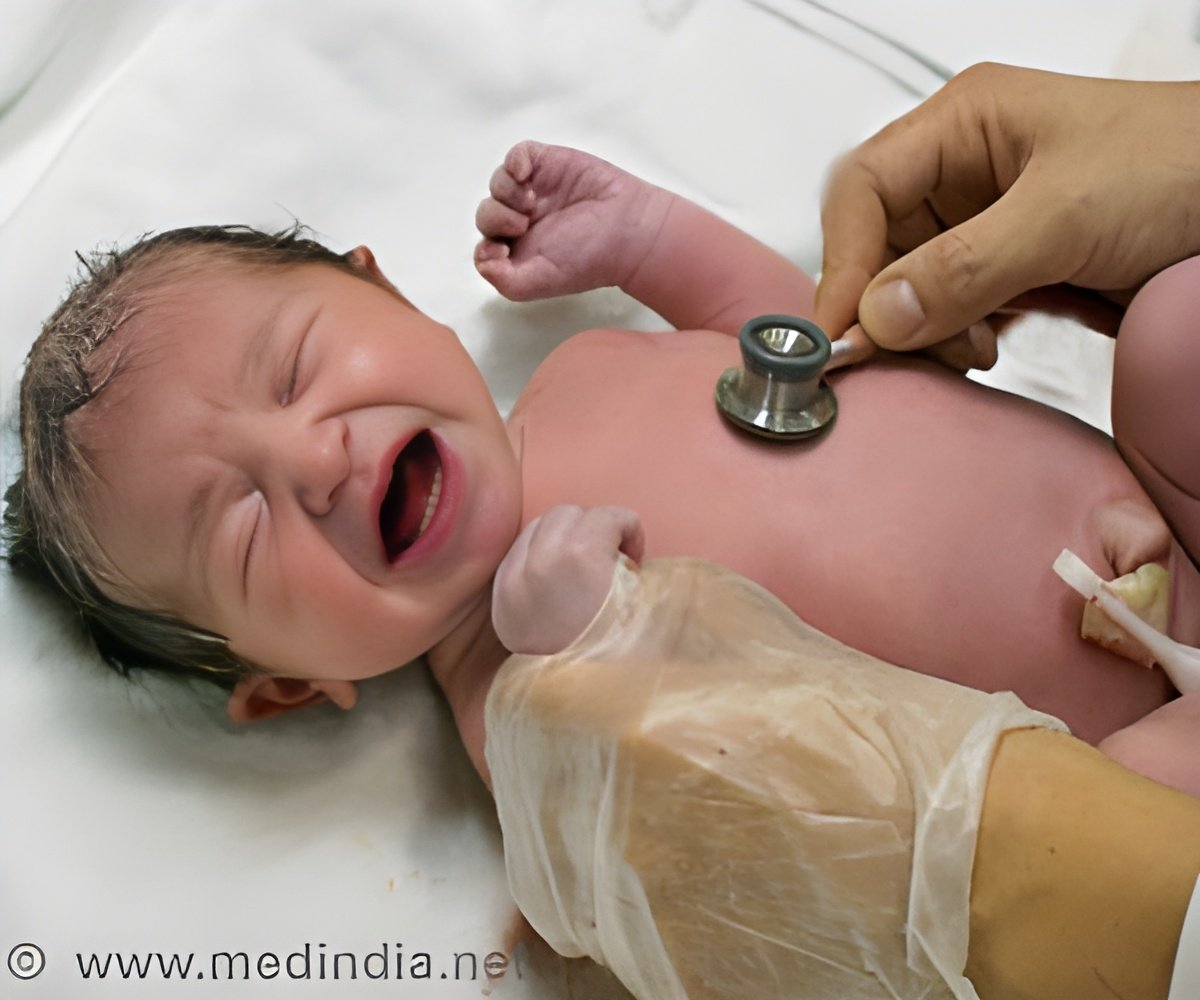
Early blood test may detect which babies deprived of oxygen at birth are at serious risk of neuro disabilities such as cerebral palsy and epilepsy, reports a new study.
Risk of Birth Asphyxia High Among Babies Born to Overweight and Obese Women
Babies born to overweight or obese women have a high risk of suffering from birth asphyxia, or experiencing oxygen deficit at birth, compared to normal weight women.
Babies born to overweight or obese women have a high risk of suffering from birth asphyxia, or experiencing oxygen deficit at birth, compared to normal weight women.
TOP INSIGHT

Following oxygen deprivation at birth, brain injury can develop over hours to months and affect various brain regions, resulting in a variety of potential neuro disabilities like epilepsy, cerebral palsy, deafness, or blindness.
This makes it hard to determine which babies are most at risk of complications and to design interventions that can prevent the worst outcomes.
Now, in a preliminary study of 45 babies that experienced oxygen deprivation at birth, researchers have identified changes to a raft of genes in their blood that could identify those that go on to develop neuro disabilities.

Most Common Cause of Birth Asphyxia: Human Error
Human error is the most common cause of infant asphyxiation at birth, according to findings from a 15-year study.
Human error is the most common cause of infant asphyxiation at birth, according to findings from a 15-year study.
The team found 855 genes were expressed differently between the two groups, with two showing the most significant difference.
Find Out Why Brain is More Sensitive to Oxygen Deprivation
Hypoxia caused by a stroke activates a specific mechanism that is protective in other organs but can be detrimental to the brain.
Hypoxia caused by a stroke activates a specific mechanism that is protective in other organs but can be detrimental to the brain.
Lead author Dr. Paolo Montaldo, from the Centre for Perinatal Neuroscience at Imperial, said: "We know that early intervention is key to preventing the worst outcomes in babies following oxygen deprivation, but knowing which babies need this help, and how best to help them, remains a challenge."

Link Between Oxygen Deprivation Before Birth and ADHD Discovered
Children exposed to ischemic-hypoxic conditions, situations during which the brain is deprived of oxygen are more likely to develop attention deficit hyperactivity disorder, states study.
Children exposed to ischemic-hypoxic conditions, situations during which the brain is deprived of oxygen are more likely to develop attention deficit hyperactivity disorder, states study.
The babies were part of a trial called Hypothermia for Encephalopathy in Low and middle-income countries (HELIX), which also examines the use of hypothermia (extreme cooling) on babies to prevent brain injuries developing following oxygen deprivation.
In higher-income countries, this is known to reduce the chances of babies developing neuro disabilities, but in lower-income settings cooling may not be feasible, and even with cooling 30 percent of babies still have adverse outcomes, so new therapies are still needed.
The team will next expand their blood testing study to a larger number of babies and examine the genes that appear to show the most difference between the groups.
Source-Eurekalert
 Email
Email