MEDINDIA
 English
 हिन्दी
 Español
 français
 中文
中文
Monitoring astronauts' health is crucial due to space's unique challenges like microgravity and radiation.

Flexible wearable device applications for monitoring astronaut health: Current status and challenges
Go to source). As human space missions evolve toward longer durations, the need for real-time monitoring of astronauts' physical and mental health has become more crucial. The space environment, with its microgravity, radiation exposure, and extreme temperature variations, poses complex health risks to crew members.
How Micro-gravity in Space Affects Our Lung Function
Understanding the physiology changes to lungs in space travel is essential. Parabolic flights taken by pilots simulate this very well and gives us a good understanding.
Understanding the physiology changes to lungs in space travel is essential. Parabolic flights taken by pilots simulate this very well and gives us a good understanding.
TOP INSIGHT

Exciting future for #astronaut health! Breakthrough development trajectories point to key research areas and interdisciplinary collaborations in flexible #wearable_devices. #space_research
The Power of Flexible Wearable Health Surveillance Systems
Flexible wearable systems, equipped with multimodal sensor arrays, enable comprehensive and continuous health surveillance. These integrated platforms include inertial measurement units, biosignal electrodes, and environmental detectors, among others.They have proven to be indispensable for early anomaly detection in cardiopulmonary functions, neuromuscular performance, and circadian rhythm regulation, thereby facilitating timely personalized countermeasures.
Nonetheless, despite recent advancements in materials science and miniaturized electronics, three notable technical barriers persist:
- device reliability under combined space stressors
- secure data management protocols addressing confined spacecraft privacy concerns
- multi-parametric data fusion challenges involving temporal-spatial synchronization of heterogeneous bio-signals.

Space Travel and Medicine - An Introductory Editorial
Space travel is slowly becoming a reality for mankind. This new section will cover how space travel will affect our health. Some of these new discoveries will help the development of medicine on our mother earth too.
Space travel is slowly becoming a reality for mankind. This new section will cover how space travel will affect our health. Some of these new discoveries will help the development of medicine on our mother earth too.
In particular, continuous development and maturity of the technology, together with flexible electronic devices, will play an important role in enhancing astronauts' health monitoring capabilities and promoting the progress of human space exploration in the future.

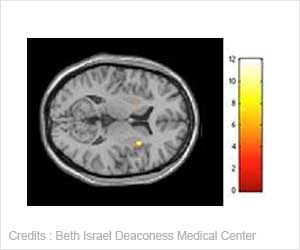
Orbiting Minds: The Cognitive Challenges of Astronauts in Space
Can space travel cause permanent cognitive damage? Six months in space may slow astronauts' attention and memory, but it doesn't lead to lasting cognitive decline.
Can space travel cause permanent cognitive damage? Six months in space may slow astronauts' attention and memory, but it doesn't lead to lasting cognitive decline.
- Flexible wearable device applications for monitoring astronaut health: Current status and challenges - (https://www.sciencedirect.com/science/article/pii/S2950235725000083?via%3Dihub)
Source-Eurekalert
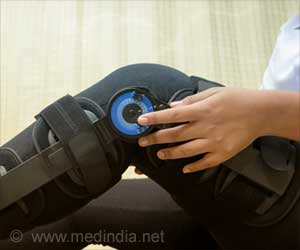
NELL-1 Protein Aids to Reduce Bone Loss in Astronauts
Microgravity-induced bone loss in space, can be reduced by systemic delivery of NELL-1, a protein required for bone growth and its maintenance.
Microgravity-induced bone loss in space, can be reduced by systemic delivery of NELL-1, a protein required for bone growth and its maintenance.
 Email
Email