MEDINDIA
 English
 हिन्दी
 Español
 français
 中文
中文
The framing of the parent-targeted messages about benefits of vaccination for their children seems to influence their intentions to immunize their children.
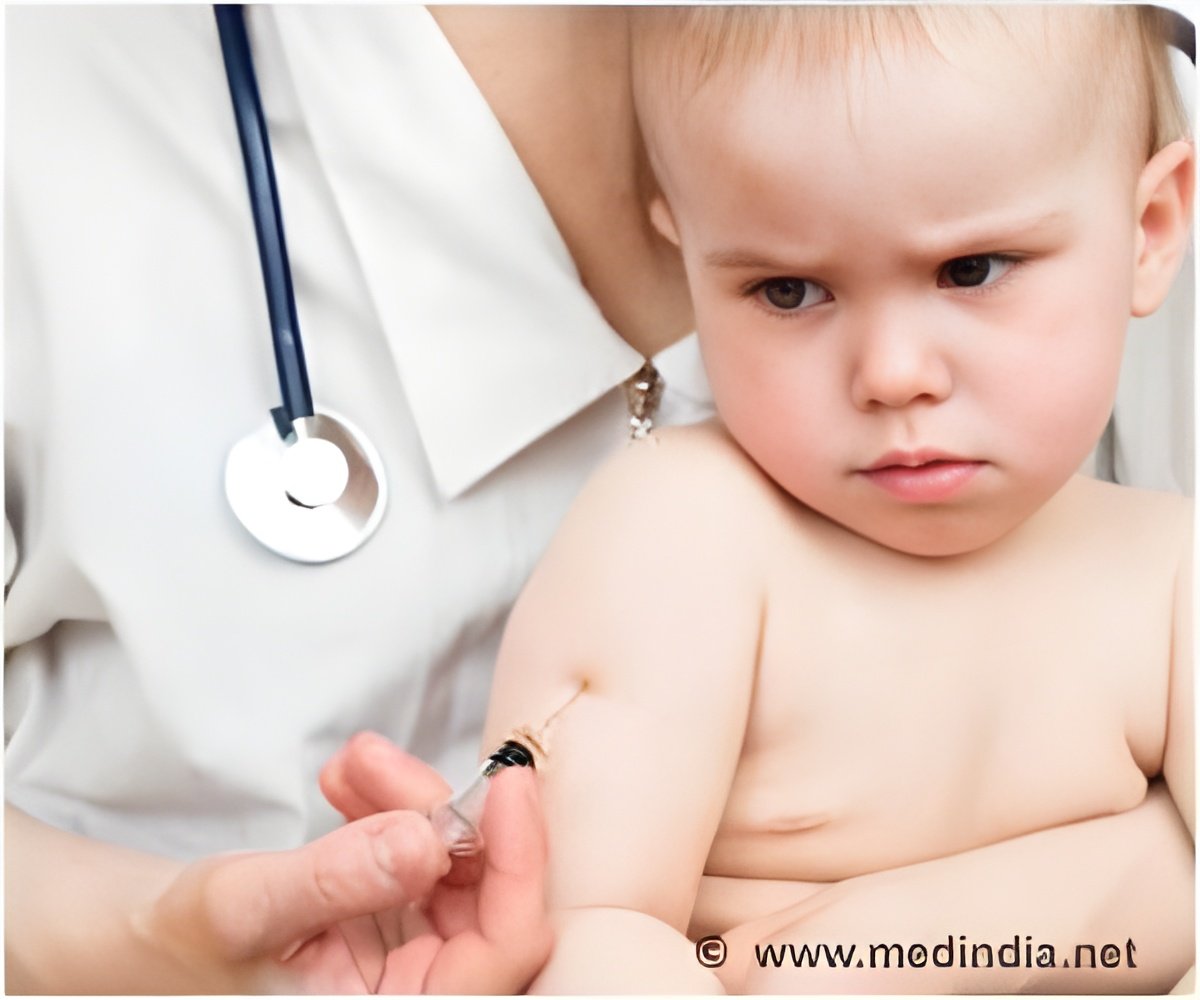
Vaccination for Children
Vaccines are biological products that impart immunity to the recipient. Vaccines may be live attenuated, killed or toxoids.
Vaccines are biological products that impart immunity to the recipient. Vaccines may be live attenuated, killed or toxoids.
Led by social psychologist and pediatric health services researcher Kristin S. Hendrix, Ph.D., the study authors conducted a national online survey of 802 parents of infants younger than 12 months to determine their willingness to have their child vaccinated for MMR. The first MMR vaccine is recommended at 12 months. According to the Centers for Disease Control, the safety record of the MMR vaccine is very good. Measles is the most deadly of all childhood rash/fever illnesses and very easily transmitted, making it a significant public health threat, as evident in multiple outbreaks in recent months. Vaccination is by far the best tool for prevention.
"If we are going to increase childhood vaccine acceptance, we need to communicate more effectively about the benefits of vaccines, to help parents feel that they are making a more informed decision," said Dr. Hendrix, an assistant professor of pediatrics and a Regenstrief Institute and IU Center for Bioethics affiliated scientist.

Immunization
Protect your child from various deadly diseases by giving the vaccinations at the right age. This tool helps you schedule the vaccinations of your child.
Protect your child from various deadly diseases by giving the vaccinations at the right age. This tool helps you schedule the vaccinations of your child.
1: Standard information statement from the Centers for Disease Control describing MMR and the MMR vaccine, including who should receive the vaccine, when they should receive it, contraindications, vaccine risks and what to do in the event of a serious reaction to the vaccine.

Childhood Vaccinations-Why Are They So Important?
Know why it’s extremely important to get your child vaccinated. Read on…
Know why it’s extremely important to get your child vaccinated. Read on…
3: CDC information statement plus additional information highlighting the MMR vaccine's benefits to society at large.

Campaign Involving Muslim Clerics Has Increased Uptake of Polio Vaccination
In northern Nigeria, a coalition campaign involving imams, Islamic school teachers, traditional rulers, doctors, journalists, and polio survivors is gradually turning the tide against polio vaccine rejection.
In northern Nigeria, a coalition campaign involving imams, Islamic school teachers, traditional rulers, doctors, journalists, and polio survivors is gradually turning the tide against polio vaccine rejection.
Source-Eurekalert
 Email
Email