MEDINDIA
 English
 हिन्दी
 Español
 français
 中文
中文
Manual differentiation between cancer cells can now be helped by an Artificial Intelligence-Based System.


Novel Artificial Intelligence Helps in Dressing Up
A novel artificial intelligence has been developed that can assist humans in the daily task of putting on clothes.
A novel artificial intelligence has been developed that can assist humans in the daily task of putting on clothes.
TOP INSIGHT

While identification of the particular cancer cell type can be very useful while choosing a treatment. The method of doing this is usually very time-consuming and often hampered by human error and this Artificial Intelligence-Based System can help us overcome that.
The system is based on a convolutional neural network, a form of artificial intelligence modeled on the human visual system. In this study, reported in the journal Cancer Research, this system was applied to distinguish cancer cells from mice and humans, as well as equivalent cells that had also been selected for resistance to radiation.
"We first trained our system on 8,000 images of cells obtained from a phase-contrast microscope," the corresponding author Hideshi Ishii says. "We then tested its accuracy on another 2,000 images, to see whether it had learned the features that distinguish mouse cancer cells from human ones, and radioresistant cancer cells from radiosensitive ones."

Artificial Intelligence Accurately Predicts the Prostate Cancer Progression Risk
Risk factors associated with prostate cancer progression can now be predicted by Artificial intelligence using a pathology test.
Risk factors associated with prostate cancer progression can now be predicted by Artificial intelligence using a pathology test.
"The automation and high accuracy with which this system can identify cells should be very useful for determining exactly which cells are present in a tumor or circulating in the body of cancer patients," lead author Masayasu Toratani says. "For example, knowing whether or not radioresistant cells are present is vital when deciding whether radiotherapy would be effective, and the same approach can then be applied after treatment to see whether it has had the desired effect."
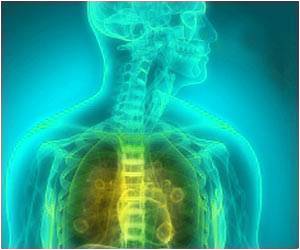
New Artificial Intelligence can Help Distinguish Between Two Lung Cancer Types
New artificial intelligence can distinguish between two lung cancer types adenocarcinoma and squamous cell carcinoma with more accuracy, finds a new study.
New artificial intelligence can distinguish between two lung cancer types adenocarcinoma and squamous cell carcinoma with more accuracy, finds a new study.
Source-Eurekalert
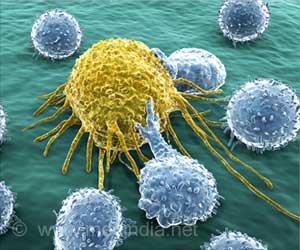
CURATE.AI Artificial Intelligence Platform Treats Patient With Advanced Cancer Successfully
CURATE.AI, a powerful artificial intelligence (AI) platform has been harnessed, to successfully treat a patient with advanced cancer, completely halting disease progression.
CURATE.AI, a powerful artificial intelligence (AI) platform has been harnessed, to successfully treat a patient with advanced cancer, completely halting disease progression.
 Email
Email